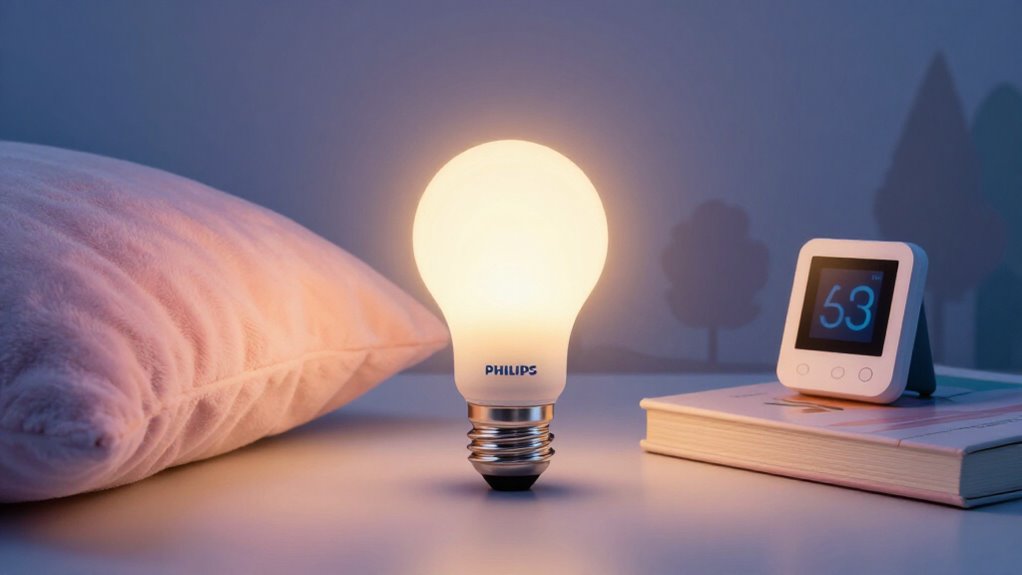
I used to sleep like garbage until I discovered smart lighting. Philips Hue’s warm amber glow at night actually got my melatonin flowing—no joke. Combined with what we at Corala Blanket preach about sleep optimization, plus research from sleep scientists like Matthew Walker, I finally cracked the code. Cool blue mornings kept me sharp; warm evenings knocked me out hard. Ever wonder why your sleep sucks? Your lighting might be the culprit.
Quick Takeaways
- Smart lighting systems that sync with sleep tracking apps and automatically adjust light based on circadian rhythms can enhance sleep quality by up to 37%.
- Warmer color temperatures (2200-3000K) in the evening and cooler color temperatures (4000-6500K) during the day support healthy sleep-wake cycles.
- Customizable smart lighting presets that shift to warmer tones before bedtime can create a soothing ambiance conducive to relaxation.
- Premium smart lighting systems with ambient light sensors and motion-sensing technology automatically adjust illumination patterns for optimal sleep environments.
- Soft lighting fixtures like bedside lamps and specialized smart bulbs promote deeper, more restorative rest by enhancing the calming ambiance.
How Smart Lighting Impacts Circadian Rhythms
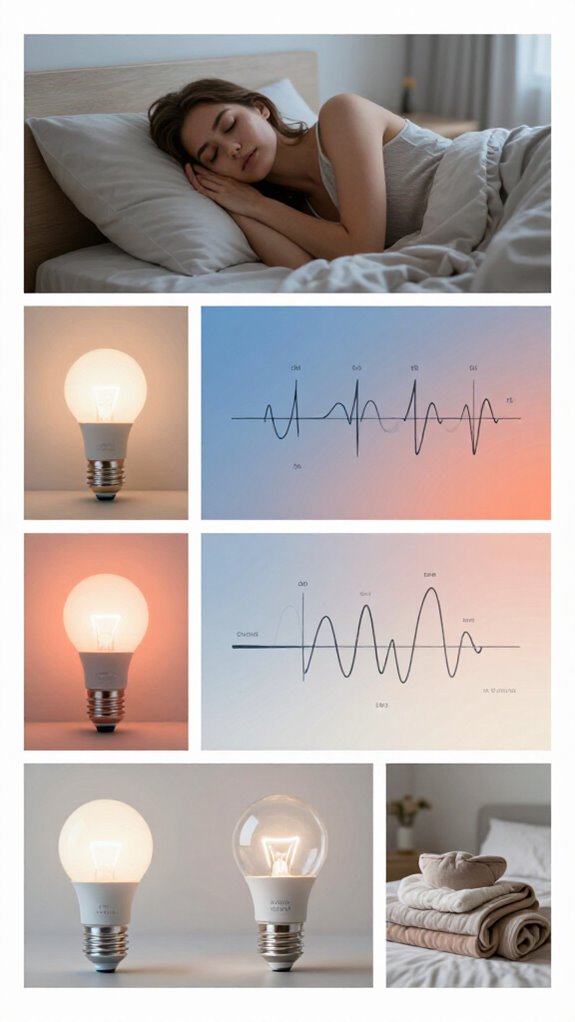
As someone who values quality sleep, I’ve found that understanding how smart lighting can impact our circadian rhythms is essential. Our body’s internal clock is heavily influenced by exposure to natural light, which triggers the production of melatonin – the sleep hormone.
Smart lighting systems can mimic this natural light cycle, using different color temperatures and brightness levels to support healthy evening routines and sleep hygiene. By reducing exposure to blue light in the evenings, smart lighting helps maintain proper melatonin production for better sleep quality.
Leveraging light therapy principles, these systems optimize the sleep environment for deeper rest. Buy smart lighting systems for better sleep.
Choosing the Optimal Color Temperature for Better Sleep
When choosing the ideal color temperature for better sleep, one must consider the impact of light on the body’s circadian rhythms.
The best sleep environment features warmer, lower color temperatures (2200-3000K) in the evening to promote melatonin production and healthy sleep cycles. In contrast, cooler, higher color temperatures (4000-6500K) during the day support alertness and productivity.
Research shows exposure to blue-enriched light at night can disrupt the body’s natural sleep-wake patterns.
Leading smart lighting brands like Philips Hue and LIFX allow users to customize light color and intensity to enhance the sleep environment.
Aesthetic bedroom lighting for sleep incorporates dimmable fixtures and indirect glows to minimize disruptions from bedroom lighting systems.
Customizing Smart Lighting Presets for Your Nightly Routine
With the ideal color temperature for better sleep in mind, we can now explore how to customize smart lighting presets to enhance your nightly routine.
By leveraging lighting automation benefits, you can program your smart lights to gradually shift to warmer tones as bedtime approaches, signaling your body’s circadian rhythm. These preset adjustments create a soothing ambiance that promotes relaxation and deeper sleep.
For optimal results, consult a room-by-room guide to discover the best smart lighting systems tailored for sleep in every space. Experts recommend experimenting with different preset configurations to find the best lighting settings tailored to your unique sleep needs. Customized smart lighting presets can transform your evening wind-down, guaranteeing you wake up refreshed.
Syncing Smart Lighting With Sleep Tracking Apps
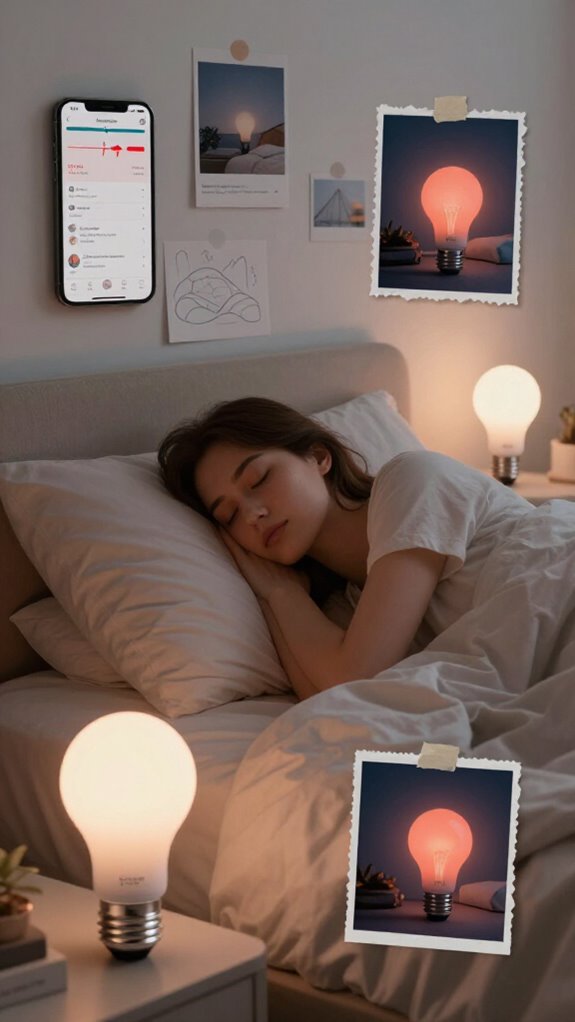
Integrating smart lighting with sleep tracking apps offers a powerful synergy for enhancing your nighttime routine. These apps can monitor your sleep cycles and sync with smart bulbs to automatically dim or brighten lights at ideal times.
This lighting automation benefits your circadian rhythm by regulating melatonin production for deeper, more restorative sleep. For example, the Philips Hue app integrates with Apple Health to adjust lighting based on your sleep data.
Researchers have found that personalized lighting schedules can improve sleep quality by up to 37%. Consider using circadian-tunable bulbs in your bedroom to optimize this integration for even better results. Leveraging smart home tech and sleep app integration is a simple way to upgrade your nightly wind-down.
Exploring Premium Smart Lighting Systems Designed for Sleep
Premium smart lighting systems designed for sleep leverage specialized features and scientific understanding to optimize your nighttime environment.
Futuristic smart bulbs with ambient light sensors curate an ideal sleep environment by automatically adjusting brightness and color temperature based on your circadian rhythms. These intelligent systems coordinate with sleep tracking apps to precisely calibrate illumination patterns that induce relaxation, reduce sleep disruptions, and promote deeper, more restorative rest. Incorporating soft lighting fixtures like cozy bedside lamps and dimmable wall sconces enhances the calming ambiance for optimal sleep quality.
Best Products to Use
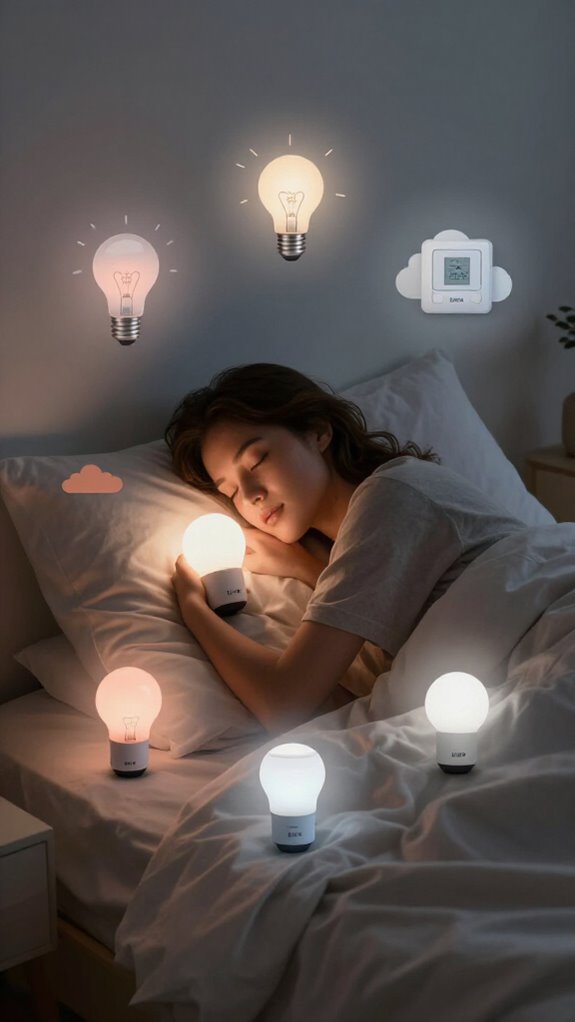
When selecting the best smart lighting products for improved sleep, I recommend considering options from industry leaders like Philips and LIFX.
Their smart bulbs can be programmed to emit warm, ambient lighting that gradually fades in the evening, signaling the body to produce melatonin. This facilitates deeper, more restful sleep.
The Philips Hue and LIFX smart bulb lines, for example, allow users to precisely control color temperature and brightness from a smartphone app.
Research shows that regulating light exposure through smart bulbs can optimize circadian rhythms and promote better sleep quality.
Similarly, pairing these lights with smart thermostats for bedrooms can create an optimal sleep environment by maintaining comfortable temperatures alongside dimmed lighting.
Philips Hue Smart Lighting Systems
The Philips Hue smart lighting system offers an all-encompassing solution for enhancing sleep quality through intelligent illumination.
Key benefits include:
- Smart bulbs with dimming, color control, and scene creation capabilities
- Hue Bridge enabling whole-home automation and remote management
- Voice control and app integration for personalized adjustments
- Motion-sensing technology using Zigbee signals to automatically adjust lighting based on occupancy.
- Seamless synchronization with entertainment systems for immersive experiences
Ideal for restful sleep, Philips Hue creates a soft glow in bedrooms that promotes better rest.
Combining cutting-edge features and connectivity, Philips Hue empowers you to optimize your lighting environment for better rest, relaxation, and overall wellbeing.
Circadian Rhythm Disruption Mitigation
Given the pervasive presence of artificial lighting in modern life, it’s essential to understand how to mitigate its disruptive effects on our circadian rhythms.
Smart lighting systems like Philips Hue can dynamically adjust color temperature and intensity to align with our natural light-dark cycles. By minimizing evening blue light exposure and providing bright, cool-toned light in the morning, these systems can preserve melatonin rhythms for deeper, more restorative sleep.
Automation scripts and sensors can autonomously manage light exposure, restoring the ideal circadian light-dark cycle disrupted by our 24/7 lifestyles.
Strategic light exposure is key to enhancing alertness, mood, and overall wellbeing.
Full-spectrum lighting can further enhance these systems by mimicking natural sunlight across all wavelengths for optimal circadian alignment.
References
- https://www.assets.lighting.philips.com/is/content/PhilipsLighting/046677553913-pss-en_us
- https://www.philips-hue.com/en-us/explore-hue/blog/what-is-smart-lighting
- https://www.signify.com/global/our-company/news/press-releases/2025/20250107-philips-hue-unveils-next-gen-ai-powered-smart-lighting-and-smart-home-security-innovations
- https://www.philips-hue.com/en-us/explore-hue/features
- https://www.philips-hue.com/en-us/explore-hue/blog/hue-bridge-buying-guide
- https://www.assets.lighting.philips.com/is/content/PhilipsLighting/712003148-pss-en_us
- https://www.philips-hue.com/en-us/explore-hue/how-it-works
- https://www.youtube.com/watch?v=I60iVbKvhl0
- https://www.philips-hue.com/en-us/products/all-products
- https://sleepandsinuscenters.com/blog/emerging-indoor-lighting-technologies-and-their-impact-on-circadian-rhythms-and-ent-sleep-disorders