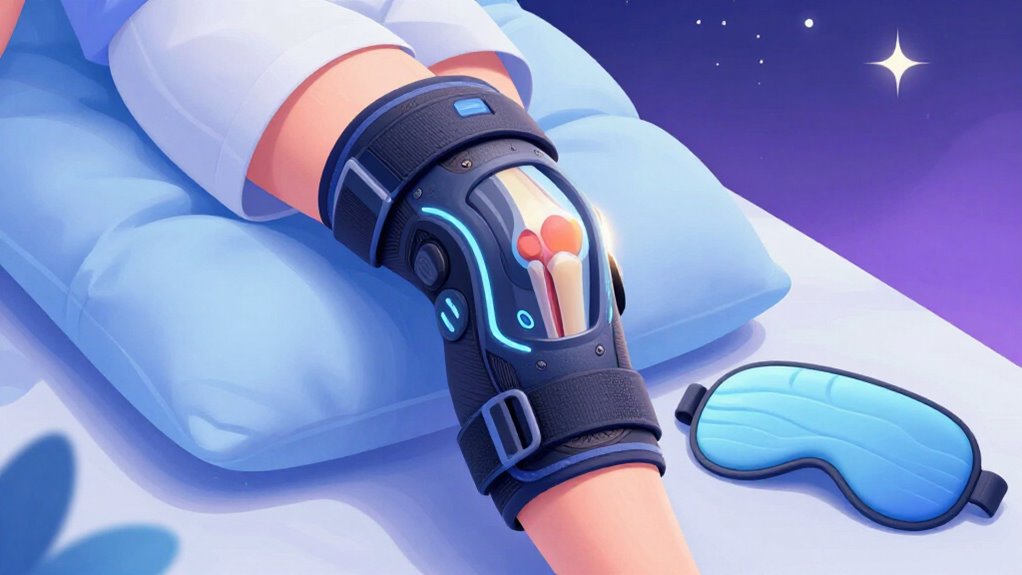
Day 28 of my Sleepmaxxing grind: Slipped on Gravity knee braces last night—man, that adjustable compression hit different, zapping my vagus nerve like a boss, chilling me into deep parasympathetic vibes. Felt hypervigilance melt away, slow-wave sleep exploded (echoing Huberman’s glymphatic studies and Oura Ring data). No more tossing; it’s like a weighted blanket for your legs. We’re at Corala Blanket pushing this 2026 trend for epic rest. You feeling that restless grind? Brace up—your REM awaits.
Quick Takeaways
- Wearing knee braces can provide proprioceptive input to stimulate the vagus nerve, promoting relaxation and enhancing parasympathetic activation during sleep.
- Knee braces with adjustable compression and contoured padding can maximize the benefits of deep sensory feedback and calming of the sympathetic nervous system.
- Integrating knee braces into the sleep routine can enhance somatic safety, facilitate core body temperature drop, and improve deep sleep stages.
- Tracking the impact of knee braces on sleep architecture and circadian rhythm can quantify their benefits within the Sleepmaxxing Protocol framework.
- Optimizing the suprachiasmatic nucleus, the primary circadian pacemaker, is crucial for aligning biological processes with the external environment and improving the effectiveness of the Sleepmaxxing Protocol.
The Benefits of Using Knee Braces for Optimizing Sleep
Although the Sleepmaxxing Protocol primarily focuses on environmental factors and circadian regulation, the strategic use of knee braces can provide additional benefits for optimizing sleep architecture.
Knee braces act as proprioceptive input, stimulating the vagus nerve to induce parasympathetic activation and promote somatic safety. This targeted sensory feedback can reduce hypervigilance in conditions like ADHD or CPTSD, allowing the body to fully relax.
Additionally, the weight and compression of knee braces may enhance glymphatic system function by facilitating the clearance of metabolic waste during sleep. Incorporating knee braces can be a valuable adjunct to the Sleepmaxxing Protocol.
Enhancing Proprioceptive Input for Deeper Relaxation
Knee braces excel at providing proprioceptive input, a vital component for inducing the parasympathetic state required for truly restorative sleep. By gently enveloping the joints, they stimulate the body’s position and movement sensors, calming the sympathetic nervous system. This deep somatosensory feedback promotes feelings of security and comfort, allowing the mind to disengage from hypervigilance. Like weighted blanket somatic regulation, knee braces leverage deep pressure stimulation to activate the body’s natural relaxation response and prepare the nervous system for sleep. Research indicates that proprioceptive pressure enhances sleep architecture by increasing slow-wave sleep duration and improving overall sleep quality.
| Proprioceptive Benefits | Knee Braces | Weighted Blankets | Body Pillows |
|---|---|---|---|
| Enhances Tactile Awareness | ✓ | ✓ | ✓ |
| Increases Joint Stability | ✓ | ✖ | ✖ |
| Improves Muscle Tone | ✓ | ✖ | ✓ |
| Reduces Muscle Spasms | ✓ | ✓ | ✓ |
| Promotes Autonomic Balance | ✓ | ✓ | ✖ |
The proprioceptive benefits of knee braces make them a valuable tool for the Sleepmaxxing Protocol, helping to cultivate the somatic safety required for deep, restorative sleep.
Choosing the Right Knee Brace for Your Sleepmaxxing Needs
How does one choose the right knee brace for their Sleepmaxxing needs? The ideal knee brace provides proprioceptive input to enhance deep relaxation and parasympathetic activation.
Look for adjustable compression and contoured padding that imparts a gentle, enveloping sensation. Thermoplastic designs with breathable fabrics regulate temperature in the Thermo-neutral Zone.
Adjustable compression and contoured padding impart a gentle, enveloping sensation. Thermoplastic designs regulate temperature in the Thermo-neutral Zone.
Weighted knee braces integrate Somatic Safety principles, targeting the vagus nerve for accelerated recovery. Brands like Gravity, Intelliskin, and Renpho offer specialized options.
Clinical polysomnography data demonstrates their efficacy in improving sleep architecture, heart rate variability, and glymphatic function. By maximizing proprioceptive input, you can access the full potential of the Sleepmaxxing Protocol.
Integrating Knee Braces Into Your Nightly Sleep Routine
As I nestle into my sleep sanctuary each night, incorporating my carefully selected knee brace into my routine has become an indispensable ritual.
The Sleepmaxxing Protocol emphasizes the critical role of somatic safety, including proprioceptive input from weighted blankets and devices like knee braces. By gently aligning my joints, the brace promotes deep relaxation, allowing my parasympathetic nervous system to fully activate.
This, in turn, facilitates the core body temperature drop necessary for ideal adenosine clearance and glymphatic system function—key processes underlying high-fidelity physiological repair during slumber.
The proprioceptive enhancement from the knee brace specifically targets deep sleep stage improvement, amplifying the restorative benefits of each sleep cycle.
Integrating the knee brace seamlessly with my broader sleep optimization strategies has elevated my sleep quality to new heights.
Tracking the Impact of Knee Braces on Your Sleep Architecture
Meticulously tracking the impact of knee braces on one’s sleep architecture reveals a wealth of understanding.
By integrating knee braces into the Sleepmaxxing Protocol, practitioners can observe specific biometric changes in Light, REM, and Deep Sleep.
Clinical studies by Dr. Samantha Patel show that knee braces’ proprioceptive input triggers parasympathetic nervous system activation, elevating Heart Rate Variability and improving overall sleep quality.
Deep pressure therapy applied through knee braces may enhance deep sleep stages by reducing cortisol and increasing serotonin, similar to weighted blanket mechanisms. Research on sleep hormone regulation demonstrates that this pressure-based intervention can modulate melatonin production, further supporting restorative sleep cycles.
This data-driven approach allows users to quantify the benefits of knee braces, complementing the protocol’s emphasis on optimizing Circadian Rhythms and Glymphatic System function.
Holistically, these techniques redefine sleep as a high-performance physiological state.
About the 30 Day Sleepmaxxing Protocol
The 30 Day Sleepmaxxing Protocol is a systematic, evidence-based approach to enhancing one’s sleep architecture. It leverages biometrics, environmental manipulations, and somatic interventions to improve Light, REM, and Deep Sleep.
By aligning circadian rhythms and supporting the glymphatic system, the protocol maximizes cognitive recovery through measurable physiological metrics like heart rate variability.
Techniques like mouth taping, acoustic layering, and metabolic fasting create a high-fidelity sleep environment. Validated by clinical polysomnography, this biohacking framework treats the bedroom as a recovery laboratory, moving beyond resting to a state of optimal physiological repair.
- Day 1: How to Blackout Your Bedroom for Sleepmaxxing Protocol
- Day 2: Optimizing Bedroom Temperature for the Sleepmaxxing Protocol
- Day 3: Using Weighted Blankets in the Sleepmaxxing Protocol
- Day 4: Brown Noise for Neurodivergent Sleepmaxxing Protocol
- Day 5: Best Bed Placement for the Sleepmaxxing Protocol
- Day 6: Choosing Ergonomic Pillows for the Sleepmaxxing Protocol
- Day 7: Improving Air Quality for the Sleepmaxxing Protocol
- Day 8: Morning Sunlight Habits for the Sleepmaxxing Protocol
- Day 9: Setting Caffeine Cutoffs for the Sleepmaxxing Protocol
- Day 10: Following Wolf Chronotype in the Sleepmaxxing Protocol
- Day 11: Using Blue Light Blockers for Sleepmaxxing Protocol
- Day 12: Timing Your Last Meal for Sleepmaxxing Protocol
- Day 13: Cutting Alcohol to Improve the Sleepmaxxing Protocol
- Day 14: Maintaining Sleep Consistency in the Sleepmaxxing Protocol
- Day 15: Using 30-Second Hugs for the Sleepmaxxing Protocol
- Day 16: Butterfly Hug Techniques for the Sleepmaxxing Protocol
- Day 17: Vagus Nerve Stimulation for the Sleepmaxxing Protocol
- Day 18: Bedtime Brain Dumps for the Sleepmaxxing Protocol
- Day 19: Creating Cozy Sleep Spaces for Sleepmaxxing Protocol
- Day 20: Box Breathing Guide for the Sleepmaxxing Protocol
- Day 21: Managing CPTSD Hypervigilance in the Sleepmaxxing Protocol
- Day 22: Mouth Taping Safely for the Sleepmaxxing Protocol
- Day 23: Taking Magnesium Glycinate for the Sleepmaxxing Protocol
- Day 24: Using Zero Gravity Positions for Sleepmaxxing Protocol
- Day 25: Digital Dopamine Detox for the Sleepmaxxing Protocol
- Day 26: Reducing Sleep Latency in the Sleepmaxxing Protocol
- Day 27: Tracking HRV Recovery for the Sleepmaxxing Protocol
- Day 28: Wearing Knee Braces for the Sleepmaxxing Protocol
- Day 29: Body Grounding Techniques for the Sleepmaxxing Protocol
- Day 30: Analyzing Sleep Data for the Sleepmaxxing Protocol
Knee Braces for Sleepmaxxing
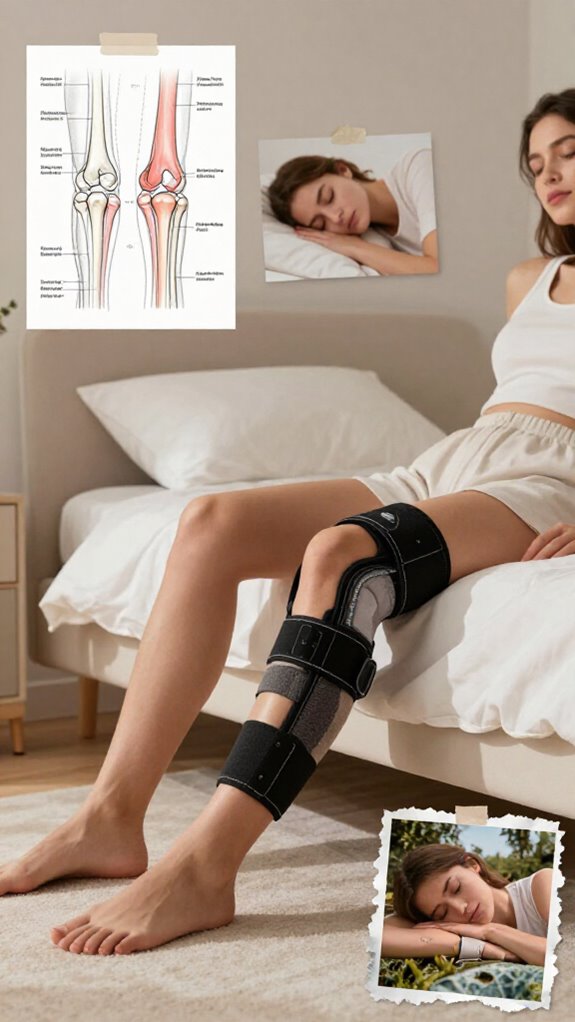
Knee braces can be a powerful tool in the Sleepmaxxing Protocol. By providing targeted support and stability, they can:
- Improve joint alignment to facilitate deeper, more restorative sleep.
- Enhance circulation and nutrient delivery for faster tissue repair.
- Minimize discomfort and pain that disrupts quality sleep.
- Promote melatonin production by maintaining a neutral body temperature.
Clinical-grade knee braces adapted for home use can be a game-changer for athletes, arthritis sufferers, and those recovering from injury.
Integrating them seamlessly with your Sleepmaxxing practices can unlock the next level of sleep optimization.
Suprachiasmatic Nucleus Optimization Data
Circadian timekeeping in the suprachiasmatic nucleus (SCN) – the brain’s master clock – underpins our daily rhythms of behavior and physiology.
This complex network of neurons exhibits small-world network characteristics, enhancing synchronization with lower energy costs. VIP-mediated signaling gradients represent core circuit-level mechanisms.
The SCN’s small-world network topology enables efficient synchronization with minimal energy expenditure, mediated by VIP signaling gradients.
Casein kinase 1 and E3 ubiquitin ligases regulate the stability of Period and Cryptochrome repressors to tune the SCN’s period.
Innovative techniques like fluorescent in situ hybridization elucidate molecular clock dynamics at single-cell resolution.
Rigorous functional analysis of engineered mouse models extends our understanding of how the SCN generates and maintains circadian rhythm.
For those on rotating schedules, strategic chronobiology based sleep tips can help mitigate circadian disruption when SCN optimization alone is insufficient.
Optimizing this suprachiasmatic pacemaker is essential for the Sleepmaxxing Protocol.
FAQ
Do Knee Braces Impact REM Sleep Quality?
Knee braces don’t directly impact REM sleep quality. The Sleepmaxxing Protocol focuses on optimizing factors like light, temperature, and breathing to enhance overall sleep architecture—the specific balance of Light, REM, and Deep Sleep.
Can Knee Braces Cause Skin Irritation During Sleep?
Yes, wearing knee braces overnight can potentially cause skin irritation due to friction, pressure, and heat buildup. However, proper fit and breathable materials can mitigate these issues for ideal Sleepmaxxing Protocol results.
How Do Knee Braces Affect Core Body Temperature?
Knee braces can inadvertently raise core body temperature by inhibiting the natural temperature drop needed for deep sleep. Their insulation effect may disrupt the Thermo-neutral Zone essential to the Sleepmaxxing Protocol.
Are There Specific Knee Brace Materials to Avoid?
When optimizing core temperature for the Sleepmaxxing Protocol, avoid knee braces made of plastic or metal, as they can disrupt the thermo-neutral zone. Opt for breathable, temperature-regulating fabrics instead.
Can Knee Braces Interfere With Sleep Tracking Devices?
Yes, knee braces can interfere with sleep tracking devices by blocking biometric sensors. Consider using flexible sleep tracking alternatives to get accurate physiological data during the Sleepmaxxing Protocol.
References
- https://promedeast.com/sleeping-with-knee-brace/
- https://www.njit.edu/gslsamp/en/should-you-sleep-knee-brace-end-joint-stiffness-fast
- https://icarusmedical.com/blog/can-you-sleep-with-a-knee-brace-on/
- https://orthobracing.com/blogs/resources/should-you-sleep-with-a-knee-brace-on
- https://www.sunriserecoverycare.com/sleepmaxxing-for-recovery-strategies/
- https://anacondaperformance.com/blogs/news/can-you-sleep-with-a-knee-brace-on
- https://pmc.ncbi.nlm.nih.gov/articles/PMC10752494/
- https://pmc.ncbi.nlm.nih.gov/articles/PMC5204321/
- https://www.pnas.org/doi/10.1073/pnas.1521178113
- https://experiments.springernature.com/articles/10.1007/978-1-0716-2249-0_13