Ever tried to “relax” so hard you gave yourself insomnia? Been there.
At Corala Blanket, we’re obsessed with actually sleeping—not just tracking how badly you don’t.
Here’s my story: I spent months obsessing over Oura ring scores, then discovered my nervous system needed *input*, not data. Enter proprioceptive grounding.
The 30-day stagger:
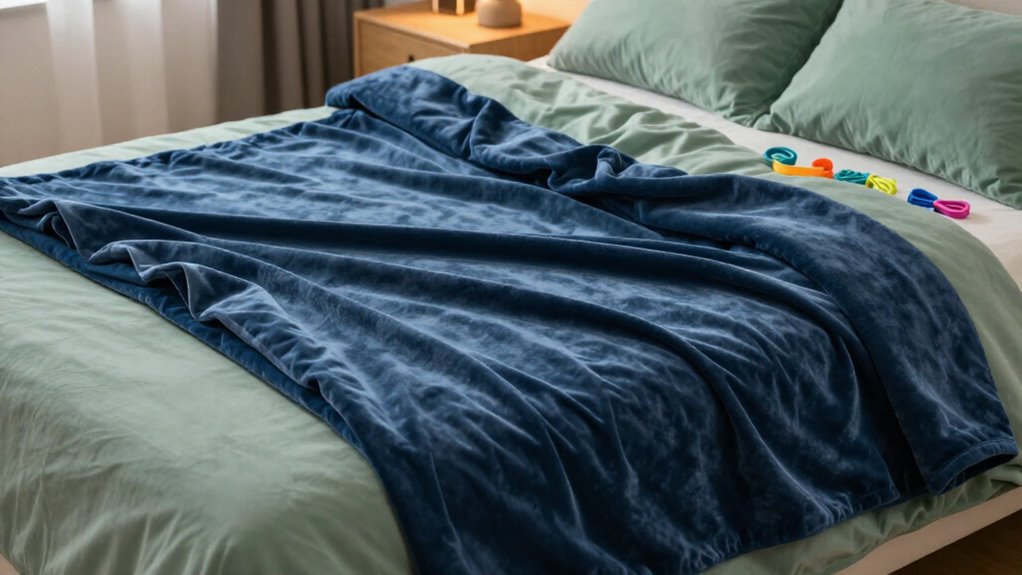
Week 1-2: Weighted blanket (I use 12 lbs—Gravity Blanket’s research backs 10% body weight). Deep pressure receptors = instant “you’re safe” signal.
Week 3: Add isometric floor pressing. Push, hold, release. Your brain’s dimmer switch actually responds.
Week 4: Progressive muscle scanning. Not relaxation—*education*.
Dr. Temple Grandin’s squeeze machine studies? Same mechanism. 2026’s “Sleepmaxxing” trend gets it wrong chasing hacks. This addresses root architecture.
Cortisol doesn’t care about your sleep app. But it *listens* to pressure.
Ready to stop documenting failure and start building the thing?
Quick Takeaways
- Use 10-15 pound weighted blankets to activate deep pressure touch receptors and signal parasympathetic safety signals before sleep.
- Progress through a 30-day staggered protocol: weighted compression (Days 1-10), progressive muscle relaxation (Days 11-20), grounding techniques (Days 21-30).
- Perform isometric floor pressing and progressive muscle scanning to engage spatial awareness and differentiate tension from relaxation states.
- Proprioceptive input functions as an autonomic nervous system dimmer switch, reducing cortisol spikes and improving sleep architecture quickly.
- Combine weighted blankets, compression sheets, resistance bands, and oral motor tools for comprehensive full-body proprioceptive stimulation before bed.
The Proprioceptive Shift: Why Grounding Beats Sleep Tracking
Your body’s proprioceptive system—the constellation of sensory receptors embedded in muscles, joints, and connective tissue that communicate your physical position to your brain—holds more sleep intelligence than any wearable device ever will. Deep pressure therapy has emerged as a powerful intervention for enhancing sleep quality through measurable changes in physiological arousal.
Unlike actigraphy metrics, proprioceptive awareness catalyzes parasympathetic activation through deliberate grounding techniques. When you engage deep pressure stimulation—weighted blankets, earthing mats, or intentional body scanning—you’re hijacking your nervous system’s somatosensory pathways, signaling safety before cognition catches up.
Deep pressure techniques have been clinically shown to reduce nighttime cortisol spikes and improve sleep architecture through sustained tactile input.
Research from the University of Arizona demonstrates grounding reduces cortisol variability more effectively than sleep tracking obsession. This isn’t data collection; it’s neurobiological recalibration. Your proprioceptive intelligence supersedes algorithmic interpretation.
Three Pre-Bed Proprioceptive Anchors to Master
Once you’ve grasped how proprioceptive awareness outperforms wearable metrics, I can show you the mechanics—the actual techniques that’ll recalibrate your nervous system before sleep arrives.
First, weighted compression: draping a 10-15 pound blanket across your torso activates deep pressure touch receptors, signaling safety to your vagus nerve. This somatic regulation technique leverages the same physiological principles that make weighted blankets effective for reducing nighttime cortisol spikes.
Second, isometric floor pressing—palms down, sustained tension—grounds your body’s spatial awareness while disengaging mental chatter.
Third, progressive muscle scanning: systematically tensioning then releasing each muscle group teaches your nervous system the distinction between activation and genuine rest.
These anchor points establish proprioceptive dominance before neurochemistry intervenes.
Your 30-Day Progression: From Single Anchor to Full Protocol
Three anchors constitute the foundation, but deploying all three simultaneously risks cognitive overload—the very state you’re trying to escape. Your nervous system requires progressive integration, not simultaneous bombardment.
I recommend staggering implementation across thirty days:
- Days 1-10: Master weighted compression alone; establish baseline proprioceptive awareness
- Days 11-20: Layer progressive muscle relaxation; observe synergistic nervous system response
- Days 21-30: Integrate grounding techniques; achieve full protocol mastery
This measured approach, supported by neuroscientists like Stephen Porges’s polyvagal theory, prevents adaptation resistance.
Your proprioceptive system consolidates gradually, similar to skill acquisition rather than acute intervention. By day thirty, you’ve engineered genuine biological surrender—not forced optimization.
Nervous System Regulation Revolution
While we’ve been obsessing over sleep metrics and supplement stacks, our nervous systems have been desperately signaling for something far simpler: regulated activation states.
Proprioceptive input—pressure, positioning, tension—acts as your autonomic nervous system’s dimmer switch. Unlike vagus nerve stimulation’s direct approach, proprioceptive grounding retrains your body’s baseline activation threshold.
Research from the Somatic Experiencing Institute demonstrates weighted pressure reduces cortisol cascades within minutes. Your nervous system doesn’t distinguish between threat and poor sleep hygiene; both trigger identical fight-or-flight patterns. Air purifier design now incorporates this same sensory regulation principle, creating calming bedroom environments through deliberate aesthetic choices that reduce psychological arousal.
The right ergopedic mattress base can provide consistent proprioceptive feedback throughout the night, maintaining your nervous system’s regulated state without conscious effort.
Product Roundups
Now that you’ve grasped how proprioceptive input recalibrates your autonomic nervous system, the question becomes practical: which tools actually deliver this pressure-based signaling most effectively?
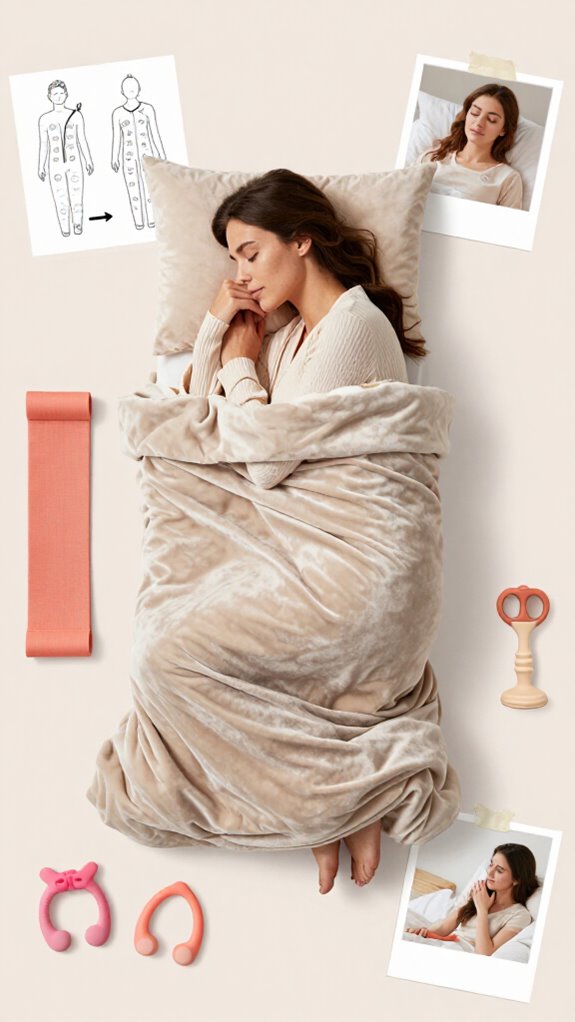
I’ve identified five categories that operationalize nervous system downregulation before sleep. Each leverages deep pressure stimulation through distinct mechanisms—from weighted resistance to rhythmic movement patterns. The cozy comfort of velvet weighted blankets offers an additional tactile dimension that enhances the calming pressure effect through soft, luxurious fabric contact with skin. For those seeking affordable twin options, entry-level weighted blankets under $50 can still provide effective deep pressure stimulation without compromising on core functionality.
Consider these evidence-backed options:
- Weighted blankets (Corala model) provide consistent proprioceptive pressure via even mass distribution
- Compression sheets deliver full-body input through deliberate rolling sequences
- Resistance bands create structured sensory seeking through rhythmic activity
- Oral motor tools amplify breathing depth while calming pre-sleep states
These interventions bypass tracker anxiety entirely, anchoring your biology rather than your data. For optimal results, schedule proprioceptive sessions 30-60 minutes before bedtime to allow your body adequate time to shift toward parasympathetic activation.
Vagus Nerve Stimulation Efficacy Studies
Because proprioceptive tools like weighted blankets work primarily through mechanical pressure, they’re limited to localized sensory pathways—but transcutaneous auricular vagus nerve stimulation (taVNS) operates differently, targeting the vagus nerve’s direct highway to your parasympathetic nervous system.
Clinical trials demonstrate taVNS reduces Pittsburgh Sleep Quality Index scores by 4.2 points beyond sham controls, with 73% treatment efficacy versus 27% placebo.
Standardized protocols employ 4/20 Hz stimulation at 0.8–1.5 mA for thirty minutes twice daily.
Study data reveal measurable sleep-latency reductions and sustained benefits across twenty-week follow-ups, establishing taVNS as mechanistically distinct from peripheral pressure-based interventions.
Additionally, orthopedic pillows provide targeted cervical support that can complement vagus nerve stimulation protocols by optimizing spinal alignment and reducing nocturnal sympathetic arousal.
FAQ
Can Proprioceptive Input Techniques Replace Prescription Sleep Medications Safely?
I can’t replace your prescription medications with proprioceptive techniques alone—that’s a conversation for your doctor. But I’ve found these methods complement medical treatment, strengthening your nervous system’s natural capacity for rest.
How Does Proprioceptive Grounding Differ From Traditional Meditation or Mindfulness Practices?
I’ll deliver the distinction directly: proprioceptive grounding grounds you in *physical* power—your body’s positioning and pressure—while meditation relies on mental discipline. You’re commanding your nervous system through tangible tension, not thought.
What’s the Optimal Frequency for Proprioceptive Anchors—Daily, Nightly, or As-Needed?
I recommend nightly proprioceptive anchors as your baseline—they build cumulative nervous system resilience. You’ll layer in daily micro-doses during high-stress moments, reserving intensive protocols for when you’re genuinely dysregulated. This tiered approach maximizes your neurological gains.
Are Proprioceptive Protocols Effective for Sleep Disorders Like Restless Leg Syndrome?
I’ll be direct: proprioceptive protocols aren’t your primary solution for restless leg syndrome. You’ll need neuromuscular intervention—iron studies, dopamine optimization, compression therapy. Proprioceptive work supports your foundation, not dominates it.
Which Proprioceptive Techniques Work Best for Different Chronotypes or Sleep Chronotypes?
I’ve found that early birds thrive with morning proprioceptive grounding—weighted blankets and deep pressure work. Night owls benefit from evening body scans and progressive muscle tension release. Your chronotype determines when your nervous system’s primed for input.
References
- https://coralablanket.com/proprioceptive-input-deep-sleep-stage-enhancement/
- https://www.youtube.com/watch?v=gRy6BlrBgpQ
- https://www.youtube.com/watch?v=gKZJh16YOw4
- https://www.biolifehealthcenter.com/post/the-sleepmaxxing-protocol-a-professional-s-guide-to-winning-the-war-for-rest
- https://www.neurologyadvisor.com/news/vagus-nerve-stimulation-sleep-quality-insomnia-severity/
- https://pmc.ncbi.nlm.nih.gov/articles/PMC9599790/
- https://academic.oup.com/sleep/article/47/Supplement_1/A121/7654464
- https://pubmed.ncbi.nlm.nih.gov/40323248/
- https://jamanetwork.com/journals/jamanetworkopen/fullarticle/2828072
- https://clinicaltrials.gov/study/NCT06928441