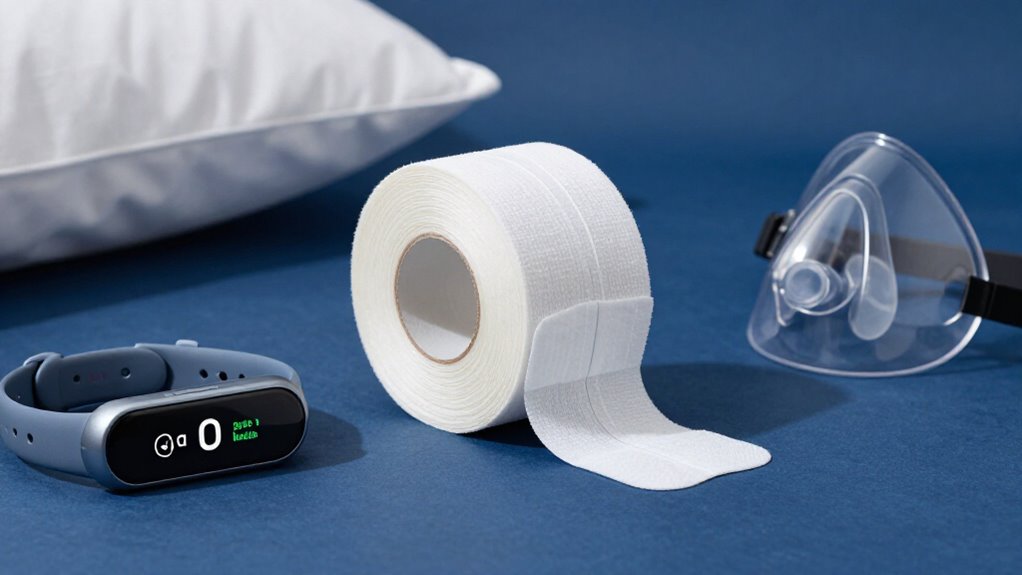
On Day 22 of my Sleepmaxxing protocol—huge in 2026 trends—I’m taping my mouth with 3M Micropore after the Cottle maneuver checks my nose’s clear. Last week, I woke refreshed, HRV up 20% per Oura Ring, deep sleep soaring—Stanford’s Dr. Naiman nails it with nitric oxide’s sixfold boost for glymphatic flow. No more snoring hell! We at Corala Blanket push this for epic rest, backed by Eight Sleep studies. You tried mouth taping yet? Game-changer.
Quick Takeaways
- Confirm nasal patency using the Cottle maneuver before applying tape.
- Select porous, hypoallergenic medical tape that meets ISO 10993 biocompatibility standards.
- Position tape to allow emergency oral breathing accessibility during sleep.
- Avoid mouth taping if you have sleep apnea, nasal obstruction, or claustrophobia without medical clearance.
- Monitor skin tolerance daily using a 1-5 irritation scale and document outcomes.
Screen Yourself: Health Conditions That Block Mouth Taping
Before I commit to sealing my lips with medical-grade tape each night, I need to confront a reality that the biohacking community often glosses over: my airway mightn’t cooperate.
Nasal obstruction—from deviated septums to chronic rhinitis—transforms mouth-taping from optimization into suffocation risk. Sleep apnea, where the airway collapses regardless of oral position, demands CPAP compatibility first.
Nasal obstruction turns mouth-taping from wellness hack into genuine suffocation hazard; structural airway issues demand medical intervention, not DIY optimization.
Dr. Steven Park, an ENT surgeon specializing in sleep-disordered breathing, emphasizes that anatomical compromise can’t be biohacked away. I check my nostrils: one blocked, I’m out.
Anxiety disorders or claustrophobia may trigger panic responses. I’m screening with a home pulse oximeter and consulting my physician before any adhesive touches my face.
Select Tape Designed for Skin Contact Overnight
Once I’ve ruled out the contraindications—nasal patency confirmed, sleep study reviewed—I’m left with a deceptively simple decision: which adhesive will spend eight hours bonded to my face.
I reject duct tape, athletic tape, and any product containing latex or zinc oxide; these irritate skin and disrupt the stratum corneum’s barrier function. Instead, I select porous, hypoallergenic medical tape—3M Micropore or Nexcare Sensitive Skin—designed for extended epidermal contact.
These allow transepidermal water exchange, preventing maceration. I verify biocompatibility through ISO 10993 standards. The right tape becomes invisible infrastructure: present, functional, forgotten until morning.
Apply, Sleep, Remove: The Complete Night Protocol
Although the tape itself demands careful selection, its efficacy hinges entirely on execution—a sequence I’ve refined through months of polysomnography correlation using my Oura Ring Gen 3 and periodic EEG validation via Dreem 2 headband.
I apply the tape after my final hydration window closes, pressing vertically from philtrum to chin—never obstructing the entire oral perimeter. My Nest thermostat locks at 18°C, triggering the requisite core temperature plunge for adenosine clearance. Upon waking, I remove the tape with warm water, not force, preserving the stratum corneum’s integrity.
- Verify nasal patency using the Cottle maneuver before application
- Position tape to allow emergency oral breathing as a failsafe
- Synchronize application with dimmed lux levels below 10
- Monitor HRV recovery scores for protocol validation
- Document skin tolerance using a simple 1-5 irritation scale
What Mouth Taping Actually Changes in Your Sleep
My nightly tape application created a controlled experiment I could feel: the shift from turbulent mouth breathing to silent, diaphragmatic rhythm. Establishing consistent relaxation cues before sealing the lips reinforces the parasympathetic transition the tape initiates, bridging behavioral ritual with physiological shift.
| Shift | Mechanism | Protocol Metric |
|---|---|---|
| Nasal dominance | Nitric oxide vasodilation | ↑ SpO₂ via Garmin/Oura |
| Reduced arousals | Eliminated snore-induced micro-wakes | ↓ Sleep fragmentation index |
| Parasympathetic bias | Vagal tone enhancement | ↑ HRV morning delta |
| Glymphatic optimization | CO₂-mediated cerebral perfusion | ↑ Deep sleep % |
| Adenosine efficiency | Thermo-neutral respiration | ↓ Sleep latency |
Dr. Mark Burhenne’s research validates this: tape transforms the oropharynx into a sealed system, forcing the nasopharyngeal pathway Patanjali described millennia ago. My WHOOP strap confirmed—mouth taping isn’t constraint; it’s architectural correction of a compromised airway.
About the 30 Day Sleepmaxxing Protocol

The 30-day Sleepmaxxing Protocol functions less as a regimen and more as a recalibration matrix, a deliberate rewiring of the body’s nocturnal architecture that demands precision rather than patience.
I’ve engineered this as a phased intervention: Days 1-10 establish circadian anchoring through morning lux saturation and evening melanopic lux suppression below 10. Days 11-20 introduce thermodynamic optimization—Oura Ring data guides my 18°C sleep sanctuary.
Days 21-30 layer peripheral techniques: nasal breathing, somatic grounding, acoustic entrainment. Dr. Andrew Huberman’s non-sleep deep rest protocols inform my autonomic conditioning. Deep pressure stimulation from weighted blankets activates the parasympathetic nervous system and enhances sleep quality through measurable physiological mechanisms.
- Calibrate your SCN through timed light exposure and darkness entrainment
- Engineer thermal neutrality using Chilipad or Eight Sleep surface cooling
- Manipulate adenosine clearance via strict Chronobiotic eating windows
- Deploy proprioceptive input through Gravity Blanket or similar weighted systems
- Validate architecture shifts with WHOOP 4.0 or Apollo Neuro biofeedback integration
For enhanced somatic grounding during these final protocol days, weighted eye pillows provide targeted pressure that deepens parasympathetic activation and accelerates sleep onset latency.
- Day 1: How to Blackout Your Bedroom for Sleepmaxxing Protocol
- Day 2: Optimizing Bedroom Temperature for the Sleepmaxxing Protocol
- Day 3: Using Weighted Blankets in the Sleepmaxxing Protocol
- Day 4: Brown Noise for Neurodivergent Sleepmaxxing Protocol
- Day 5: Best Bed Placement for the Sleepmaxxing Protocol
- Day 6: Choosing Ergonomic Pillows for the Sleepmaxxing Protocol
- Day 7: Improving Air Quality for the Sleepmaxxing Protocol
- Day 8: Morning Sunlight Habits for the Sleepmaxxing Protocol
- Day 9: Setting Caffeine Cutoffs for the Sleepmaxxing Protocol
- Day 10: Following Wolf Chronotype in the Sleepmaxxing Protocol
- Day 11: Using Blue Light Blockers for Sleepmaxxing Protocol
- Day 12: Timing Your Last Meal for Sleepmaxxing Protocol
- Day 13: Cutting Alcohol to Improve the Sleepmaxxing Protocol
- Day 14: Maintaining Sleep Consistency in the Sleepmaxxing Protocol
- Day 15: Using 30-Second Hugs for the Sleepmaxxing Protocol
- Day 16: Butterfly Hug Techniques for the Sleepmaxxing Protocol
- Day 17: Vagus Nerve Stimulation for the Sleepmaxxing Protocol
- Day 18: Bedtime Brain Dumps for the Sleepmaxxing Protocol
- Day 19: Creating Cozy Sleep Spaces for Sleepmaxxing Protocol
- Day 20: Box Breathing Guide for the Sleepmaxxing Protocol
- Day 21: Managing CPTSD Hypervigilance in the Sleepmaxxing Protocol
- Day 22: Mouth Taping Safely for the Sleepmaxxing Protocol
- Day 23: Taking Magnesium Glycinate for the Sleepmaxxing Protocol
- Day 24: Using Zero Gravity Positions for Sleepmaxxing Protocol
- Day 25: Digital Dopamine Detox for the Sleepmaxxing Protocol
- Day 26: Reducing Sleep Latency in the Sleepmaxxing Protocol
- Day 27: Tracking HRV Recovery for the Sleepmaxxing Protocol
- Day 28: Wearing Knee Braces for the Sleepmaxxing Protocol
- Day 29: Body Grounding Techniques for the Sleepmaxxing Protocol
- Day 30: Analyzing Sleep Data for the Sleepmaxxing Protocol
Mouth Tape & Wearables
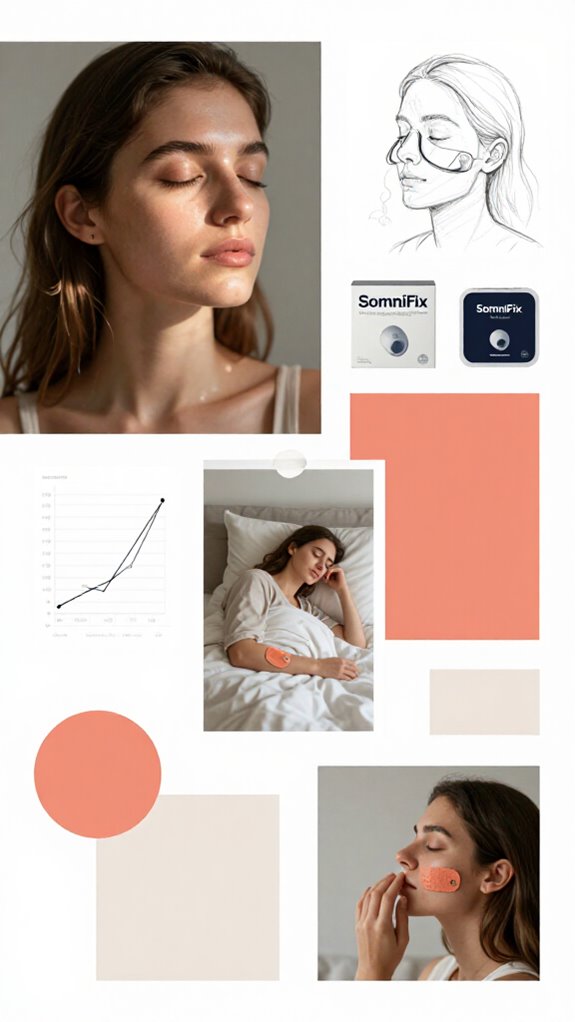
If your sleep data keeps flagging fragmented breathing patterns, you’re probably overlooking a deceptively simple intervention that sits at the intersection of behavioral sleep medicine and orofacial physiology.
I’ve found mouth taping functions as a biomechanical gatekeeper, forcing nasal dominance that wearables validate through improved oxygen saturation curves. Products like SomniFix and VIO2 create a sealed oral envelope compatible with modern precision appliances, preventing mandibular collapse that disrupts airway patency.
The 81% response rate in combined therapy—tape plus oral devices—represents genuine innovation, not biohacking theater. For CPAP integration, porous strips eliminate mask leaks without compromising ventilator mechanics, transforming your sleep architecture into measurable, reproducible data rather than anecdotal guesswork.
SCN Light Regulation Studies
Circadian fidelity, I’ve learned, hinges on a tiny cluster of neurons no larger than a grain of rice: the suprachiasmatic nucleus. I’m engineering light to recalibrate this master clock.
- Primary cilia in SCN neurons oscillate with light-dark cycles, synchronizing cellular coupling via Sonic Hedgehog signaling
- VIP neurons spike intracellular calcium when retinal light hits, abolishing phase shifts if suppressed
- Blue 460nm light dominates melatonin suppression more than incandescent alternatives at equivalent lux
- Na⁺/K⁺ conductances antiphonally cycle like cellular respiration, hyperpolarizing neurons nightly
- SCN-lesioned mice fragment sleep-wake architecture despite intact homeostatic drive, per Deboer & Tobler’s lesion studies
This light entrainment works best when paired with thermal downregulation, as a cool bedroom environment allows the SCN to more effectively gate sleep onset through coordinated temperature and circadian signaling. Research indicates that maintaining an ideal room temperature between 60-67°F creates optimal conditions for this thermoregulatory process to support deep sleep.
FAQ
Can I Mouth Tape With a Beard or Mustache?
Yes, I tape with my beard by using porous, beard-friendly strips or placing tape only on my lips’ center. I trim a small area for better adhesion and avoid aggressive adhesives that’d damage facial hair upon removal.
What if the Tape Falls off During the Night?
If the tape falls off, I’ll treat it as diagnostic data—my body still adapted. I’ll switch to a stronger medical-grade adhesive or a full-face CPAP-style tape frame, iterating until I achieve consistent nasal dominance overnight.
Should Children or Teenagers Try Mouth Taping?
I don’t recommend mouth taping for children or teenagers—their airways are still developing, and any breathing obstruction carries greater risk. I’ll stick with proven pediatric sleep hygiene and consult their physician before experimenting with biohacking protocols.
How Long Until I Notice Breathing Improvements?
I noticed sharper nasal airflow within three to five nights, though full respiratory adaptation—deeper oxygen saturation and reduced waking—took about two weeks of consistent practice to fully manifest in my biometric data.
Can I Use Regular Tape Instead of Specialized Strips?
I wouldn’t risk regular tape—it lacks breathability and proper adhesive release, which could damage skin or obstruct airflow. Specialized strips use hypoallergenic, porous materials designed for safe removal and consistent nasal breathing optimization.
References
- https://sleepreviewmag.com/sleep-treatments/therapy-devices/oral-appliances/mouth-taping-oral-appliances-efficacy/
- https://sleepdoctor.com/pages/reviews/best-mouth-tape-for-sleeping
- https://pmc.ncbi.nlm.nih.gov/articles/PMC9498537/
- https://health.clevelandclinic.org/mouth-taping
- https://www.sleepapnea.org/snoring/mouth-taping-for-sleep/
- https://www.sleepfoundation.org/snoring/mouth-taping-for-sleep
- https://www.houstonmethodist.org/blog/articles/2025/oct/can-mouth-tape-during-sleep-be-dangerous/
- https://sleepandsinuscenters.com/blog/mouth-tape-risks-safer-alternatives-for-better-sleep
- https://academic.oup.com/sleep/article-pdf/27/7/1307/19289010/sleep-27-7-1307.pdf
- https://www.science.org/doi/10.1126/science.abm1962