My partner snores like a chainsaw having an existential crisis. I finally got my own bedroom. Best. Decision. Ever.
Turns out I’m not alone—about 33% of American couples are now “sleep divorcing,” and honestly? The guilt evaporated once I discovered chronotypes. Dr. Russell Foster’s research at Oxford hit different: fighting your biological clock is basically self-sabotage with extra steps.
We at Corala Blanket live for this stuff—promoting better sleep isn’t just our job, it’s personal revenge against my 3 AM doom-scrolling era.
Enter “sleepmaxxing,” the 2026 trend where Gen Z treats rest like a competitive sport. Casper’s cooling tech, Oura’s ring data, Roenneberg’s Munich Chronotype Questionnaire—suddenly we’re all scientists of our own slumber.
Ever tried explaining to your grandma why you and your spouse have “separate bedrooms”? The horror in her eyes. Priceless.
Your circadian rhythm doesn’t care about romance. Should your sanity?
Quick Takeaways
- Incompatible sleep schedules can disrupt relationship harmony due to differing biological rhythms.
- Chronotype conflicts are linked to increased anxiety and depression risks in couples.
- Adopting separate sleep spaces allows for individualized environments that support personal circadian rhythms.
- Sleep autonomy prioritizes individual sleep needs, potentially enhancing overall couple dynamics and sleep quality.
- Understanding attachment dynamics can inform sleep arrangement choices and improve couple satisfaction.
Discovering Your Natural Sleep Type
How do you know if you’re a “Night Owl” or an “Early Bird”? I’m here to guide you in discovering your natural sleep type.
Understanding your sleep preferences is essential in aligning with your biological rhythms. Research by Dr. Nathaniel Kleitman and Dr. Charles Czeisler has shown that our internal clocks are regulated by the suprachiasmatic nucleus (SCN). Sleep timing plays a critical role in mental health outcomes and overall well-being. Aligning your sleep schedule with your circadian rhythm is also key to optimizing deep sleep and physical restoration.
Chronotype Compatibility: What to Know
As we navigate the complexities of sharing a bed with a partner, understanding chronotype compatibility becomes essential, particularly when one partner is a “Night Owl” and the other an “Early Bird,” a mismatch that can disrupt the delicate harmony of a relationship. Circadian rhythm disruption from incompatible sleep schedules has been linked to increased risk of anxiety and depression, making chronotype conflicts not just a matter of convenience but potential mental health concerns. Research consistently shows that sleep deprivation weakens immune function, adding another layer of health consequence when partners cannot synchronize their rest. I’m drawn to research by Till Roenneberg, who coined the term “chronotype,” highlighting the intrinsic nature of our internal clocks.
Achieving biological harmony requires acknowledging these innate differences, rather than forcing conformity.
Syncing Sleep Schedules: Strategies for Couples
Couples often face a challenging task when trying to synchronize their sleep schedules, particularly when their chronotypes are mismatched. For those navigating rotating schedules from shift work, additional challenges arise in maintaining any semblance of sleep harmony.
I implement sleep synchronization techniques, such as establishing a consistent sleep schedule and creating couple sleep rituals like a calming pre-sleep routine, to harmonize our rhythms. Strategic light exposure is particularly crucial when partners must adapt to irregular sleep windows.
By adopting Morning Light Anchoring, as advocated by circadian researcher Dr. Michael Breus, and practicing relaxation techniques, I’m able to regulate my nervous system.
This enables my partner and me to achieve a restful night’s sleep, even with differing chronotypes, and wake up feeling refreshed and rejuvenated together.
Why Separate Bedrooms Can Strengthen Your Relationship
The notion that sharing a bed is a litmus test for a healthy relationship is being reevaluated in light of emerging research on sleep chronotypes and the importance of individualized sleep environments. Coordinating sleep schedules with your partner nightly can actually be achieved more effectively when each person has their own optimized space.
I’m finding that separate bedrooms can be a liberating choice, allowing me to tailor my sleep space to my unique needs. Properly designed individual bedrooms can support circadian rhythm regulation through personalized light and temperature control.
Some benefits include:
- Aligning my mattress preferences with my sleep chronotype
- Crafting nighttime rituals that signal my body to wind down
- Reducing sleep disruptions caused by differing sleep schedules
- Enhancing overall sleep quality, as advocated by sleep researchers like Dr. Russell Foster, who emphasize the importance of circadian alignment.
Tailoring Your Bedroom for Better Sleep
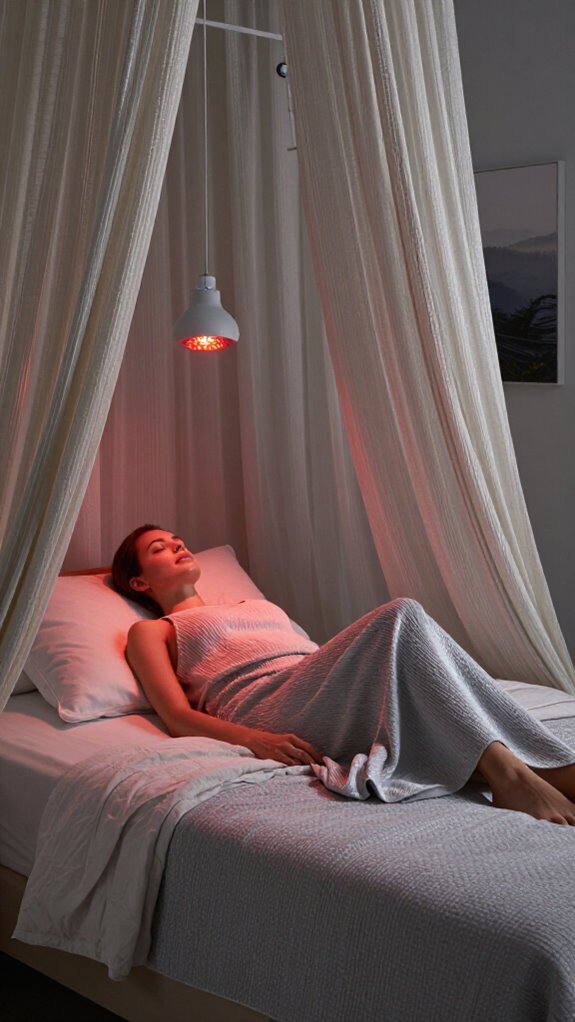
I’m crafting my bedroom ambiance to achieve environmental harmony by leveraging principles from Circadian Realignment and Neurowellness.
I’ll utilize Red Light Therapy, as researched by experts like Dr. Michael Breus, to sync my internal clock.
By incorporating bio-wicking textiles, such as bamboo and silver-infused fabrics, I’m regulating my body temperature. Installing top thermal curtains can further stabilize room temperature by blocking heat transfer through windows.
Optimal bedroom temperature is another crucial factor, as maintaining a cool room between 60-67°F helps your circadian rhythm function properly.
This synergy of elements creates a sleep-conducive environment, allowing my nervous system to surrender to restful slumber, fostering a restorative sleep experience.
Embracing Separate Sleep Spaces for Better Health
As we reevaluate our sleep priorities, it becomes evident that separate sleep spaces can be a pragmatic solution for optimizing rest. By abandoning shared spaces that disrupt sleep harmony, individuals can recalibrate their biological rhythms. This approach is particularly valuable for those experiencing hormonal changes that affect sleep architecture, such as pregnant individuals who often struggle with insomnia and disrupted rest patterns.
Key benefits include:
- Enhanced Chronotype Optimization, as seen in research by Dr. Michael Breus
- Reduced sleep fragmentation due to disparate sleep schedules
- Increased flexibility in bedroom temperature and ambiance
- Improved overall well-being through tailored sleep environments, akin to those advocated by sleep experts like Matthew Walker.
This autonomy allows for a more subtle approach to sleep, yielding better health outcomes. To further enhance individualized sleep quality, partners can explore binaural beats audio as part of their separate, designer sound systems for deeper rest.
New Sleep Trends Emerge
I’m seeing a shift towards Nervous System Regulation, with techniques like Vagus Nerve Stimulation and Aromatherapy practices including essential oils for bedroom relaxation to calm the nervous system and Acoustic Pacing influencing brainwaves. Sleep essentials now include Light Hygiene practices, such as Morning Light Anchoring and Red Light Therapy, which are redefining relationship dynamics by prioritizing Chronotype Optimization. Bamboo bedding materials are gaining recognition for their temperature-regulating properties that support these optimized sleep environments.
Experts like those behind At-Home Diagnostics are empowering individuals to take control of their sleep health.
Bio-Wicking Sleepwear for Comfort
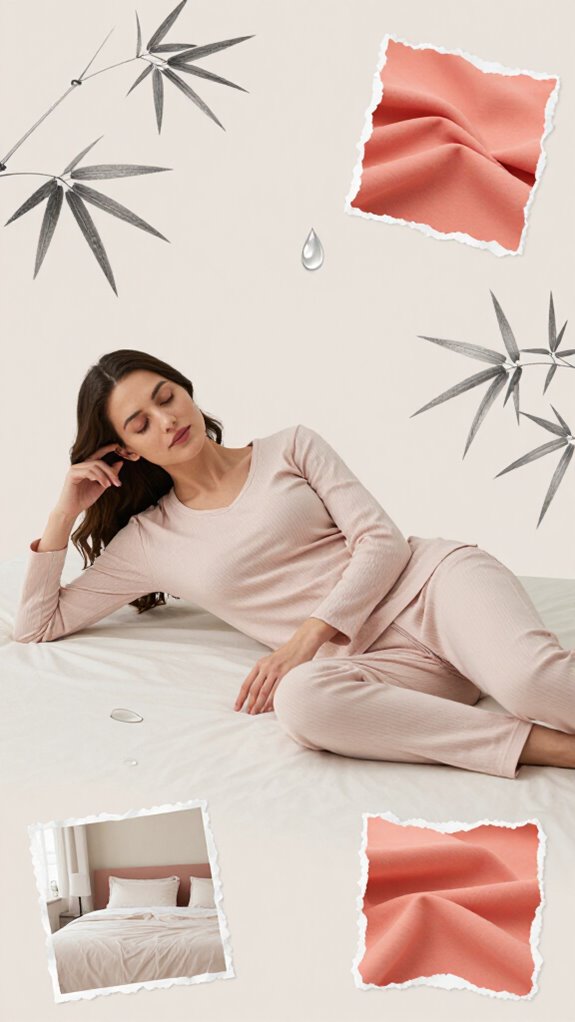
The pursuit of a restful night’s sleep has led to a renewed focus on the oft-overlooked “micro-environment” surrounding our slumber, with temperature playing an essential role in determining sleep quality. Breathable pajamas provide an effective solution by allowing air circulation and preventing overheating during the night.
I’m drawn to bio-wicking sleepwear materials that regulate body heat.
Some benefits of bio-wicking fabrics include:
- Moisture management through breathable fibers
- Temperature regulation using phase-change materials
- Antimicrobial properties from silver-infused fabrics
- Softness and comfort from bamboo-derived textiles
I choose these materials for their bio-wicking benefits, which enhance my sleep quality by maintaining a stable body temperature, a vital aspect of a restful night’s sleep. For those seeking similar comfort, Bamboo sleepwear for women offers an excellent balance of softness and natural temperature regulation through its breathable, moisture-wicking fibers.
Sleep Autonomy Gains Popularity
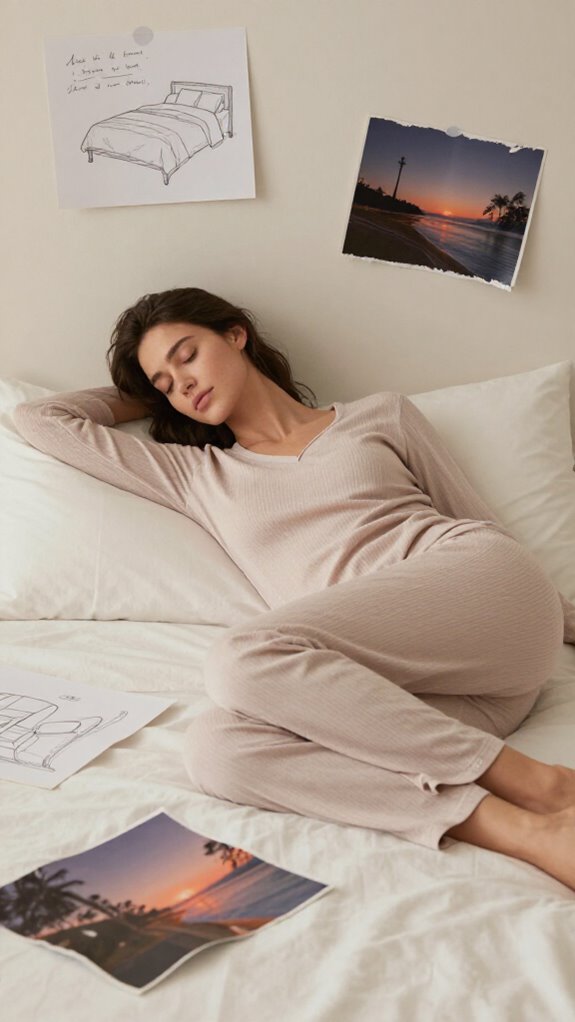
Nearly a third of American couples are opting for separate sleeping arrangements, a phenomenon now rebranded as “Sleep Autonomy.” I’m part of a growing demographic prioritizing individual sleep needs over traditional shared sleeping arrangements, a decision supported by research on sleep concordance and its complex relationship with marital satisfaction and sleep quality. Studies show 60% of separate sleepers rate their sleep quality higher than shared bed sleepers, exemplifying the benefits of Sleep Autonomy on couple dynamics. Weighted relaxation products, commonly used for stress relief and better rest, may help individuals optimize their sleep environment when practicing Sleep Autonomy. Research has indicated that attachment security plays a significant role in determining the impact of shared sleeping arrangements on sleep quality. Creating a personalized sleep sanctuary can be enhanced with thoughtful design choices like stylish window sheers, which allow soft natural light during the day while maintaining privacy for uninterrupted rest.
FAQ
How Do I Explain Sleep Autonomy to Family and Friends?
I’m embracing Sleep Autonomy by prioritizing my personal comfort and sleep preferences. It’s not about ‘sleep divorce.’
Research by Dr. Breus shows that chronotype mismatch disrupts sleep quality.
I optimize my sleep environment using Light Hygiene techniques, like Morning Light Anchoring, and Temperature-Tech Apparel from brands like Smartwool, ensuring a restful night’s sleep, uncompromised by conflicting biological rhythms, thereby nurturing overall wellness.
What Are the Financial Implications of Maintaining Separate Bedrooms?
I’m not swayed by the notion that separate bedrooms are a financial burden.
Research by Dr. Russell Foster on chronotype mismatch suggests that sleep autonomy is a worthwhile investment.
Maintaining separate bedrooms will likely increase bedroom costs and bedding expenses, but I find that the benefits far outweigh the costs, much like upgrading to a high-end mattress from brands like Vispring or Hästens, which can enhance overall well-being.
Can Sleep Divorce Lead to Emotional Distance in a Relationship?
I don’t think sleep divorce necessarily leads to emotional distance; instead, it can foster emotional safety by acknowledging disparate sleep patterns.
By prioritizing personal space, couples can maintain harmony in their relationship dynamics.
Research by Dr. Russell Foster on chronotype mismatch supports this, showing that sleep autonomy can be beneficial.
Brands like Sleep Number are now offering solutions for separate sleep environments, promoting a more refined understanding of individual sleep needs.
How Do We Still Maintain Intimacy With Separate Sleep Spaces?
I maintain intimacy with separate sleep spaces by cultivating intimacy practices and shared rituals.
By scheduling joint morning meditation sessions, akin to Dr. Andrew Weil’s guided practices, and synchronizing our wake-up times, we foster connection.
We also prioritize shared activities, like reading together before drifting off to our respective sleep sanctuaries, ensuring our bond remains strong despite divergent chronotypes, much like couples embracing Sleep Autonomy.
Are There Any Age Limits for Adopting Sleep Autonomy Practices?
I’m not aware of any specific age limits for adopting sleep autonomy practices.
Research by Dr. Till Roenneberg suggests that sleep patterns evolve across the lifespan, with adolescents and young adults typically being night owls, while older adults tend to be early risers.
Considering these age-related chronotype shifts, individuals of any age can benefit from sleep autonomy, as it allows for tailored sleep environments that accommodate unique biological rhythms and needs.
References
- https://pmc.ncbi.nlm.nih.gov/articles/PMC6702108/
- https://www.frontiersin.org/journals/psychiatry/articles/10.3389/fpsyt.2021.641102/full
- https://pmc.ncbi.nlm.nih.gov/articles/PMC4434560/
- https://www.sleepmeeting.org/adults-sleep-better-together-than-they-do-alone/
- https://aasm.org/new-survey-data-sleep-divorce/
- https://www.thecardiologyadvisor.com/news/couples-sleep-outcomes-relationship-quality/
- https://www.naturepedic.com/couple-sleep-together-study
- https://medicalxpress.com/news/2025-07-survey-reveals-americans-engage-divorce.html
- https://sleepresearchsociety.org/wp-content/uploads/2024/08/Pulling-Back-the-Sheets-Exploring-the-Impact-of-Sleep-on-Couples-Relationships.pdf
- https://academic.oup.com/sleepadvances/article/5/1/zpae049/7717581