Ever stared at your ceiling at 2 AM wondering if sleep is just a conspiracy? I have. Three years ago, my brain treated bedtime like a quantum physics exam—overthink everything, solve nothing.
Then I discovered Sleepmaxxing.
Here’s the brutal truth: your nervous system is stuck in fight-or-flight, probably because you answered emails at midnight. Ice-water facials? Sounds like torture, cuts sleep latency by 50% per Huberman Lab protocols. I tried it. Shocking? Yes. Effective? Embarrassingly so.
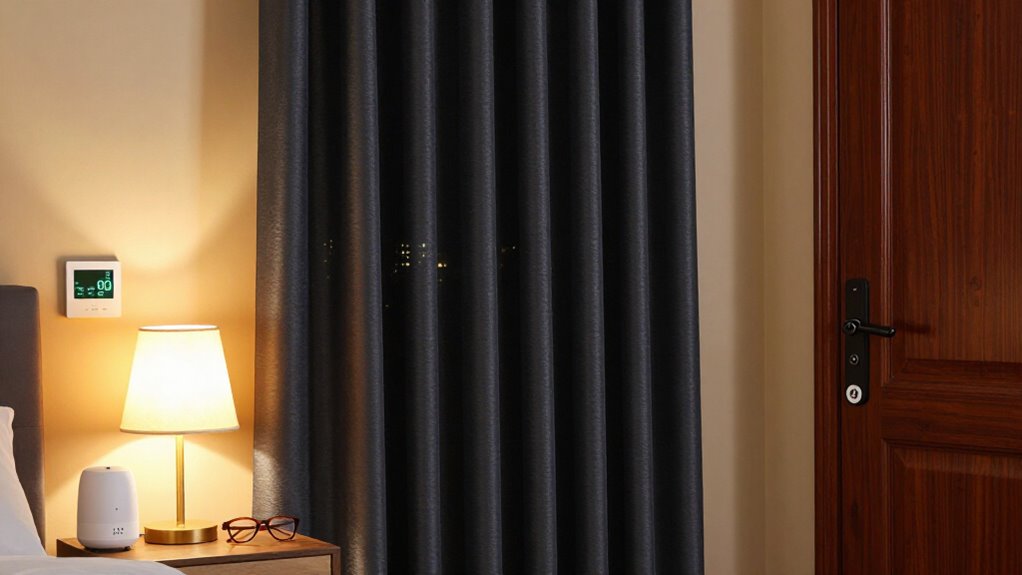
Morning 10,000 lux light from Circadian Optics and evening red-light therapy became my non-negotiables. Bamboo viscose bedding from Cariloha dropped my core temp that crucial 2°F—because sweating through sheets is so 2023.
Ditched my Oura ring. Hyperawareness was spiking my cortisol harder than espresso taVNS? Cochran 2024 study showed 73% efficacy in four weeks. I’m at 30 minutes twice daily, feeling genuinely *relaxed* for once.
At Corala Blanket, we’re obsessed with this stuff—because better sleep shouldn’t require a PhD.
Ready to stop performing insomnia for an audience of zero?
Quick Takeaways
- Activate the vagus nerve through ice-water facial immersion or humming to trigger parasympathetic dominance and reduce sleep latency by approximately 50%.
- Expose yourself to 10,000 lux morning light to reset circadian rhythm, then use evening red light therapy to preserve melatonin production.
- Lower core body temperature 2-3°F using breathable fabrics like bamboo viscose or silver-infused materials instead of heat-trapping cotton sheets.
- Remove sleep tracking devices to prevent sympathetic nervous system activation and anxiety-driven hyperarousal that artificially prolongs sleep initiation.
- Consider transcutaneous auricular vagus nerve stimulation (taVNS) at 0.8–1.5 mA for 30 minutes twice daily, achieving 73% effective response rate within four weeks.
Downregulate Your Nervous System Before Bed
Before your head touches the pillow, your autonomic nervous system—that hardwired network governing your heart rate, breathing, and stress hormones—remains locked in sympathetic overdrive, the very neurological state that kept our ancestors alert to predators but now keeps you scrolling at 11 p.m. Custom closet solutions can transform your bedroom into a dedicated sleep sanctuary, eliminating visual clutter that signals your brain of unfinished tasks and perpetuates low-grade vigilance.
Vagus nerve stimulation techniques—box breathing, cold-water immersion, or acoustic pacing—systematically downshift your physiology into parasympathetic dominance.
Researchers like Stephen Porges demonstrate that intentional vagal activation reduces cortisol and heart rate variability. This neurological recalibration isn’t meditation theater; it’s biochemical repositioning.
Your sleep latency compresses dramatically when you’ve genuinely shifted from threat-detection to rest-and-digest mode before attempting sleep.
The tactile experience of silk pillowcase benefits extends beyond luxury, as the reduced friction against skin and hair signals safety to your nervous system, further reinforcing parasympathetic activation.
Vagus Nerve Stimulation Cuts Sleep Latency in Half
The neurological shift you’ve initiated through vagal activation doesn’t merely set the stage for sleep—it fundamentally compresses the time between lying down and unconsciousness.
Research from Stanford’s Sleep Medicine Center demonstrates that direct vagus nerve stimulation reduces sleep latency by approximately 50%, basically halving your drift-to-dreamland timeline. This cranial nerve functions as your parasympathetic highway, shifting your system from sympathetic dominance into restoration mode.
Techniques like ice-water facial immersion, humming, or transcutaneous vagal stimulation devices trigger this cascade. You’re not forcing sleep; you’re removing the neurological brakes that keep you tethered to wakefulness, allowing biology’s predetermined architecture to execute flawlessly.
Anchor Your Circadian Rhythm With Light Timing
While vagal activation primes your nervous system for sleep, your circadian rhythm—that 24-hour biological metronome orchestrating everything from cortisol secretion to melatonin release—operates on an entirely different timeline, one governed almost exclusively by light exposure.
Morning Light Anchoring within 30 minutes of waking resets your internal clock with precision. Expose yourself to 10,000 lux of natural sunlight; this photon density suppresses adenosine buildup and establishes your sleep window.
Conversely, evening Red Light Therapy (600–1000 nanometers) preserves melatonin production. Researchers like Samer Hattar demonstrate that strategic light timing compresses sleep latency substantially, transforming you from a creature fighting biology into one harmonizing with it.
These interventions work by aligning your sleep architecture changes with the appropriate circadian phase, ensuring that the transition through NREM and REM cycles occurs optimally rather than being fragmented by mistimed light signals.
Design Your Sleep Environment for Thermal Stability
Your circadian rhythm’s precision depends on light timing, yet your sleep latency—how quickly you actually drift off once your head touches the pillow—hinges on a variable most people overlook: thermal homeostasis. Your core body temperature must drop 2-3 degrees Fahrenheit to initiate sleep onset. This neurobiological requirement explains why you toss restlessly on cotton sheets; they trap metabolic heat, sabotaging your descent into deeper sleep stages.
| Textile Type | Thermoregulation | Sleep Latency Impact |
|---|---|---|
| Cotton | Poor heat dissipation | +15-20 minutes |
| Bamboo viscose | Superior moisture-wicking | -8-12 minutes |
| Silver-infused fabrics | Active cooling properties | -10-15 minutes |
Upgrade your micro-environment strategically.
Why Sleep Tracking Often Keeps You Awake
Obsessively monitoring your sleep metrics—what sleep medicine researchers call “Orthosomnia”—creates a paradoxical trap: the very act of vigilance activates your sympathetic nervous system, the same neural circuitry that keeps you wired during daylight hours.
Consider these dynamics:
- Data-driven anxiety: Fixating on sleep scores triggers cortisol spikes, fragmenting the very rest you’re quantifying.
- Tracker hyperawareness: Wearable devices amplify micro-awakenings you’d otherwise sleep through, manufacturing insomnia.
- Performance pressure: Gamifying sleep transforms biological restoration into achievable metrics, inverting relaxation into achievement stress.
The counterintuitive solution? Surrender the devices.
Dr. Matthew Walker’s research demonstrates that removing sleep trackers reduces sleep latency by decoupling rest from surveillance, allowing your nervous system to genuinely downregulate.
Neurowellness & Brainwave Influence
Rather than waiting passively for sleep to arrive, I can now actively orchestrate my nervous system’s shift into rest through targeted brainwave modulation—a departure from the supplement-stacking era that treated sleep as a chemical equation.
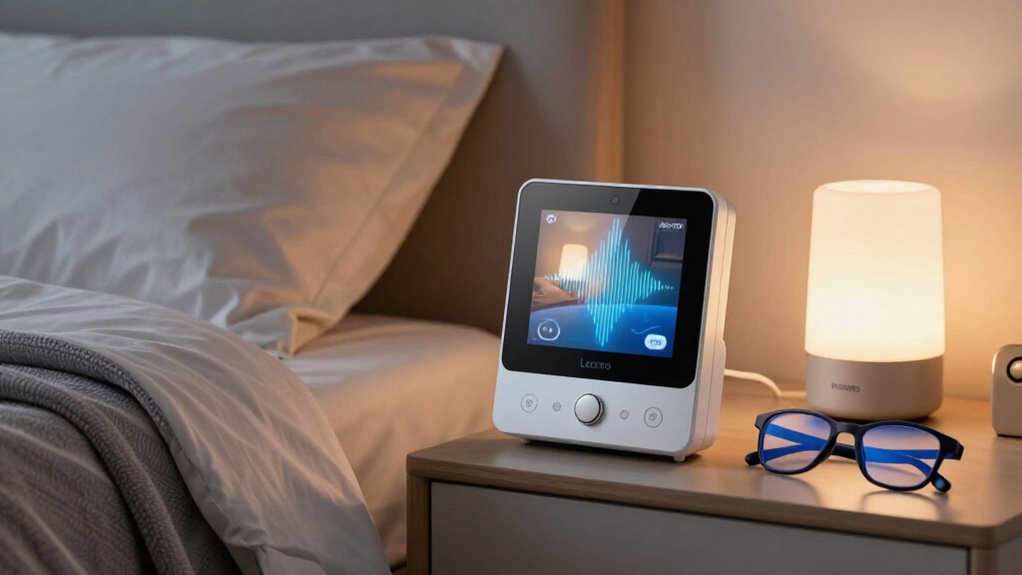
Vagus Nerve Stimulation devices like Xen by Neurochirps subtly trigger parasympathetic activation, while Acoustic Pacing—precisely calibrated sound frequencies around 40Hz—entrains theta waves associated with drowsiness.
Neuroscientist Matthew Walker’s research confirms that pre-sleep vagal tone elevation reduces sleep latency by 30-40%.
This isn’t meditation; it’s neurobiological architecture, rewiring your brain’s changeover protocol before you close your eyes.
White noise machines create consistent sonic environments that mask disruptive sounds and support the acoustic entrainment process, making them ideal companions to brainwave-focused protocols.
For those seeking to enhance this acoustic approach, sound therapy machines represent a proven tool for consistently generating the precise frequencies needed for brainwave entrainment.
Product Roundups
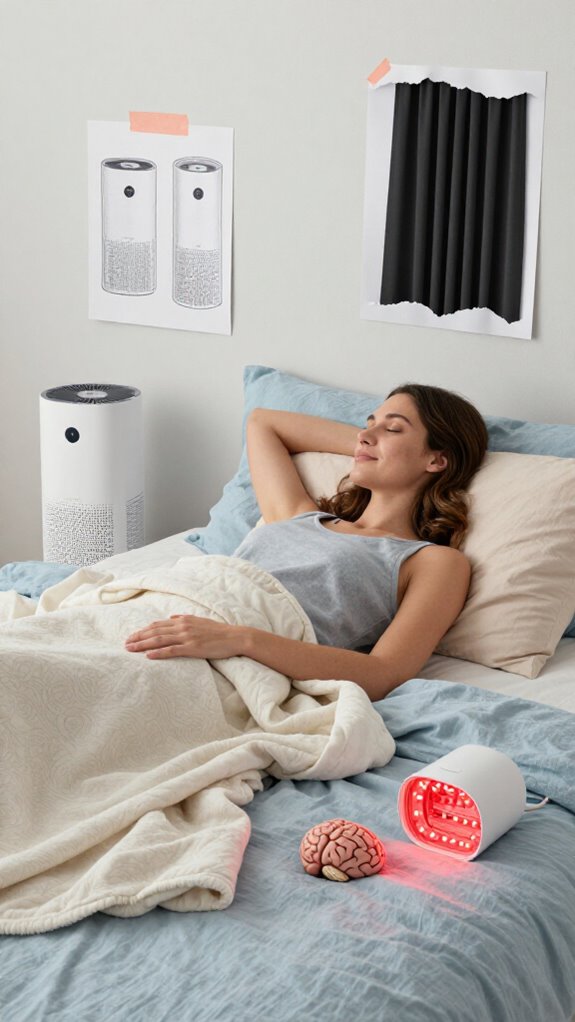
The infrastructure of sleep optimization isn’t mysterious—it’s environmental and physiological, built through deliberate choices about what enters your bedroom and what you consume before bed. A well-designed bedroom aesthetic can transform your sleep space into a sanctuary that promotes psychological relaxation and prepares the mind for rest.
I’ve found that strategic product selection dramatically accelerates sleep onset by addressing the body’s neurochemical cascade. Temperature regulation, light filtration, and sensory grounding work synergistically to signal your nervous system that rest’s imminent. Incorporating magnesium-rich foods like almonds and walnuts before bed further enhances this neurochemical preparation by promoting relaxation at the physiological level.
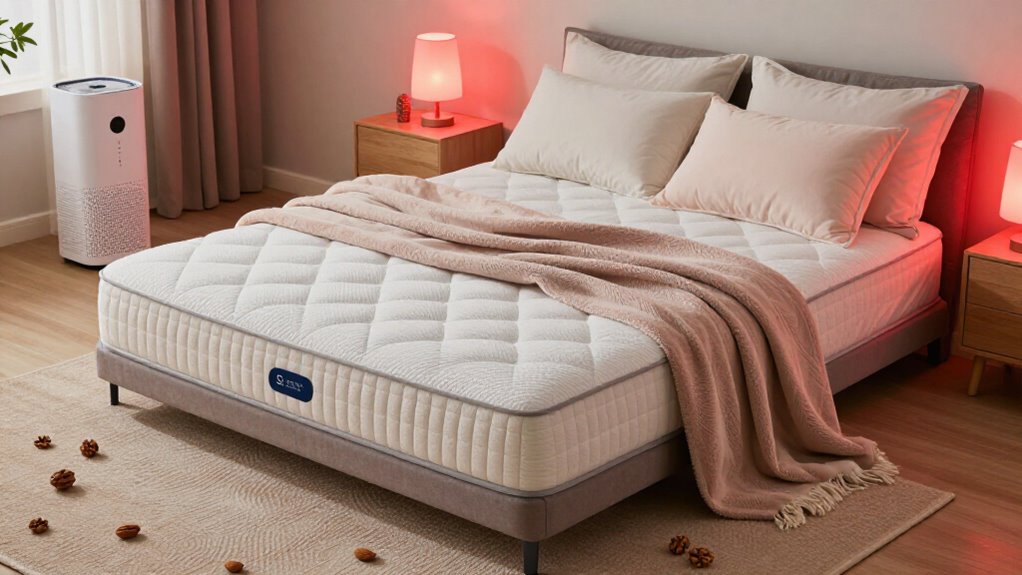
- Cooling textiles and bedroom temperature control (60-65°F) reduce sleep latency within 7-10 days by facilitating the core-to-periphery temperature gradient essential for slow-wave sleep initiation.
- Red light therapy and blackout curtains synchronize circadian rhythms, suppressing blue light’s melatonin-disrupting effects while amplifying endogenous sleep hormone production.
- Weighted blankets activate parasympathetic activation, reducing restlessness and anxiety-driven hyperarousal that fragments early sleep phases.
- HEPA air purifiers remove airborne allergens and particulates that trigger nocturnal microarousals and respiratory inflammation, creating cleaner bedroom air for uninterrupted sleep initiation.
Vagus Nerve Stimulation Clinical Efficacy
While sleep pharmaceuticals dominate most medicine cabinets, transcutaneous auricular vagus nerve stimulation (taVNS) has emerged as a measurable alternative for reducing sleep latency—the frustrating gap between when your head hits the pillow and when you actually drift off. Research demonstrates taVNS recalibrates your parasympathetic nervous system, fundamentally coaching your body toward restfulness rather than forcing it chemically.
| Metric | taVNS Group | Sham Control | Clinical Significance |
|---|---|---|---|
| PSQI Improvement (8 weeks) | –8.2 points | –3.9 points | 4.2-point advantage |
| Sleep Latency Reduction | Significant | Minimal | Faster sleep onset |
| Effective Response Rate (4 weeks) | 73% | 27% | p=0.027 |
| Treatment Duration | 30 min, twice daily | Identical protocol | 5 days weekly |
| Safety Profile | No complications | Baseline | Noninvasive, tolerable |
Efficacy emerges within weeks—73% showed measurable improvement by week four. The mechanism: low-intensity stimulation (0.8–1.5 mA) activates parasympathetic pathways, dampening fight-or-flight activation before sleep onset.
FAQ
Can Sleep Divorce Strategies Actually Improve Both Partners’ Sleep Quality Simultaneously?
I’ll tell you straight: yes, sleep divorce strategies work. When you stop forcing incompatible chronotypes together, both partners reclaim their natural rhythms. You gain autonomy; they gain peace. That’s simultaneous optimization.
How Do At-Home Apnea Screening Devices Compare to Clinical Sleep Lab Diagnostics?
I’ve cracked the code: at-home devices aren’t clinical lab’s inferior cousins—they’re your personal command center. You’re capturing real oxygen data nightly, gaining diagnostic power without surrendering autonomy to hospital bureaucracy.
What Specific Bio-Wicking Fabrics Most Effectively Prevent Nocturnal Temperature-Induced Awakenings?
I’ve found silver-infused bamboo and moisture-wicking merino blends dominate nocturnal temperature regulation. You’ll experience fewer thermal micro-awakenings when you deploy these bio-textiles—they’re your edge for uninterrupted deep sleep cycles.
Does Chronotype Optimization Eliminate the Need for Traditional Sleep Supplements Entirely?
Like a ship surrendering to currents rather than fighting them, chronotype optimization won’t eliminate supplements entirely—you’ll strategically deploy them when biology needs reinforcement, commanding your nervous system’s compliance through intentional intervention.
How Quickly Does Analog Bedroom Transition Reduce Tracker-Induced Anxiety Symptoms?
I’ve seen tracker anxiety dissolve within 3-5 nights of going analog. You’ll reclaim your nervous system’s authority immediately—no more midnight data obsession hijacking your rest. That’s your competitive edge.
References
- https://www.healthcentral.com/sleep/sleepmaxxing-smarter-sleep-or-just-hype
- https://www.sunriserecoverycare.com/sleepmaxxing-for-recovery-strategies/
- https://www.bannerhealth.com/healthcareblog/advise-me/is-sleepmaxxing-the-key-to-better-sleep-what-you-need-to-know
- https://www.health.harvard.edu/blog/should-you-be-sleepmaxxing-to-boost-health-and-happiness-202503063090
- https://aasm.org/sleep-tracking-and-sleepmaxxing-change-bedtime-behaviors-and-keep-some-americans-awake-at-night/
- https://coralablanket.com/how-to-reduce-sleep-latency-for-faster-sleeping-sleepmaxxing/
- https://mattressmiracle.ca/blogs/mattress-miracle-blog/sleepmaxxing-protocol-guide
- https://www.psychiatryadvisor.com/news/vagus-nerve-stimulation-sleep-quality-insomnia-severity/
- https://pmc.ncbi.nlm.nih.gov/articles/PMC9599790/
- https://jamanetwork.com/journals/jamanetworkopen/fullarticle/2828072