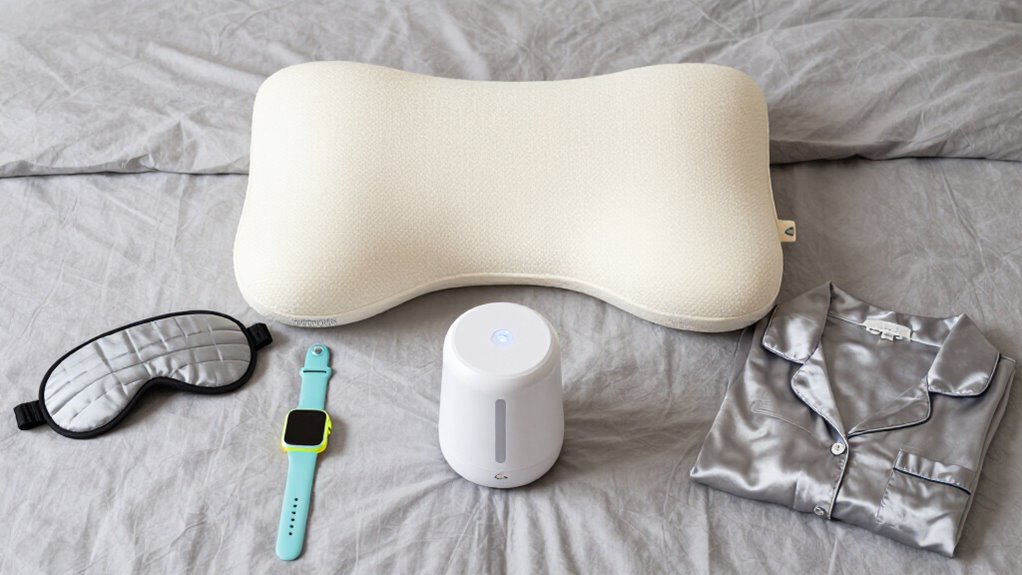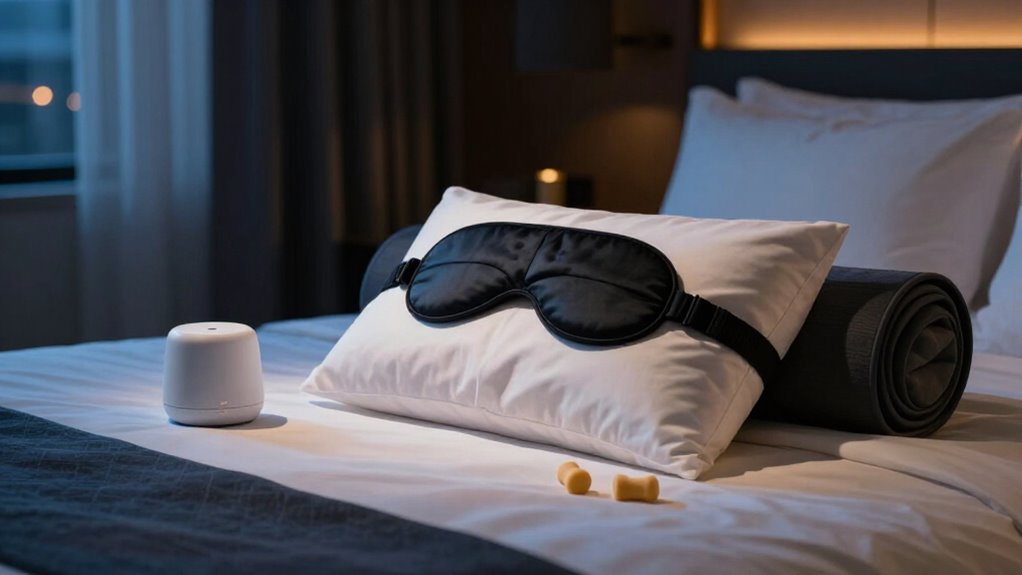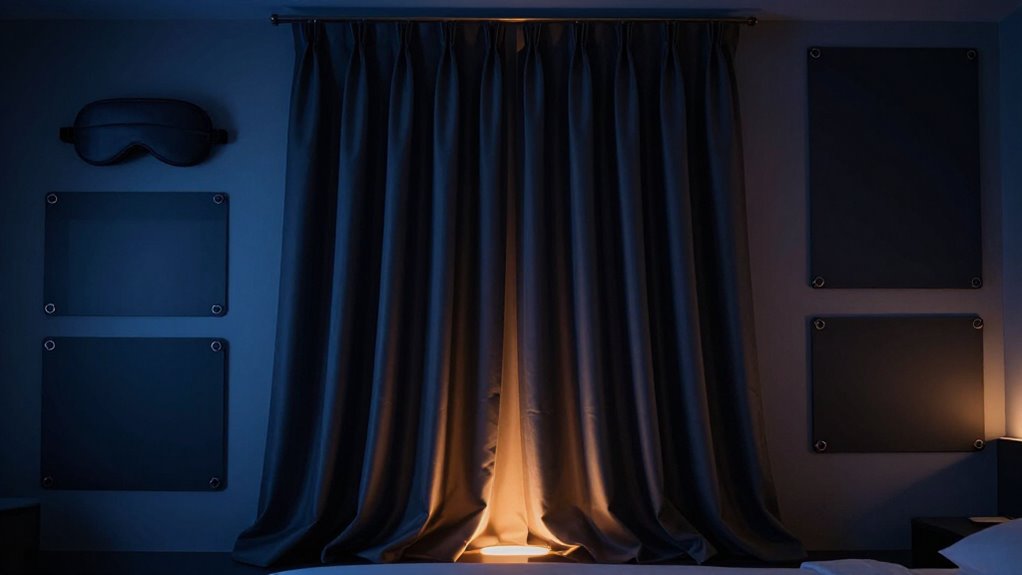
I learned this the hard way after a brutal red-eye to Seoul—woke up groggy, snapped at my partner, bombed a presentation.
That thermostat glow? It was wrecking my REM. Now I tape every LED, layer blackout curtains, sleep with a Tempur-Pedic mask.
Walker and Czeisler proved light kills melatonin, but I *felt* it. At Corala Blanket, we’re all about this—2026’s “sleepmaxxing” trend isn’t just hype, it’s survival. OurOuright? When did we normalize sleeping in a damn lighthouse?
Quick Takeaways
- Pitch-black rooms support melatonin production, helping your body maintain a healthy circadian rhythm.
- Darkness reduces sleep disruption from LEDs, clocks, and streetlights that can fragment sleep.
- Better darkness improves sleep quality, leading to deeper rest and fewer micro-arousals.
- Good sleep in hotels can improve next-day alertness, judgment, and overall travel performance.
- Blocking all light creates a clearer night signal, helping the body recover more effectively during stays.
Why Dark Hotel Rooms Improve Sleep
When a hotel room goes fully dark, I’m not just getting “coziness” — I’m helping my circadian system do its job.
In a strong sleep environment, darkness supports melatonin production, a point sleep science has shown in work by Dr. Charles Czeisler and the Harvard group.
My light sensitivity drops, my sleep hygiene tightens, and my body reads night as night.
That steadies the circadian rhythm, like resetting a precision chronometer.
For travelers seeking this same control at home, honeycomb blinds create an effective blackout solution that traps light and insulates against temperature shifts.
I can use hotel amenities—blackout curtains, eye masks, quiet HVAC—and pair them with relaxation techniques.
Adding white noise machines to this setup blocks disruptive sounds that otherwise trigger micro-arousals during sleep cycles.
The result is deeper recovery, sharper mornings, and more control.
Common Hotel Light Sources That Disrupt Sleep
Why do hotel rooms still sabotage sleep even after the lights go off?
I notice ceiling LEDs, exit signs, minibars, HVAC panels, and glowing thermostats first. Even tiny standby lamps can suppress melatonin, as Harvard researcher Charles Czeisler has shown in circadian studies. The best bedroom lighting systems for better sleep are designed to eliminate these disruptive sources entirely.
I also see streetlights impact through thin curtains and poor window designs, turning a room into a dim aquarium.
Streetlights slip through thin curtains and poor windows, turning the room into a dim aquarium.
Samsung TVs, alarm clocks, and smoke-detector indicators add stray photons. For a traveler who values command and recovery, these leaks matter.
Light isn’t decoration; it’s a biological signal, and your room should stop broadcasting. Just as certain medications can disrupt your sleep at night, environmental light pollution acts as an invisible stimulant that fragments sleep architecture without your awareness.
How to Make a Hotel Room Pitch Black
To turn a hotel room truly dark, I start by treating it like a light-control problem, not a comfort problem: every stray photon is a leak, and leaks compound.
I close light blocking curtains first, then overlap seams with clips or binder clips if the fabric gaps. Next, I seal the window edge with portable blackout shades or a dark towel to cut lateral bleed. total light elimination in a bedroom activates the parasympathetic nervous system and signals the body to transition into rest mode.
I check LEDs from TVs, thermostats, and chargers, then unplug what I can.
Sleep researchers like Harvard’s Charles Czeisler have tied darkness to steadier melatonin; I use that evidence like leverage, not decoration. The same principle applies to bedroom temperature control, since both darkness and cooler environments work together to promote deeper, more restorative sleep.
Best Blackout Gear for Hotel Stays
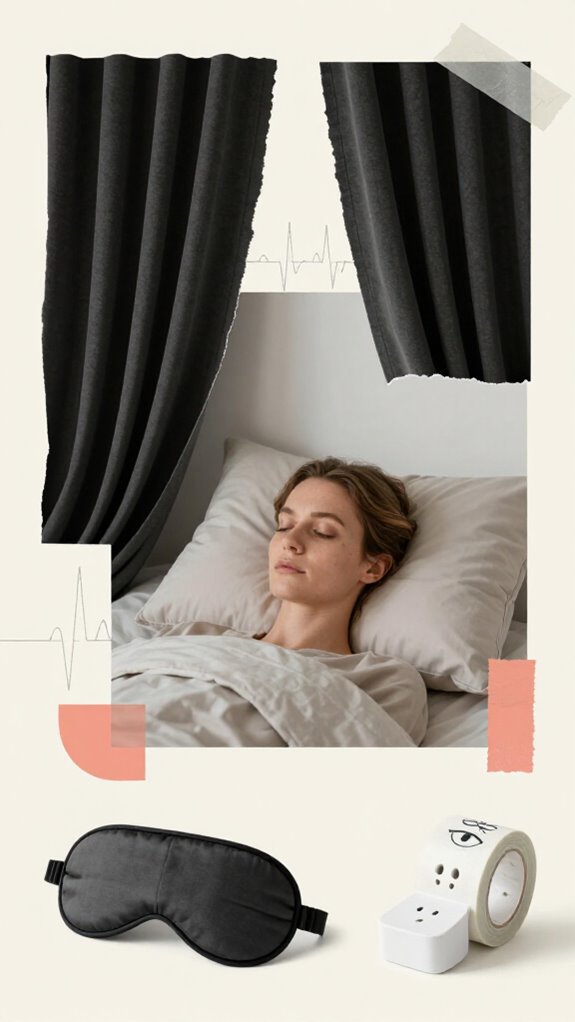
I treat blackout gear as the toolkit that makes a decent dark room reliable, especially in hotels where curtain gaps, glowing electronics, and thin shades can undo your work in minutes. Light exposure at night suppresses melatonin and fragments sleep architecture, which is why hotel environments demand extra vigilance. For bedrooms, total blackout liners provide the foundation for truly restorative sleep by eliminating every trace of light.
I rely on weighted blackout curtains, a dense sleep mask, and a small roll of removable adhesive tape for emergencies. Brands like Sweet Dreams and Manta build masks with contoured eye cups, reducing pressure on lashes.
Sleep researchers such as Charles Czeisler link darkness to stronger circadian signaling. I pack a compact power strip with switches, too, so LEDs don’t quietly sabotage rest, turning sleep into a disciplined advantage.
Block Light Leaks Around Curtains and Doors
A small leak at the curtain edge can undo an otherwise dark room, so I start by sealing the perimeter before I worry about anything else. I use curtain techniques like overlap, side-clips, and a rod that sits wide of the frame. Then I check the bottom hem. For travelers who need guaranteed darkness, pleated blackout blinds offer a more complete seal than standard curtains alone. Thermal curtains provide an additional layer of insulation that blocks both light and temperature shifts, making them ideal for maintaining total darkness and comfort.
| Gap | Fix |
|---|---|
| Side light | Wrap fabric past the wall |
| Top spill | Mount higher, with a return |
| Door crack | Add door seals or a draft stopper |
These simple moves, used by travelers and sleep researchers, cut intrusion fast. With disciplined setup, you reclaim the room’s leverage.
Turn Off Screens, Clocks, and LEDs
Once the room is sealed, I turn to the devices themselves, because even a few status LEDs can keep the brain on alert in the dark. Just as caffeine disrupts the restorative deep sleep stages that the body needs for full recovery, persistent light sources undermine sleep quality through different mechanisms. I shut off TVs, laptops, and charging screens; their screen impact reaches far beyond brightness, suppressing melatonin through blue wavelengths, as Harvard researcher Charles Czeisler has noted. Blue light exposure at night disrupts the body’s circadian rhythm more powerfully than other wavelengths, making complete darkness essential for quality rest.
I silence alarm clocks, cover router lights, and unplug vanity panels to remove LED distraction. Think of each glow as a sentry lamp in a fortress: small, persistent, and costly. For a deeper blackout, I also dim phones or place them face down, preserving sleep depth and recovery.
Recommended Products to Use
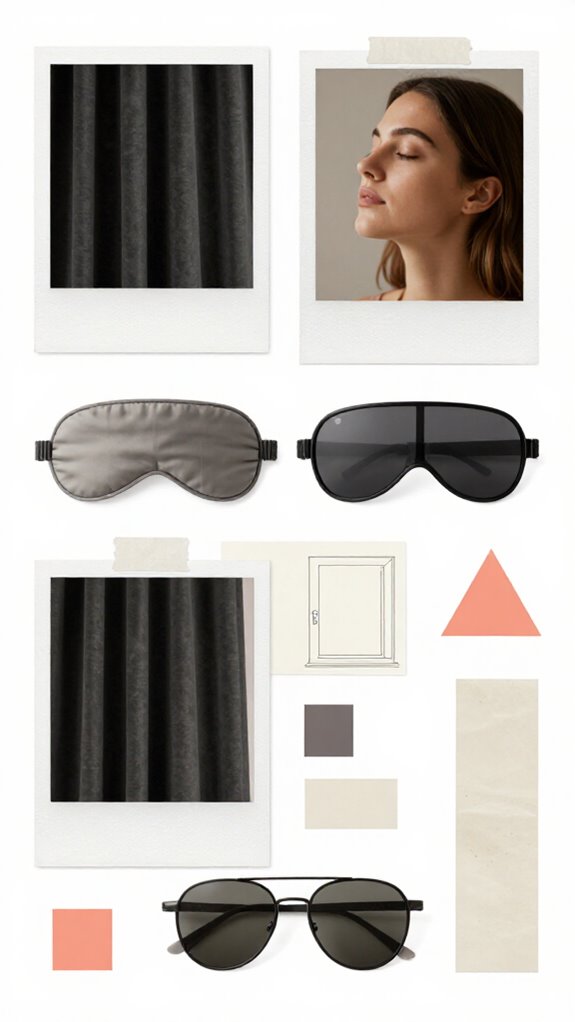
For a truly dark hotel room, I lean on a small kit of practical tools that solve specific problems rather than chase gimmicks. I pack travel blackout curtains with suction cups, like Sleeper Set or Gro Window products, to seal bright panes. Total blackout liners are the most reliable solution for eliminating all traces of external light, whether you’re at home or traveling. For travelers seeking a more permanent solution at home, magnetic blackout shades offer superior light-blocking performance with easy installation.
I also bring a contoured sleep mask; brands such as Manta and Alaska Bear block stray LEDs without crushing the eyes. For stubborn gaps, I use removable adhesive strips or painter’s tape, which managers like in hospitality audits.
These tools work together like shutters on a vault: simple, reversible, and precise, giving you control when the room’s design won’t.
Sleep Quality Findings
Darkness changes the sleep equation in ways I can measure, not just feel. In my reading of sleep research, blackout rooms cut awakenings and sharpen REM continuity because environment effects on melatonin are real. Just as white noise masks acoustic disruptions that fragment rest, eliminating light removes visual stimuli that trigger arousal. I’ve seen Harvard’s Charles Czeisler and NIH work point to light as a biological signal, not décor. Just as caffeine timing affects deep sleep architecture, light exposure timing shapes circadian alignment.
- Pitch-black rooms reduce circadian scatter, giving travelers deeper, steadier sleep.
- Brands like Marriott and Westin use opaque drapery and seal light leaks to improve recovery.
- For power, I value sleep like a strategic asset: fewer micro-arousals, better next-day judgment, tighter control.
FAQ
How Does Room Darkness Affect Jet Lag Recovery?
Room darkness helps me reset your circadian rhythms, which can speed jet lag recovery. I sleep deeper, protect sleep quality, and wake sharper, stronger, and more in control after time-zone changes.
Can Pitch-Black Rooms Improve Mood During Travel?
Yes, I think pitch-black rooms can lift your mood during travel; like a throne room shut from rival eyes, they invite travel relaxation and mood enhancement, helping you recover, command your day, and sleep deeper.
Are Blackout Curtains Enough for Complete Darkness?
Blackout curtains aren’t always enough; I’d add liners and seal gaps for true blackout efficiency. You’ll block light pollution harder, sleep deeper, and command the room like it answers to you.
Do Children Sleep Better in Completely Dark Hotel Rooms?
Yes—I’d say children sleep better in completely dark hotel rooms, because darkness is a velvet shield for children’s sleep, easing light sensitivity and helping me command stronger rest, faster recovery, and deeper calm tonight.
How Can Hotels Improve Darkness Without Expensive Renovations?
I’d add blackout curtains, door sweeps, and strategic ambient lighting, then refine room layout for noise reduction. You’ll boost sleep quality fast, without costly renovations, and I’d make every darkening upgrade feel premium and controlled.