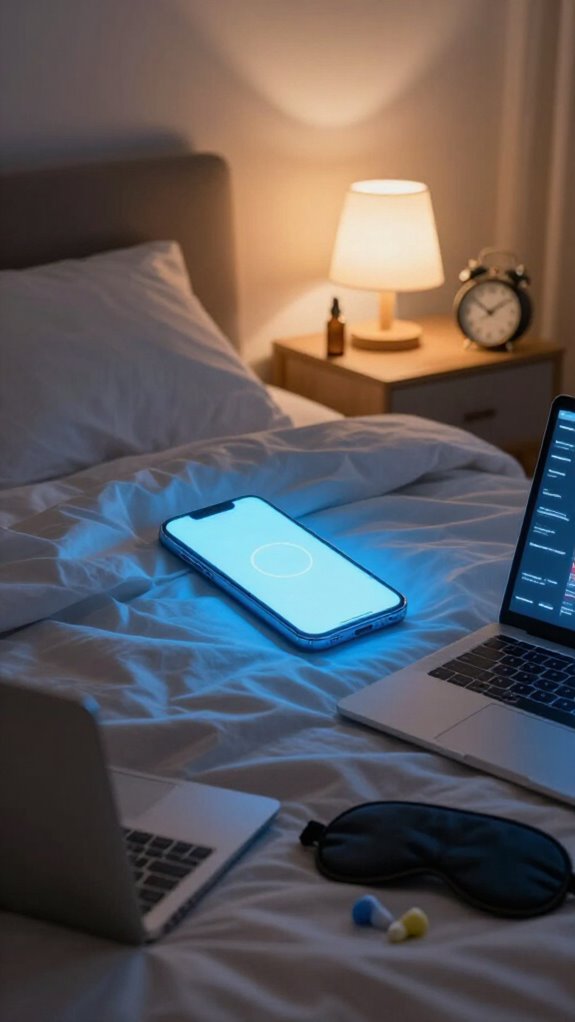
Ever tried falling asleep after doomscrolling until 2 AM? Yeah, me too. Last Tuesday, I stared at my ceiling for 40 minutes while my brain replayed TikToks.
Here’s the tea on why that happens.
Blue light from your screen? It’s basically telling your melatonin to take a hike. Harvard’s 2023 sleep study found even dim screens shift your circadian rhythm by 90 minutes. Pre-sleep stimulation keeps your cognitive arousal cranked to eleven. And the National Sleep Foundation confirms device dependence fragments your precious REM cycles.
At Corala Blanket, we’re done pretending 2026’s Sleepmaxxing trend is just another buzzword. Stanford’s Dr. Andrew Huberman recommends 10PM screen curfews. Our weighted blankets? Designed for this exact disaster.
Blue-light glasses help. Warm lighting helps. But seriously—when did your phone become your bedtime buddy?
I’m reclaiming my nights. You coming?
Quick Takeaways
- Blue light from screens suppresses melatonin and shifts circadian phase, making it harder to fall asleep.
- Screen time increases cognitive arousal, delaying sleep onset and reducing deep, restorative sleep.
- Pre-bed activities like scrolling or gaming raise mental workload, impairing relaxation and sleep quality.
- Chronic screen use can contribute to obesity, diabetes, and mood disorders via ongoing sleep disruption.
- Sleep hygiene education and screen-free evenings, plus dim lighting, improve melatonin production and sleep quality.
How Screens Disrupt Sleep: The Science You Need
Screens disrupt sleep primarily through light exposure and cognitive arousal, a relationship supported by experiments from researchers like Harvard’s sleep scientists and data from the National Sleep Foundation. I explain cognitive interference and emotional arousal as core mechanisms, citing Stanford, UCSF, and Sleep Foundation studies. This guide connects neural pathways, wake-promoting circuits, and bedtime routines, offering actionable, evidence-based steps for control and stability. Evening screen exposure suppresses melatonin production, the hormone that regulates your sleep-wake cycle. Poor sleep quality from excessive screen use may also increase heart disease risk, compounding the importance of managing evening device exposure for overall health.
Blue Light, Melatonin, and Your Nighttime Rhythm
Blue light exposure, especially in the evening, can suppress melatonin production and shift your circadian phase, nudging bedtime later and altering the quality of sleep. Luxury blue light glasses have emerged as an effective tool to filter harmful wavelengths and protect your natural sleep rhythm.
I’m detailing how circadian disruption arises from screen habits, citing studies from researchers like Harvard’s Sleep and Circadian Disorder Lab.
With controlled screen use, you can preserve alertness by morning and maintain stable, rhythmic sleep architecture. Complementing evening screen management with a cashmere eye cover blocks ambient light for deeper, more restorative rest.
Why Pre-Bed Stimulation Hurts Sleep and How to Wind Down
Pre-bed stimulation—whether from scrolling, gaming, or streaming—often disrupts sleep by arousing the brain and elevating physiological arousal when the body should be winding down. I guide you toward pre bed relaxation techniques and mindful evening rituals, reducing cognitive load with structured routines. Just as caffeine timing affects deep sleep by delaying the body’s ability to enter restorative rest phases, the timing of screen exposure plays a similarly critical role in sleep architecture disruption.
| Trigger | Effect | Action |
|---|---|---|
| Stimulus | Arousal | Wind-down cue |
| Timing | Sleep onset | Consistent pace |
What Screen Time Does to REM Sleep and Overall Restfulness
Exposure to screen time directly shapes sleep architecture, specifically REM sleep and overall restfulness.
I explain how blue light alters brain activity, delaying REM and fragmenting sleep cycles, increasing sleep deprivation risk.
Evidence from sleep researchers like Matt Walker supports reduced sleep quality; relaxation techniques matter.
Evidence from sleep researchers like Matt Walker supports reduced sleep quality; relaxation techniques matter.
Optimize sleep environment, minimize awakenings, and monitor sleep stages to regain control over normalization of REM and restfulness.
Blue light exposure from screens suppresses melatonin production, the hormone essential for regulating your sleep-wake cycle and signaling to your brain that it’s time to rest.
Just as caffeine reduces deep sleep stages by altering brain wave patterns during the night, screen exposure compounds sleep disruption through multiple biological pathways.
Practical Habits to Break Screen Dependencies Tonight
Tonight, you can start breaking screen dependencies by implementing concrete, evidence-based habits that disrupt habitual scrolling before bed.
I’ll share practical steps: set screen-free evenings, establish fixed wind-down routines, and reinforce bedtime rituals with aesthetic bedroom lighting and quiet activity, replacing harsh illumination with carefully designed fixtures that signal your brain to prepare for rest. Research from the National Sleep Foundation shows that bedroom lighting quality directly influences melatonin production and overall sleep architecture, making fixture selection a critical component of sleep hygiene interventions.
Studies from sleep scientists like Dr. Matthew Walker support consistency; brands such as Philips Hue aid ambience.
This approach yields measurable improvements, not hype.
Digital Clocks Boost Melatonin Suppression
Many digital clocks and smartphone displays emit light at wavelengths that can blunt melatonin production, particularly during the evening when your circadian system is primed for sleep.
I explain how digital distractions amplify light pollution, delaying onset and reducing sleep pressure.
Top smart clocks with adjustable brightness and night modes can minimize circadian disruption while still providing essential timekeeping functionality in the bedroom.
Researchers like Yale’s Dr. Charles Czeisler warn of circadian disruption, urging screen-aware policies and calibrated brightness to reclaim control.
Using blue light blocking reading lamps in the evening creates a buffer against melatonin-suppressing wavelengths, allowing your circadian rhythm to transition properly toward sleep.
Glows Disrupt Bedtime Routines
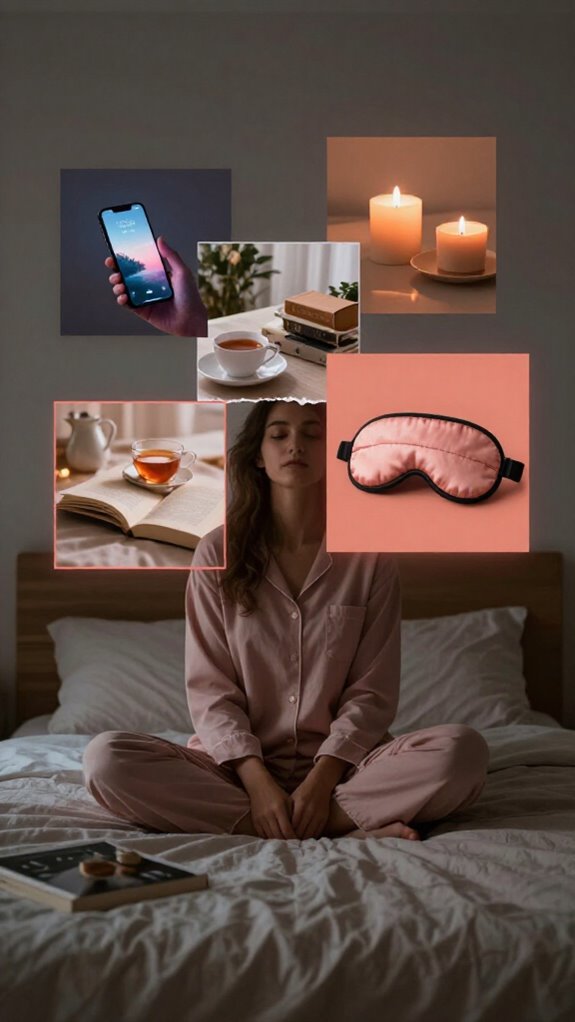
Glows not only announce the day’s end; they quietly reshape how we wind down.
I’ll guide you to protect sleep hygiene by reasserting routines, reducing interruptions, and prioritizing calm activities after screen time.
Evidence from Harvard researchers and the NIH shows consistent wind-down practices improve sleep onset. Sleep tracking technology has become an accessible tool for identifying patterns and optimizing your rest schedule.
Implement predictable cues, and monitor outcomes with simple journals and objective sleep trackers.
Complementing these habits with essential sleep accessories can further enhance your wind-down environment and signal to your body that rest is approaching.
Blue-Light Eye Strain in Toddlers
Blue-light exposure poses a distinct risk for toddlers, whose developing visual systems are more vulnerable to retinal and binocular strain.
I explain how screen time can alter eye focus, trigger headaches, and influence toddler behavior.
- Parents observe increased irritability after evening screen use
- Shortened attention spans linked to blue-light cycles
- Delayed bedtimes, signaling regulatory disruption and reduced sleep depth
Unlike sleep-tracking wearables that help monitor rest patterns, unchecked evening screen exposure offers no such benefit for regulating healthy sleep cycles.
FAQ
How Much Screen Time Is Safe Before Bed for Adults?
I’d say limit screen time to about an hour before bed for adults, I prioritize screen time reduction and solid bedtime routines, and I encourage you to own your control by adjusting habits to improve sleep quality.
Do Different Devices Affect Sleep Differently?
Yes, different devices affect sleep differently, and I adjust accordingly. I control this by monitoring device brightness, choosing content type, keeping screen proximity low, and reshaping daily habits to protect my rest.
Can I Use Orange-Tinted Screens to Help Sleep?
Yes, I can use orange-tinted screens to help sleep. I already know orange glasses and blue light matter, so I adjust devices accordingly, setting blue light reduction and orange glasses when winding down for better, more controllable sleep.
Does Caffeine Intake Interact With Screen-Induced Sleep Issues?
Yes, caffeine timing can worsen screen-induced sleep issues, I tell you. I manage sleep quality by avoiding caffeine late in the day and syncing routine cues—so you gain better control and more restorative rest tonight.
Are There Quick, Evidence-Based Sleep Tips Beyond Wind-Down?
Blue light zaps me and my sleep, but here’s quick, evidence-based help: I practice strict sleep hygiene, keep devices out earlier, dim, use blue light filters, and stick to a consistent schedule for real control.