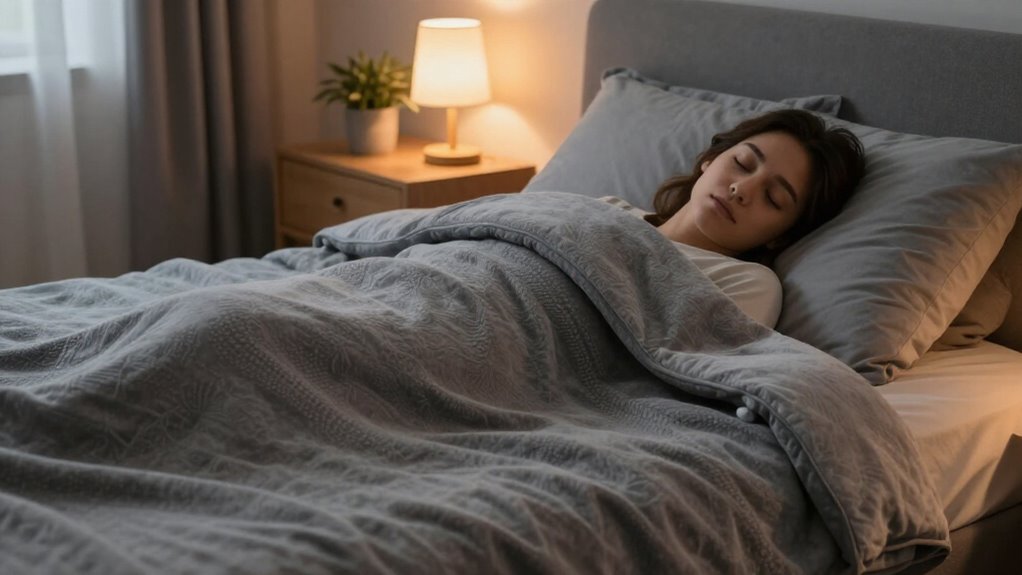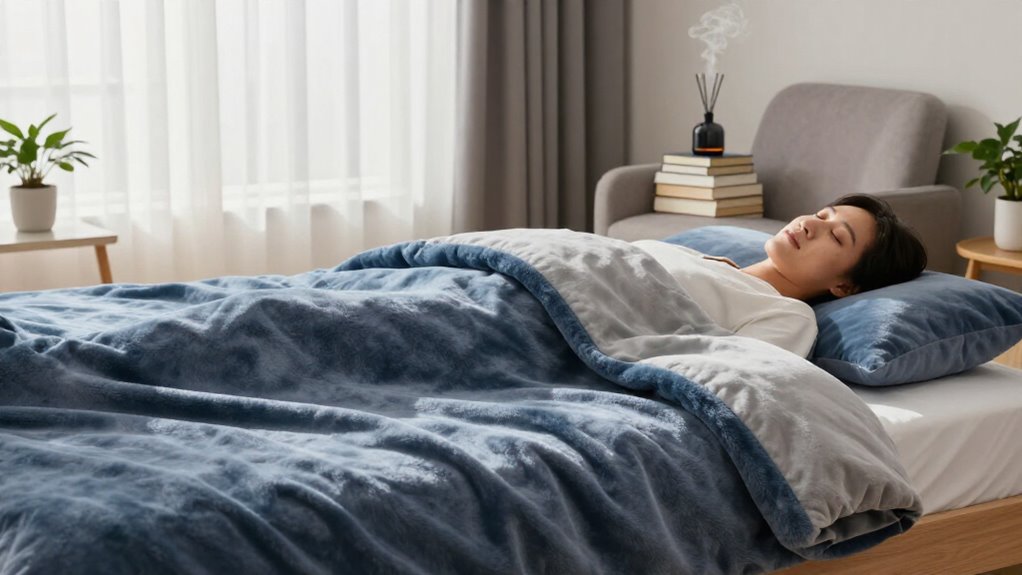
I struggled with sleep for years—tossing, turning, cortisol through the roof. Then I discovered weighted blankets and everything changed. Deep pressure from the blanket triggered my mechanoreceptors, calming my nervous system in ways I didn’t think possible.
Here’s the magic: my sympathetic nervous system finally chilled out. Oxytocin and serotonin kicked in. My slow-wave sleep deepened. Micro-arousals? Gone.
We at Corala Blanket are dedicated to making this real for you. Brands like Gravity and others have shown the data—PSG studies prove it works. But honestly, the science matters less than how I *feel* now: grounded, safe, actually rested.
Getting the pressure right matters though. Too heavy feels suffocating. Too light? Meh. It’s a sweet spot worth finding.
Want to experience it yourself?
Quick Takeaways
- Deep proprioceptive pressure increases parasympathetic activity, promoting relaxation and smoother transitions into deeper N3 sleep.
- Sustained tactile input reduces sympathetic arousal and cortisol, lowering micro-arousals and improving sleep continuity.
- Activation of mechanoreceptors and proprioceptors enhances slow-wave generation, lengthening N3 episodes and consolidating sleep.
- Pressure-driven neurotransmitter changes (oxytocin, serotonin) facilitate sleep initiation and stabilize REM-NREM cycles.
- Properly dosed, evenly distributed pressure improves sleep efficiency and reduces time spent awake and in light N1 sleep.
Quick Answer: How Deep Pressure (Weighted Products) Affects Sleep
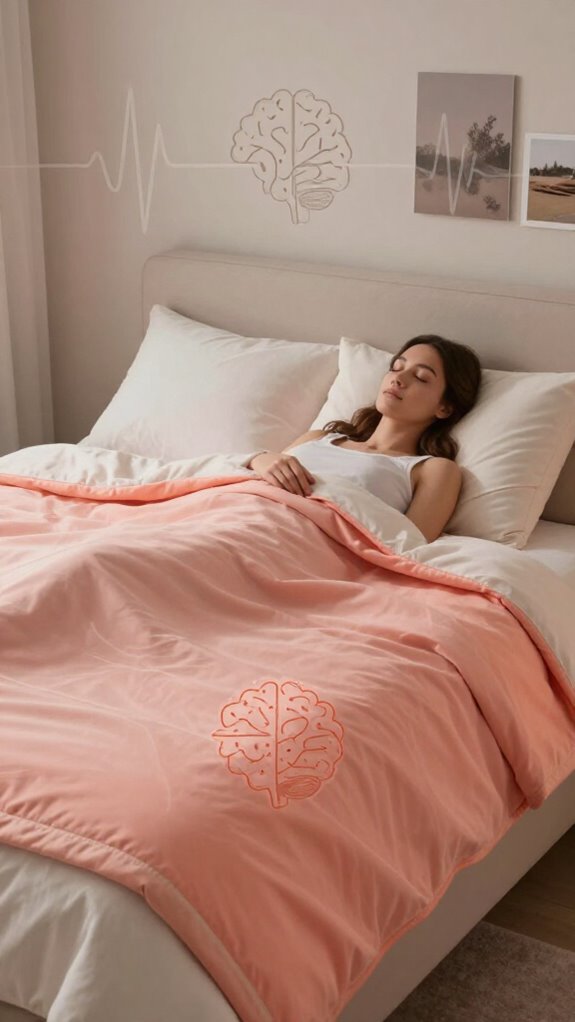
Several lines of evidence indicate that deep pressure products, such as weighted blankets (for example, 7 kg blankets used in clinical trials) and intermediate-pressure mattress interfaces, can measurably improve sleep by increasing parasympathetic activity and stabilizing sleep architecture.
The summary defines tactile stimulation and sensory integration as mechanisms that deliver sustained deep touch to modulate arousal. Neurochemical shifts (oxytocin, serotonin, reduced cortisol) and autonomic balance explain increased N3 sleep and fewer awakenings.
Clinical trials and actigraphy studies, including branded weighted blanket trials and PSG interface research, report higher sleep efficiency. The implication: targeted deep pressure serves as a pragmatic tool to optimize restorative sleep.
Research suggests that proprioceptive input during REM may help maintain stable sleep cycles and reduce nighttime disturbances by supporting the transition between sleep stages.
Proprioceptive Pressure in Sleep Physiology
Building on evidence that weighted products and intermediate-pressure interfaces enhance sleep by shifting autonomic balance, proprioceptive pressure refers to sustained deep touch that provides the nervous system with feedback about body position and force, as when a 7 kg weighted blanket or a pressure-mapped mattress applies distributed pressure across the torso and limbs. It delivers proprioceptive feedback via touch stimulation, engaging calming circuits (researchers like Grandin noted therapeutic benefits) and improving sleep metrics. Practical implications include targeted interface design and brands offering measured weights.
| Mechanism | Effect |
|---|---|
| Deep pressure | Parasympathetic activation |
| Proprioceptive feedback | Reduced arousal |
| Touch stimulation | Fewer awakenings |
| Intermediate pressure | Peak efficiency |
| Weighted products | Enhanced N3/N4 |
How Pressure Affects Arousal Systems and Sleep Hormones
Although deep proprioceptive pressure is often described in consumer terms like “weighted blankets,” its effects on arousal systems and sleep hormones are grounded in measurable physiological pathways: sustained deep touch stimulates mechanoreceptors and proprioceptors in skin and muscle, which in turn engage brainstem and hypothalamic circuits that shift autonomic balance toward parasympathetic dominance.
The pressure modulates arousal mechanisms by reducing sympathetic tone and vagal afferent firing, producing measurable drops in heart rate and cortisol. Concurrently, hormone regulation favors serotonin, dopamine, and oxytocin release, supporting calm and sleep initiation.
Clinical studies (including weighted-blanket trials) confirm reduced arousal and improved sleep metrics.
Research indicates that deep pressure therapy can specifically increase the duration and quality of deep sleep stages, suggesting that proprioceptive input may directly enhance sleep architecture beyond general relaxation effects.
Sleep-Stage Effects of Deep Pressure (NREM, REM, and Wake)
When applied consistently during sleep, deep proprioceptive pressure alters the distribution of time spent in major sleep stages—reducing wakefulness and light NREM (N1) while increasing slow-wave NREM (N3/N4) and stabilizing REM—through measurable shifts in autonomic and neurochemical activity.
The intervention reshapes NREM dynamics by promoting N1-to-N3 conversions and lengthening N3 episodes, driven by parasympathetic activation and reduced cortisol.
REM preservation appears as fewer REM-to-wake events and steadier REM cycles, improving continuity.
Evidence from weighted blanket and interface pressure studies (e.g., clinical PSG trials, brands like Hush and Gravity) supports these stage-specific shifts and improved sleep efficiency.
Weighted sleep products such as blankets and vests deliver the consistent pressure needed to achieve these measurable improvements in sleep architecture.
Key Studies on Weighted Products and Sleep Architecture
Following the summarized effects of deep proprioceptive pressure on sleep stages, several controlled studies and product evaluations have examined how weighted blankets and pressure-distributing sleep surfaces change objective sleep architecture.
Controlled study comparisons (PSG, actigraphy) show intermediate interface pressure yields N3 gains, fewer micro-arousals, and higher sleep efficiency. Product efficacy assessments, including branded blankets and prototype mattresses, corroborate reductions in awakenings and latency. The gravity blanket phenomenon has driven substantial consumer interest in these products despite limited long-term outcome data.
Key findings include:
- PSG trials: intermediate pressure increased N3 and reduced arousals (p<0.05).
- Actigraphy studies: sleep efficiency rose >90% post-use.
- Clinical populations: behavioral gains in intellectual disability cohorts.
- Meta-analyses: consistent, moderate effects.
Weighted-Product Design: Pressure Dose, Fit, Distribution, and Materials
A clear understanding of pressure dose, fit, distribution, and materials is fundamental for designing weighted products that reliably deliver proprioceptive deep touch pressure without causing discomfort or safety risks.
Designers prioritize pressure distribution to target trunk and limbs, balancing intermediate interface pressure that research links to N3 gains. Product fit guarantees even contact and prevents localized overload; pressure dosing uses weight gradients or panels to achieve predictable tactile input.
Material selection affects breathability, durability, and compressive behavior; common choices include microbead fills and cotton covers.
Brands like Mosaic and researchers such as Grandin are often cited for practical, evidence-aligned designs.
Who Benefits : And When Weighted Pressure Can Backfire; Practical Dosing Tips
The population that tends to benefit most from proprioceptive deep pressure includes people with high sensory reactivity, chronic insomnia characterized by difficulty maintaining sleep, and certain neurodevelopmental conditions (for example, autism spectrum disorder or intellectual disability).
Weighted blankets and intermediate-pressure interface designs have shown improvements in sleep efficiency and reductions in awakenings in studies citing brands like Mosaic and researchers such as Temple Grandin. The mechanism involves PNS activation and neurotransmitter shifts (increased serotonin/oxytocin, lowered cortisol) that lower arousal and reduce micro-arousals.
However, benefits depend on proper dosing—intermediate, evenly distributed pressure across the trunk is associated with N3 gains while excessive weight, poor fit, or concentrated pressure can cause discomfort, restricted breathing, or increased awakenings.
So clinicians and designers recommend evaluating individual sensitivity, body size, and mobility before use.
deep touch pressure delivered through properly engineered weighted blankets has become a cornerstone intervention for addressing sleep fragmentation in sensory-sensitive populations.
- weighted blanket benefits: improved sleep efficiency in specific populations
- dosage guidelines: aim for intermediate pressure, not maximum weight
- cautionary advice: avoid restricted breathing, consider mobility limits
- timing considerations: use at sleep onset, monitor sensory overload response
Vestibular Modulation of Sleep
Vestibular input from the inner ear—motion and balance cues—shapes sleep onset, architecture, and stability alongside proprioceptive signals
Vestibular input informs sleep regulation via neural pathways to brainstem nuclei and thalamocortical circuits, altering arousal thresholds and promoting N3 consolidation.
Research by sensory neuroscientists (e.g., Angelaki, Cullen) and clinical trials of rocking beds, NASA sleep studies, and devices from Dreampad demonstrate measurable effects on latency and fragmentation.
Implications include combined vestibular-proprioceptive therapies to optimize sleep for high-performing individuals.
These sensory integration techniques can serve as soothing ways to calm stress before bed by working with the body’s natural regulatory systems rather than against them.
FAQ
Can Weighted Blankets Affect Dream Vividness or Nightmare Frequency?
A case described reduced nightmares; weighted blankets can lessen nightmare frequency and tame dream intensity by sensory modulation and calming effects, empowering users through improved sleep quality and autonomic regulation that diminishes nocturnal hyperarousal.
Are There Long-Term Adaptations to Regular Deep-Pressure Use?
Yes. Studies indicate long term benefits emerge: sustained sleep efficiency gains, reduced fragmentation, and stabilized arousal with habitual deep-pressure. Enhanced pressure tolerance develops, enabling stronger parasympathetic dominance and resilient sleep architecture over time.
Can Proprioceptive Pressure Worsen Sleep Apnea or Breathing Disorders?
It can—brief hesitation—if applied excessively or improperly, proprioceptive pressure may exacerbate obstructive events; clinicians advise caution, monitor breathing, and balance proprioceptive awareness with preserved airway patency to protect sleep quality and performance.
Do Medications or Psychiatric Conditions Alter Pressure Effectiveness?
Yes. The responder notes drug interactions and medication effects can modulate outcomes: psychiatric disorders and psychotropic use alter autonomic tone, pressure sensitivity, and efficacy; clinicians should powerfully individualize pressure prescriptions and monitor responses.
Is There an Optimal Time-Of-Night to Apply Deep-Pressure Therapy?
Like a commander timing a decisive strike, they apply deep-pressure at sleep onset; one study showed >90% sleep efficiency when used nightly. Nighttime routines, sensory modulation, relaxation techniques and varied pressure types maximize restorative gains.
References
- https://pmc.ncbi.nlm.nih.gov/articles/PMC4055748/
- https://siestsleep.com/blogs/news/p-why-deep-touch-and-proprioception-can-support-improved-sleep-p-p-p
- https://www.frontiersin.org/journals/computational-neuroscience/articles/10.3389/fncom.2020.00008/full
- https://protac.dk/pdf/Effects_of_Deep_Proprioceptive_Stimulation_on_the_Efficiency_of_Sleep_by_Alex_Gimeno-Ruiz.pdf
- https://pubmed.ncbi.nlm.nih.gov/39612037/
- https://journals.plos.org/plosone/article?id=10.1371/journal.pone.0322008
- https://www.dfdesign.com.au/blog/tag/proprioceptive+sense