Jet lag hit me like a truck after Tokyo—wide awake at 3am, dead at noon. Brutal. That’s when I stopped fighting my body and started hacking it. At Corala Blanket, we’re obsessed with better sleep, so I tested everything. Czeisler’s light-timing rules? Game-changer. I grab my Philips goLITE at 7am to advance my clock, pop 0.5mg melatonin 90 minutes before bed, and rock blue-blocking Ra Optics after sunset. Sleepmaxxing 2026 style means precision, not willpower. Blackout curtains, 18°C room, 20-minute strategic naps. Ever tried controlling your temperature? Your circadian rhythm will thank you. Trust the science. Your clock re-entrains—I’ve lived it.
Quick Takeaways
- Reset your circadian rhythm by exposing yourself to bright morning light in the destination and avoiding evening light to shift sleep timing.
- Take low-dose melatonin (0.5–3 mg) 1–2 hours before your target bedtime to help initiate sleep and shift your internal clock.
- Stick to strict sleep hygiene: screens off 90 minutes before bed, dim amber lighting, cool room (18–20°C), and comfortable bedding.
- Use short strategic naps (20–30 minutes) or one full 90-minute nap to reduce sleepiness without disrupting night sleep.
- Block disruptive light and sound with blackout curtains or a high-quality sleep mask and white noise to maintain consolidated sleep.
3-Step Plan to Fall Asleep Fast in a Hotel When Jet-Lagged
When I’m jet-lagged in a hotel, I follow a compact, evidence-based step plan that treats sleep as a chronobiological problem rather than a matter of willpower.
Researchers at Harvard Medical School and the Circadian Sleep Disorders Network emphasize timing, light exposure, and strategic melatonin use as the cornerstone interventions. pink noise or other consistent sound profiles can mask disruptive hotel noises and promote more stable sleep architecture during circadian misalignment.
I start by aligning local bedtime to objective phase markers: seek bright light in morning or avoid it per desired shift, use blue-light blocking glasses (e.g., Swanwick) when evening light is detrimental, and dose 0.5–3 mg melatonin 1–2 hours before target sleep.
Prioritize strict sleep hygiene, brief exercise, and caffeine cutoff.
For rotating shift workers, gradual advance or delay of sleep-wake times by 30–60 minutes per day before travel can significantly reduce the circadian disruption caused by rapid time zone changes.
3-Step Pre-Sleep Routine to Reset Your Body Clock Tonight
Now that you’ve aligned timing, light, and a modest melatonin dose to shift your circadian phase, I’ll walk you through a targeted pre-sleep routine you can use tonight to start resetting your body clock immediately.
I shut screens 90 minutes before sleep, swap blue-rich LED lighting for dim amber bulbs or a Philips Hue red scene, and use brief bright light exposure earlier in the evening if delaying sleep. The optimal time to step away from screens is about one to two hours before your intended bedtime to allow your brain to wind down naturally.
I make dietary adjustments—protein with tryptophan, avoid alcohol and heavy carbs—30–60 minutes before bed.
I practice 8–12 minutes of paced breathing (6 breaths/minute), progressive muscle relaxation, and keep bedtime consistent. To further reduce environmental stressors that can disrupt recovery, I also prioritize toxin-free bedding that supports a cleaner, more minimalist sleep environment.
Set Your Hotel Room for Sleep When Severely Jet-Lagged
Because the room is your immediate circadian environment, I treat it like a compact laboratory where light, temperature, sound and scent each become variables I can control to force my clock toward the destination time; doing so is especially important when you’re severely jet-lagged and your internal rhythms are hours out of phase with local time.
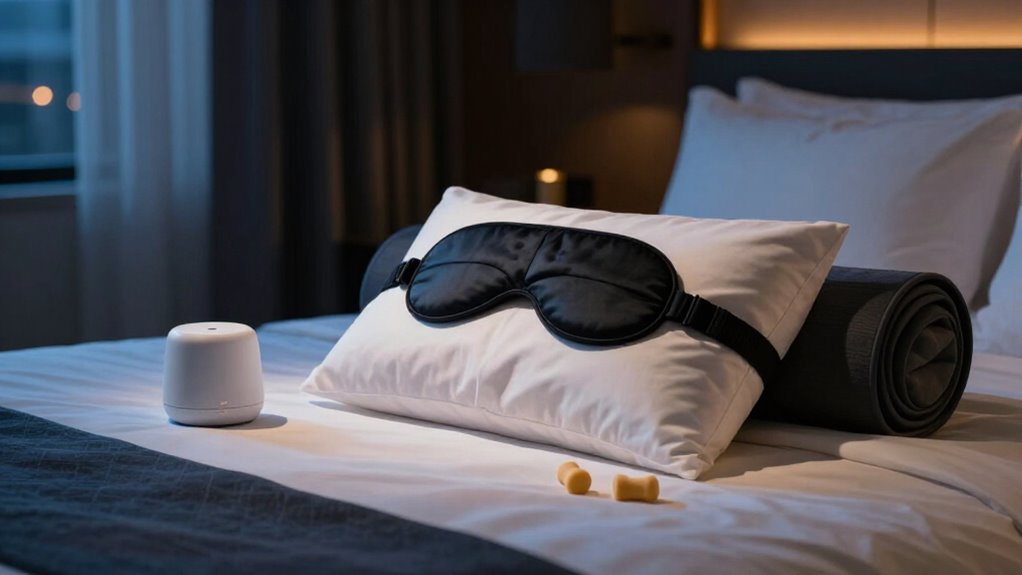
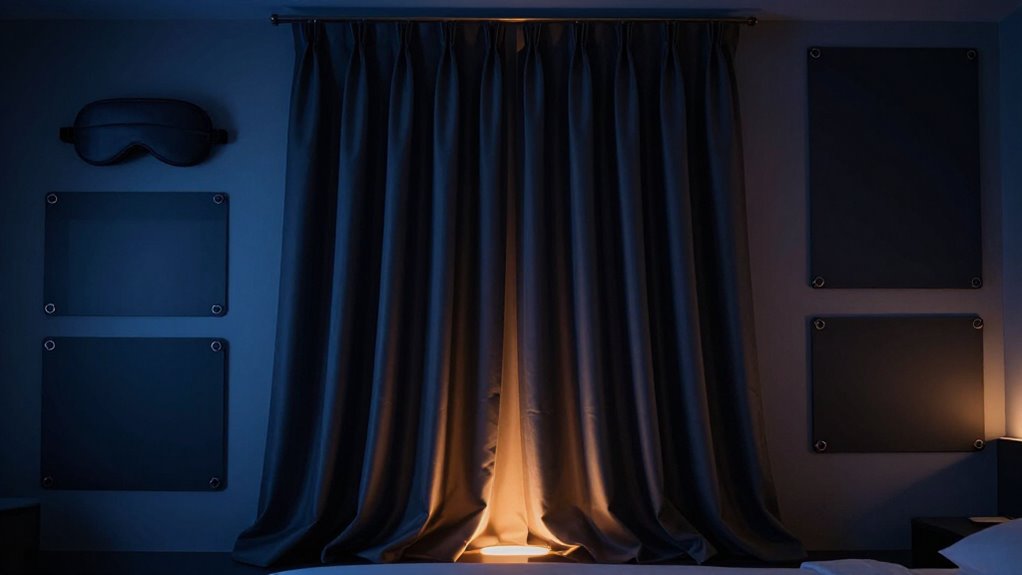
I optimize light control: blackout curtains, Philips-style dimmable bulbs, and a travel eye mask to shape melatonin cues. A cashmere blackout mask provides superior light blocking while remaining breathable and gentle against skin during sensitive sleep periods. I set temperature near 18–20°C for slow-wave sleep, deploy white-noise machines or earbuds for noise reduction, and remove LED indicators. Maintaining optimal sleep temperature aligns your body’s thermoregulation with its need for deep, restorative rest even when your circadian rhythm is disrupted.
I avoid strong fragrances; I prefer neutral linens and clinical precision.
Naps, Melatonin, and Morning Habits to Lock the New Time Zone
Naps, melatonin, and morning habits form a coordinated toolkit I use to shift my circadian phase with minimal collateral sleepiness: strategic napping (short, timed naps of 20–30 minutes or a single 90-minute nap that captures an entire slow-REM cycle), low-dose melatonin (0.5–1 mg rather than large pharmacologic doses) and controlled morning light exposure work by respectively leveraging homeostatic sleep pressure, pharmacologic phase-shifting of the suprachiasmatic nucleus via MT1/MT2 receptors, and zeitgeber-driven entrainment through retinal ipRGC activation.
I adopt power naps, timed melatonin, and deliberate light exposure (sunlight or Dawn simulators) to consolidate new timing.
Evidence from chronobiology labs (Derk-Jan Dijk, Till Roenneberg) supports phased, minimal-dose approaches; practical implication: short naps early, melatonin near target bedtime, and robust morning light to lock the new zone.
Recommended Products to Use
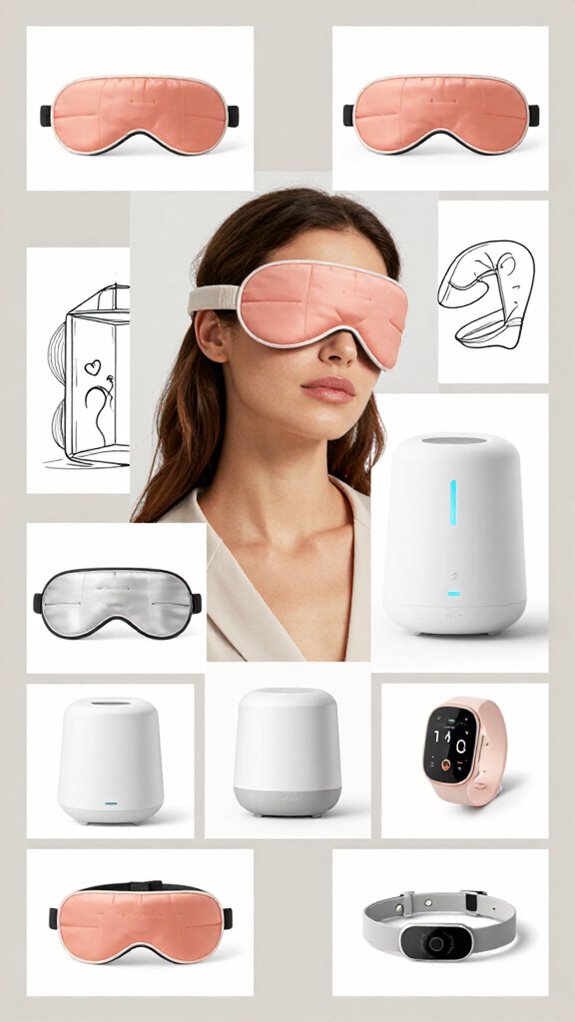
When I prepare a kit to beat jet lag, I pick products that map directly onto the three mechanisms we’ve discussed—homeostatic pressure, pharmacologic phase-shifting, and light-driven entrainment—so I can shift timing with minimal side effects.
I recommend blackout sleep masks (Raphaelite or Alaska Bear) to enhance melatonin secretion by eliminating stray photons, and a portable white noise machine (Marpac/Homedics) to stabilize sleep pressure through uninterrupted slow-wave consolidation.
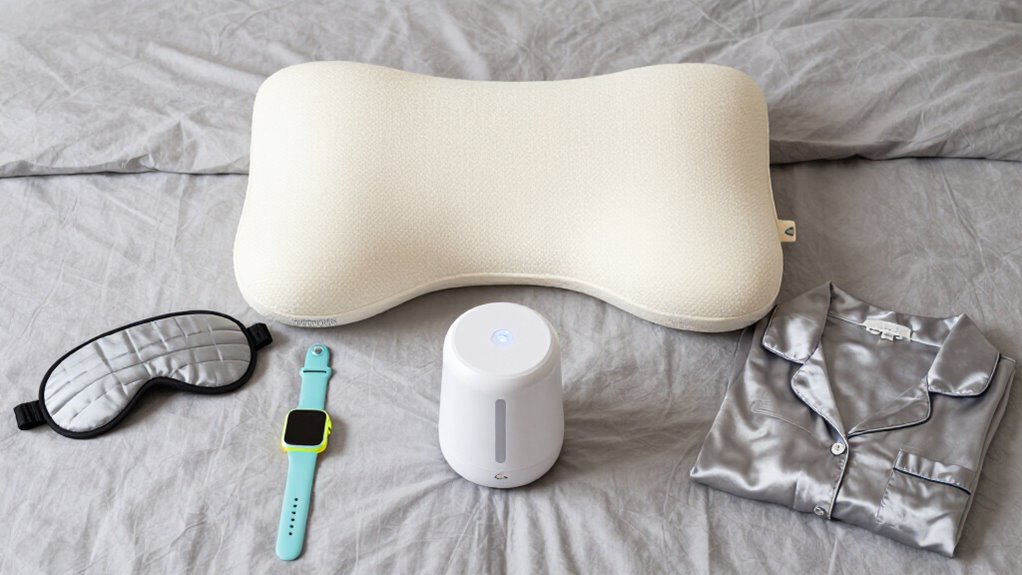
Include a timed light device (Philips goLITE, Re-timer) for dawn simulation and a short-acting hypnotic prescribed by a clinician when necessary; pack hydration aids and a sleep-tracking wearable (Oura).
While comfort may seem secondary to circadian tools, wearing aesthetic pajama sets can reduce psychological arousal and signal your brain that it’s time to wind down, supporting the transition into restful sleep.
Melatonin Timing Study Findings
In reviewing melatonin timing studies, I focus on how dose, clock time, and individual circadian phase interact to produce predictable phase shifts rather than on simple sleepiness effects.
I’ve examined work by Lewy, Arendt, and Phillips showing low melatonin dosage (0.3–0.5 mg) often yields cleaner phase advances, while higher doses blur the phase-response curve.
Studies by Lewy, Arendt, and Phillips suggest low melatonin (0.3–0.5 mg) yields clearer phase advances than higher doses
Circadian rhythm markers like dim light melatonin onset (DLMO) guide timing; give melatonin ~5 hours before DLMO to advance, or after DLMO to delay.
Brands such as Natrol and Life Extension test doses; researchers recommend individualized timing, measurement, and consistency to command your internal clock.
FAQ
Can Severe Jet Lag Cause Long-Term Sleep Disorders?
Yes — I can see severe jet lag sometimes triggering long-term sleep disorders if jet lag recovery’s neglected and circadian rhythm stays disrupted; I’ll help you reclaim control, restore routines, and strengthen your sleep resilience.
Is It Safe to Drive After a Night of Jet-Lagged Sleep?
No — I wouldn’t drive after a night of jet-lagged sleep; your judgment’s impaired. I prioritize jet lag recovery and driving safety, so I rest fully, use naps strategically, and only take the wheel when alert and strong.
Can Children and Infants Use the Same Jet Lag Strategies?
Of course kids can follow grown-up plans—said no wise parent ever. I’ll adapt child sleep tips and infant adjustment techniques, and I’ll command routines, light exposure, and naps so your family regains control fast.
Will Caffeine-Free Energy Drinks Help Combat Daytime Sleepiness?
Yes — I use caffeine-free energy drinks sparingly; they can boost daytime alertness via vitamins and ingredients, but they’re weaker than caffeine. I’ll rely on strategic naps, light exposure, and hydration to stay powerful and focused.
Do Different Airlines’ Time Zone Changes Affect Jet Lag Severity?
Yes — I believe airlines’ schedules and chosen time zone hops change jet lag severity: I assess flight duration, travel timings, and layover patterns to strategize sleep, light exposure, and power moves that minimize disruption and reclaim control.