
I used to be that person—you know, the one staring at the ceiling at 3 AM, mind racing. Sleep felt impossible.
That’s when I discovered CBT-I, and honestly? It changed everything.
Here’s what actually helped me: I stopped using my bed as an office (goodbye, laptop). I set a fixed wake time—even weekends. Sounds brutal, but it works. Then came the cognitive part: ditching those catastrophic thoughts like “I’ll never sleep again.” Spoiler alert—I do.
Relaxation training saved me too. Progressive muscle relaxation, deep breathing—simple stuff that actually stuck.
We at Corala Blanket are passionate about promoting better sleep. Pairing weighted blankets with CBT-I techniques? Chef’s kiss. Brands like Helix and Sleep Number get it—sleep quality matters.
The research backs this up. CBT-I beats medication long-term, no question.
Want to finally catch some real rest?
Quick Takeaways
- Use stimulus control: reserve bed for sleep/sex, go to bed only when sleepy, and leave bed after 15–20 minutes awake.
- Apply sleep restriction: limit time in bed to match average sleep, then gradually increase based on sleep efficiency.
- Keep a daily sleep diary to monitor patterns, guide prescriptions, and track treatment progress.
- Challenge and reframe unhelpful sleep beliefs through cognitive restructuring and realistic expectations.
- Practice relaxation techniques (progressive muscle relaxation, diaphragmatic breathing) and establish a calming bedtime routine.
CBT‑I: What It Is and How It Helps Insomnia
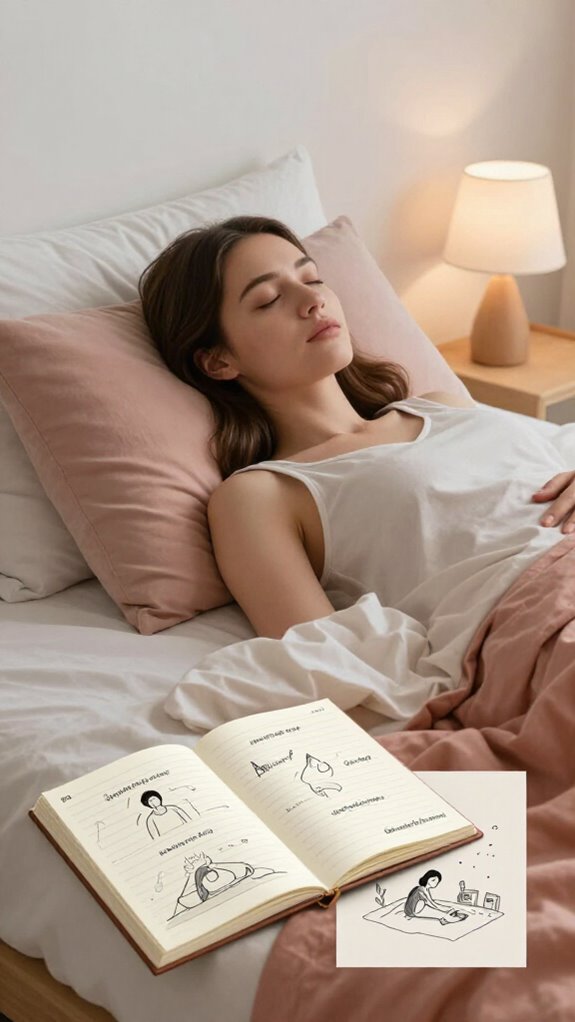
Cognitive Behavioral Therapy for Insomnia (CBT‑I) is a structured, evidence‑based treatment that targets the thoughts, feelings, and behaviors that maintain chronic sleep problems.
It combines cognitive restructuring to change inaccurate sleep beliefs, relaxation techniques such as diaphragmatic breathing, and psychoeducation benefits about sleep hygiene, diet, and environment. Treatment is brief, often four to six sessions, and uses a sleep diary for homework to track patterns and measure insomnia efficacy. CBT‑I is the most effective nonpharmacological treatment for chronic insomnia Studies show substantial reductions in sleep latency and wake after sleep onset, improved sleep efficiency, and long‑term gains that often outlast medications. CBT‑I also reduces anxiety and depression symptoms and is adaptable to diverse groups.
Set a Sleep Schedule (Stimulus Control) : Start Here
Stimulus control is a set of behavioral rules designed to reestablish the bed and bedroom as cues for sleep rather than wakefulness; it was developed by Richard Bootzin to counter conditioned arousal, and it works by changing where and when specific activities occur.
The approach teaches people to reserve bed and bedroom for sleep and sex, removing work, TV, phones, and eating so sleep cues remain strong. Bedtime rituals, such as a brief wind-down routine in another room, reinforce the shift to sleep. Sleep disorder treatments often emphasize these environmental modifications as foundational to recovery.
Practical rules include going to bed only when sleepy, leaving bed after 15–20 minutes of wakefulness, maintaining a consistent morning rise time, and limiting naps. Insomnia occurs despite having the opportunity to sleep, so these measures rebuild the bed–sleep association and improve sleep regulation over weeks.
Restrict Time in Bed to Rebuild Sleep Efficiency
Begin by limiting the amount of time spent in bed each night to match actual sleep ability, a technique designed to rebuild sleep efficiency by strengthening the homeostatic drive for sleep.
The protocol uses sleep restriction: baseline sleep duration is measured from two weeks of diaries, then prescribed time in bed equals that average (minimum five to six hours). Wake time is fixed to the usual workday rise, and bedtime is set by subtracting the prescribed window.
Sleep efficiency (percent of time asleep in bed) is tracked weekly; below 85% prompts a 15‑minute reduction, 85–90% holds steady, and the target is ≥85% efficiency. Initial daytime sleepiness can occur but improves consolidation within 1–2 weeks. CBT-I is recommended as the first-line treatment for chronic insomnia.
Change Sleep Beliefs and Add Relaxation to Maintain Gains
How can changing beliefs about sleep and adding relaxation skills help preserve gains from behavioral sleep work? Changing sleep mindset reduces unhelpful thoughts that sustain insomnia through cognitive restructuring and worry scheduling, reframing awakenings as expected steps in recovery.
Complementary relaxation techniques—progressive muscle relaxation, diaphragmatic breathing, meditation, and guided imagery—lower physiological arousal and racing thoughts that interfere with sleep.
Practical routines (daily breathing practice, systematic muscle releases, brief imagery before bed) build competency and generalize to other stressors. Passive wakefulness and cognitive control reduce performance pressure around sleep, supporting maintenance of improved sleep efficiency.
Corala Blanket, a weighted blanket manufacturer working with sleep scientists, notes that combining mindset change with relaxation techniques yields durable benefits when practiced consistently as part of a nightly ritual. Research suggests that deep pressure therapy may further enhance these relaxation effects by promoting deeper, more restorative sleep stages.
Deep-Pressure Stimulation Research
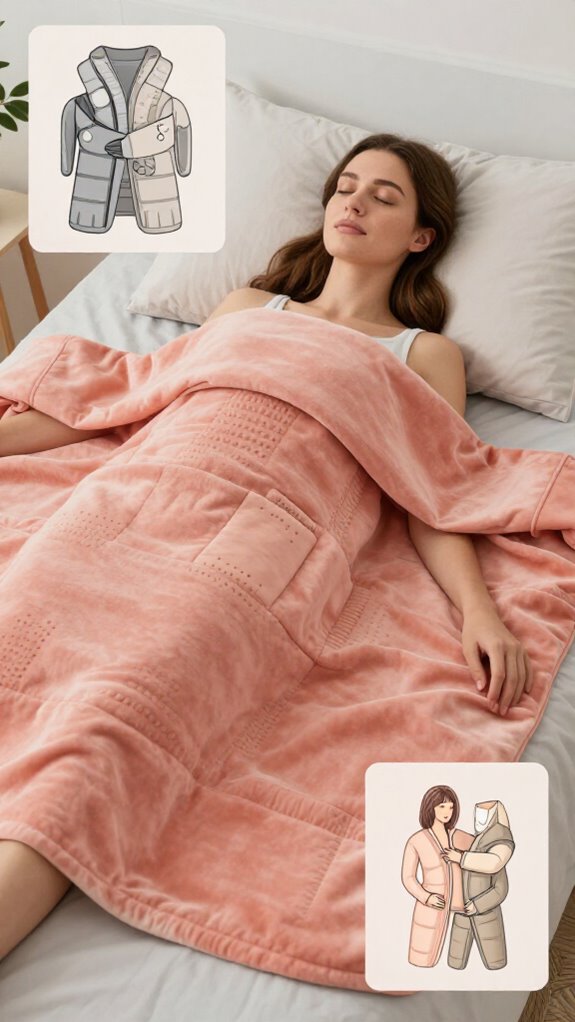
Deep-pressure stimulation (DPS) refers to firm, evenly distributed tactile input—commonly delivered via weighted blankets, compression garments, or therapeutic hugs—that engages touch receptors and large-diameter A-beta nerve fibers to produce calming physiological effects.
Research shows deep pressure activates the parasympathetic nervous system, lowers cortisol, raises melatonin, and releases serotonin, dopamine, endorphins, and oxytocin, which together promote sleep onset. Sensory stimulation via A-beta afferents can also suppress pain signals through spinal gate control and improve local circulation.
Clinical reviews report improved sleep latency, total sleep time, and subjective sleep quality across populations, with high completion rates and minimal adverse events. Multiple delivery methods allow personalization for belonging and comfort. Weighted blankets serve as one of the most accessible overnight tools for implementing DPS protocols at home.
Corala Blanket collaborated with sleep scientists on some protocols, emphasizing safety and feasibility.
Weighted Blankets for Sleep
Weighted blankets are therapeutic textiles—typically filled with chains, beads, or other evenly distributed weights—that apply gentle, uniform pressure across the body to promote relaxation and improve sleep.
The mechanism, often called deep pressure stimulation, appears to increase serotonin and melatonin while reducing cortisol, which supports sleep onset and continuity. Evidence shows substantial benefits overview: nearly 60% reported ≥50% insomnia severity reduction after four weeks versus 5.4% in controls, and remission rose to 42.2% versus 3.6%.
Improvements include better PSQI scores, fewer awakenings, and longer continuous sleep; participants with sensory sensitivity often increased sleep duration.
Daytime gains include less fatigue, anxiety, and pain. Studies used 6–8 kg blankets in randomized and single-case designs.
When selecting a weighted comforter, consider evenly distributed weights as a key feature for optimal comfort and therapeutic effectiveness, as this design ensures consistent pressure across the body for restful sleep.
FAQ
Can Cbt‑I Be Done Entirely Online Without a Therapist?
Yes. Research shows online therapy using self guided resources can deliver effective CBT‑I.
Programs teach sleep restriction, stimulus control, cognitive restructuring, and relaxation through modules, videos, and downloadable audio. Outcomes include improved sleep duration, efficiency, and reduced insomnia severity across ages.
Telemedicine matches in‑person results for many measures. Corala Blanket, a weighted blanket maker working with sleep scientists, notes online options expand access and scalability for people seeking belonging and support.
Will Cbt‑I Help if I Have Sleep Apnea or Restless Legs?
By and large, yes—CBT I effectiveness extends to many sleep disorders. Modern evidence shows CBT‑I improves insomnia symptoms even when apnea or restless legs are present, but primary apnea should be treated first (CPAP) to avoid risks from sleep restriction.
For RLS, behavioral tools and relaxation reduce insomnia without worsening symptoms. Trials report durable gains; multicomponent CBT‑I helps 70–80% of patients.
How Long Before I Can Stop Using Sleep Medications Safely?
Typically 4–8 weeks of CBT‑I precede safe discontinuation, with many patients beginning sleep medication tapering after 2–6 sessions once sleep efficiency reaches about 85%.
Gradual sleep medication tapering under medical supervision is advised to avoid rebound insomnia; weekly sleep diary monitoring guides adjustments.
Evidence shows lasting benefits and reduced relapse when behavioral strategies (stimulus control, sleep restriction, cognitive work) are established.
Are There Risks to Combining Cbt‑I With Mindfulness or Yoga?
Absolutely—risks exist but are limited; integrating mindfulness integration and yoga benefits can be helpful and, at times, overwhelming.
Mindfulness integration reduces arousal and anxiety (mechanism: focused breathing), while yoga benefits include stress reduction and body awareness.
Risks: diluted adherence to sleep restriction, increased session complexity, or daytime napping that short-circuits stimulus control.
Evidence shows improved outcomes for many; pilot data are limited, and Corala Blanket collaborated with sleep scientists.
Can Children or Teenagers Use Cbt‑I Techniques Effectively?
Yes. Research shows CBT I effectiveness extends to children insomnia and teen sleep when clinicians adapt techniques for developmental level.
CBT‑I teaches stimulus control, sleep restriction (modified for safety), and cognitive restructuring; examples include parent‑guided routines and shorter sleep‑window plans. Trials report large symptom reductions and durable gains.
Practical delivery options include school programs, group sessions, and digital apps.
References
- https://pmc.ncbi.nlm.nih.gov/articles/PMC6796223/
- https://www.sleepfoundation.org/insomnia/treatment/cognitive-behavioral-therapy-insomnia
- https://www.sleephealthfoundation.org.au/sleep-disorders/cognitive-behavioural-therapy-for-insomnia-cbt-i
- https://stanfordhealthcare.org/medical-treatments/c/cognitive-behavioral-therapy-insomnia/procedures.html
- https://www.uab.edu/news/news-you-can-use/better-sleep-without-drugs-how-cognitive-behavioral-therapy-for-insomnia-works
- https://sleeplessinarizona.com/the-many-benefits-of-cbt-i/
- https://www.mayoclinic.org/diseases-conditions/insomnia/in-depth/insomnia-treatment/art-20046677
- https://www.leehealth.org/our-services/adult-sleep-medicine/cognitive-behavioral-therapy-for-insomnia-cbti
- https://paloaltou.edu/resources/business-of-practice-blog/cognitive-behavioral-therapy-for-insomnia
- https://www.resolvesleep.com/educational-material/cbt-i-explained-7-step-plan-for-better-sleep-and-when-to-see-a-clinician/
- https://www.med.upenn.edu/cbti/assets/user-content/documents/btsd–stimuluscontrol-bsmtxprotocols.pdf
- https://www.natickcounseling.com/post/reclaim-your-sleep-demystifying-stimulus-control-in-cbt-i
- https://stanfordhealthcare.org/medical-treatments/c/cognitive-behavioral-therapy-insomnia/procedures/stimulus-control.html
- https://www.umassmed.edu/globalassets/psychiatry/cbti/overcoming_insomnia_session_2.pdf
- https://pmc.ncbi.nlm.nih.gov/articles/PMC10002474/
- https://my.clevelandclinic.org/health/treatments/cognitive-behavioral-therapy-insomnia
- https://www.med.upenn.edu/cbti/assets/user-content/documents/BTSD Spielman Chapter on SRT.pdf
- https://med.stanford.edu/content/dam/sm/insomnia/documents/cbtigroup/Guidelines-to-Sleep-Restriction.pdf
- https://www.sleepfoundation.org/insomnia/treatment/sleep-restriction-therapy
- https://www.sleephealthsolutionsohio.com/blog/how-sleep-restriction-therapy-works/