I used to wake up groggy, my Whoop data showing fragmented deep sleep and maybe 12 minutes of REM. Desperate, I started obsessing over delta wave optimization—turning my bedroom into a 17°C cave, drowning out street noise with a LectroFan, and popping Thorne’s magnesium glycinate before bed. Game changer? Absolutely. Then I discovered Sleepmaxxing—2026’s wild trend of biohacking every sleep stage. Now we’re at Corala Blanket literally engineering weighted blankets to boost those slow waves. Ever wonder why you still feel wrecked after eight hours? Your brain waves might be trash. Dr. Matthew Walker’s research at Berkeley changed everything for me. My Oura ring now shows 90+ sleep scores. Wild what data can do, right?
Quick Takeaways
- Balance delta waves during Deep Sleep and theta waves in REM for enhanced memory consolidation and physical repair.
- Use cognitive behavioral therapy techniques to retrain and stabilize disrupted brain wave sleep patterns.
- Monitor Light, REM, and Deep Sleep stages using wearable sleep trackers for personalized brain wave optimization.
- Employ pre-sleep rituals and relaxation methods to signal the brain for smoother transitions between sleep stages.
- Minimize exposure to blue light before bedtime to support natural melatonin secretion and stable brain wave rhythms.
Optimize Brain Waves for Better Sleep Quality
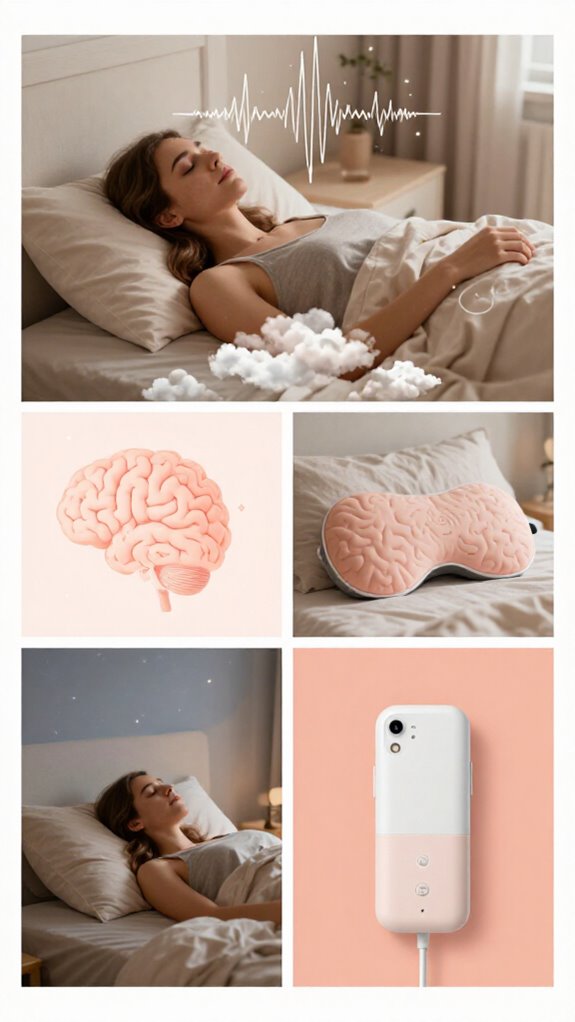
Although many people equate good sleep with simply spending enough time in bed, optimizing brain wave activity across Light, REM, and Deep Sleep stages plays a critical role in defining restorative sleep quality.
Brain wave synchronization guarantees these phases flow cohesively, facilitating efficient memory consolidation and physical repair. Sleep stage regulation hinges on precisely balancing delta waves during Deep Sleep and theta waves in REM, a process detailed by sleep researcher Matthew Walker. Cognitive Behavioral Therapy techniques can help retrain disrupted sleep patterns by addressing the underlying thoughts and behaviors that interfere with natural brain wave progression through these critical stages.
Wearables like Oura or Dreem help monitor this, offering actionable perspectives. A structured 30 day sleepmaxxing protocol progressively trains your neural rhythms to achieve peak nightly restoration. Mastering these neural oscillations transforms sleep from passive rest into a potent tool for cognitive and physiological supremacy.
Align Your Sleep Schedule With Your Circadian Rhythm
When I align my sleep schedule to the natural fluctuations governed by the circadian rhythm, I’m fundamentally syncing with the master clock located in the Suprachiasmatic Nucleus (SCN) of the hypothalamus.
Recognizing my chronotype awareness, I regulate light exposure to optimize melatonin timing and minimize sleep inertia. Consistent rhythm consistency, paired with disciplined evening routines, counters light pollution’s disruption of biological clocks.
Attuning to chronotype and light exposure sharpens melatonin rhythms, reducing inertia and shielding the circadian clock from light pollution.
This reverberates profoundly through my sleep architecture, enhancing restorative phases. Pioneers like Dr. Till Roenneberg emphasize this alignment’s role in reducing fatigue and cognitive decline.
Harnessing circadian biology empowers performance with scientific precision and neurobiological efficiency. For those prone to ADHD racing thoughts at bedtime, this alignment becomes particularly critical in quieting mental hyperactivity and initiating sleep onset.
Research on sleep timing has demonstrated that going to bed and waking up at consistent hours strengthens mental health resilience by stabilizing emotional regulation circuits.
Use Light to Protect Melatonin and Enhance REM Sleep
Because melatonin secretion dictates the onset and quality of REM sleep, strategically managing light exposure becomes essential to preserving this hormone’s natural rhythm.
Melatonin regulation hinges on minimizing blue light after sunset, which suppresses the suprachiasmatic nucleus’s signaling to the pineal gland. Research from Harvard’s Sleep Medicine Division confirms that dim, warm-hued lighting bolsters endogenous melatonin production and optimizes REM sleep consolidation.
Tools like f.lux or Philips Hue can dynamically adjust indoor illumination to align with circadian cues. Properly engineered light environments leverage neuroendocrine interplay, empowering you to amplify restorative REM phases and elevate cognitive resilience through precise photic modulation.
Create a Thermo-Neutral Bedroom to Improve Deep Sleep
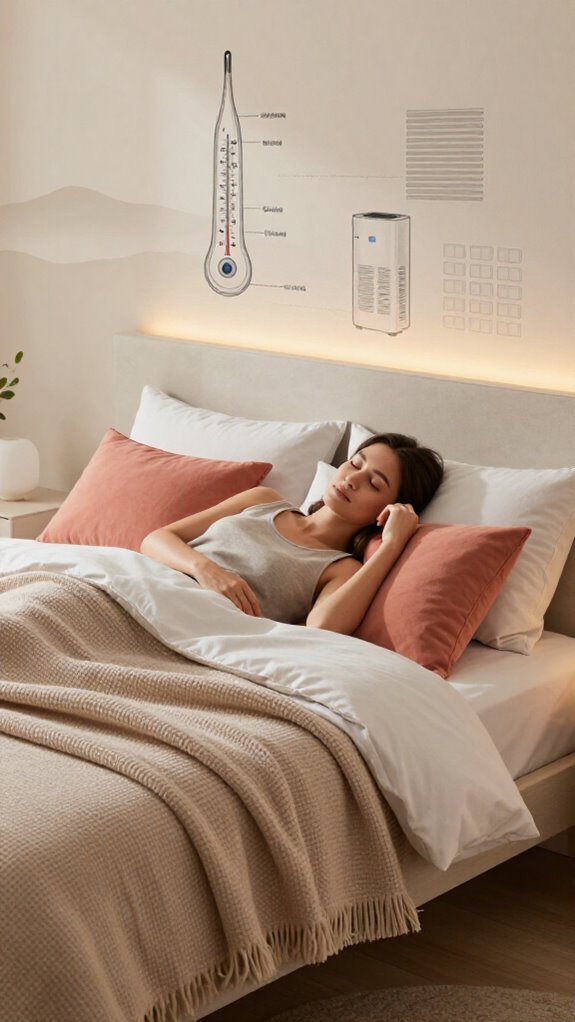
Light management sets the stage for deep sleep by preserving melatonin, but ambient temperature governs the physiological environment that allows Slow-Wave Sleep to flourish.
Maintaining a bedroom temperature near 18°C optimizes the thermoneutral zone critical for core body temperature decline, essential for Adenosine clearance as noted by Harvard Sleep Medicine. Researchers have confirmed that circadian rhythm alignment works synergistically with temperature regulation and sleep quality optimization to maximize sleep architecture and overall rest quality. Studies indicate that even slight deviations from this thermal window can fragment sleep stages and reduce overnight recovery.
Bedroom temperature around 18°C supports core temperature drop vital for Adenosine clearance and deep sleep.
Integrate humidity control to prevent mucosal irritation and support consistent respiration.
Employ soundproofing techniques—like acoustic panels or white noise machines—to mitigate disruptive stimuli.
Prioritize air quality using HEPA filters or plants to reduce airborne toxins, creating an ecosystem where restorative sleep mechanisms activate effectively and empower next-day cognitive performance.
Optimize Pre-Sleep Nutrition to Support Restorative Sleep
Although nutrition often takes a backseat in sleep discussions, curating pre-sleep dietary habits critically influences the complex biochemistry governing restorative rest.
Ideal nutrition timing—consuming nutrient rich foods and pre sleep snacks at least two hours before bed—supports digestive health and stabilizes blood sugar, minimizing nocturnal arousals. Maintaining hydration levels without excess fluid intake prevents sleep disruption. For those seeking targeted mineral support, magnesium glycinate offers superior bioavailability and calming effects on the nervous system compared to other forms.
Emerging research from the University of Colorado underscores how sleep supplements like magnesium and glycine modulate neurotransmitters, enhancing slow-wave sleep.
I focus on these precision strategies, integrating metabolic windows and micronutrient balance, to powerfully elevate the quality of my nightly brain wave patterns and cognitive recovery.
Certain foods to eat before bed—such as tart cherries, kiwifruit, and almonds—contain natural melatonin and serotonin precursors that directly support sleep onset and sleep architecture.
Use Weighted Blankets to Calm Nighttime Anxiety
Building on the metabolic precision of pre-sleep nutrition, managing somatic safety represents a pivotal layer in calming nighttime anxiety—a frequent barrier to restorative sleep.
Weighted blanket benefits stem from their deep-pressure stimulation, which activates the parasympathetic nervous system, mimicking a calming embrace. Researchers like Dr. Temple Grandin highlight how this proprioceptive input reduces cortisol and boosts serotonin, resulting in nighttime anxiety relief. Deep pressure therapy has been shown to lower heart rate and prepare the body for sleep by grounding the nervous system in tangible, physical feedback.
Brands such as Gravity Blanket have leveraged this principle, crafting products calibrated to body weight for maximum effect. Incorporating weighted blankets integrates somatic safety into your routine, enhancing sleep architecture by mitigating hypervigilance and promoting neurophysiological calm. For those struggling with chronic insomnia relief, this tool offers a non-pharmaceutical approach to achieving deeper, more restorative rest.
Practice Nasal Breathing and Mouth Taping for Better Oxygenation
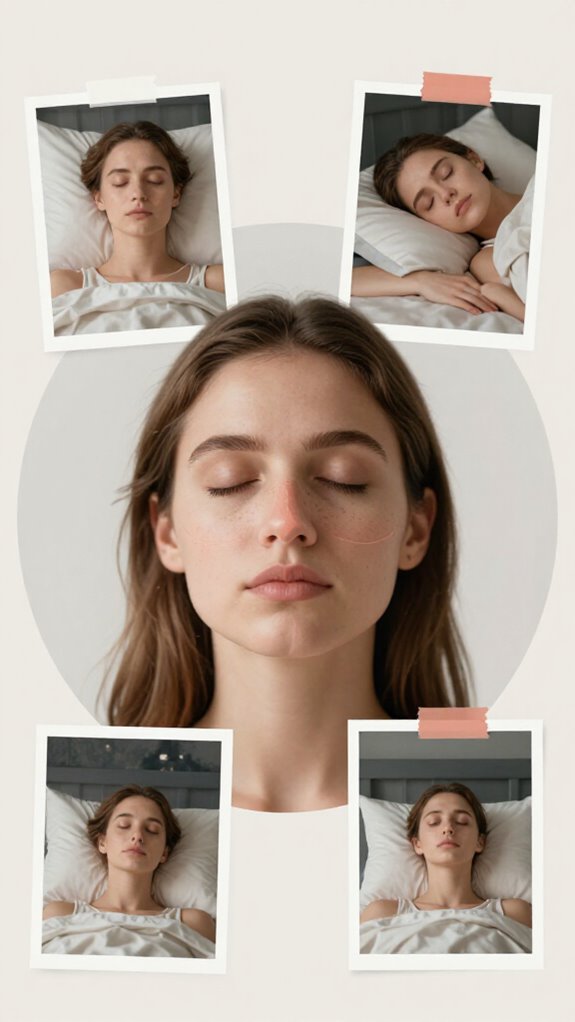
When I incorporated nasal breathing and mouth taping into my routine, I noticed a marked improvement in oxygenation during sleep, a factor critical to maintaining ideal blood gas levels.
Nasal breathing optimizes nitric oxide production, enhancing pulmonary vasodilation and oxygen uptake—key for sustaining steady cerebral oxygen supply.
Nasal breathing boosts nitric oxide, improving lung blood flow and oxygen delivery to the brain.
Mouth taping supports this by preventing oral airflow, reducing apnea risk and maintaining positive airway pressure.
Researchers like Dr. Patrick McKeown highlight these methods’ efficacy in improving sleep apnea outcomes.
Integrating nasal breathing and mouth taping fortifies autonomic stability, aligning with Sleepmaxxing’s goal of maximizing physiological recovery through enhanced respiratory efficiency.
For those experiencing nighttime anxiety, these techniques can serve as effective compressive sleep aids that promote calm and restful sleep. Cognitive behavioral strategies for anxiety management can further enhance the effectiveness of these breathing techniques by addressing the underlying psychological factors that disrupt sleep architecture.
Use Pink Noise to Block Distractions and Improve Sleep
Three distinct auditory frequencies—pink, brown, and white noise—have each been studied for their effects on sleep, but pink noise stands out for its unique spectral properties that mirror natural environmental sounds, leading to more consistent masking of disruptive stimuli.
Pink noise delivers balanced auditory stimulation across frequencies, preventing abrupt changes in sound frequency that can jolt brain wave patterns. Researchers like Dr. Wallace and brands such as LectroFan utilize pink noise to optimize sleep by stabilizing neural oscillations.
Integrating pink noise into your sleep environment strategically blocks distractions, enhancing sleep continuity and promoting deeper restorative phases essential for cognitive supremacy.
Track Sleep Quality With Wearables for Targeted Improvements
While pink noise can shield your sleep from sudden environmental disruptions, refining sleep quality demands a more granular understanding of what happens inside your body during rest.
Sleep tracking via wearable technology—like Oura Ring or WHOOP—offers real-time biometric data on Light, REM, and Deep Sleep stages. This granular understanding enables targeted interventions based on personal sleep architecture rather than generic advice. Top fitness trackers designed for bedroom use can transform how you monitor and improve your nightly recovery.
Researchers like Matthew Walker emphasize how biofeedback sharpens circadian alignment and sleep latency reduction strategies. Integrating this data lets you optimize recovery cycles with precision, turning sleep from guesswork into an exact, performance-driven science.
Smart watches designed specifically to enhance sleep quality can provide even more comprehensive metrics and personalized recommendations for improving your nightly rest.
Optimize Bedroom Environment to Boost Nighttime Heart Rate Variability
Since nighttime Heart Rate Variability (HRV) reflects the balance between your sympathetic and parasympathetic nervous systems, optimizing your bedroom environment plays an essential part in enhancing this biomarker for restorative sleep. Bedroom acoustics reduce disruptive stimuli, facilitating parasympathetic dominance. Precise temperature regulation near 18°C supports core body temperature decline, vital for glymphatic clearance and HRV elevation. Strategic nap scheduling can further prime the nervous system for deeper nocturnal recovery by consolidating sleep pressure. Evening exposure to blue light emissions from screens suppresses melatonin secretion, disrupting the autonomic balance necessary for optimal HRV during early sleep phases. Below is a measured framework for environmental control:
| Element | Ideal Range | Effect on HRV |
|---|---|---|
| Temperature | 16–19°C | Promotes parasympathetic tone |
| Noise Level | <30 dB | Minimizes sympathetic spikes |
| Humidity | 40–60% | Supports mucosal function |
Aligning these factors amplifies HRV, enhancing restorative capacity.
Recommended Products to Use
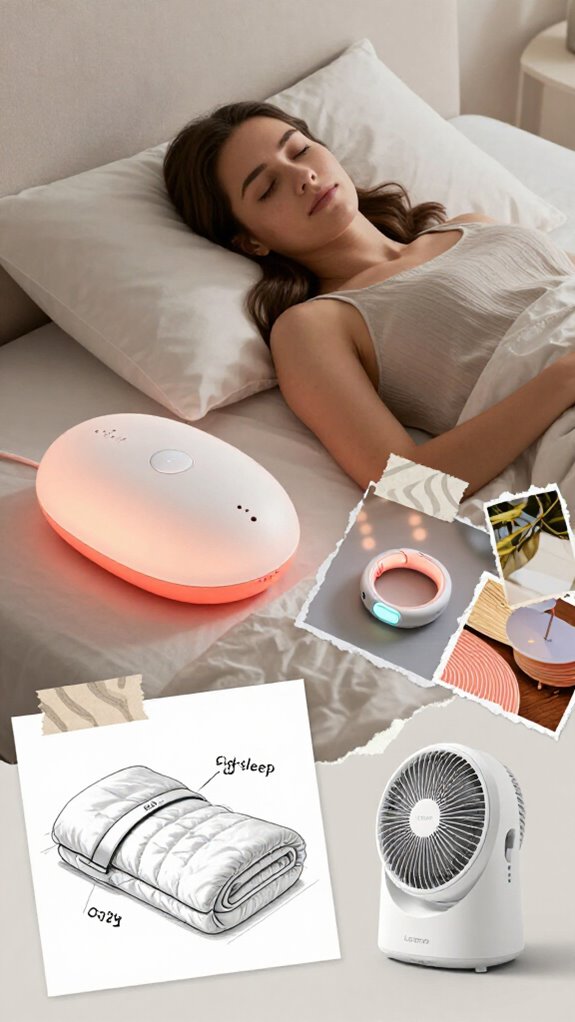
Controlling bedroom environment metrics such as temperature, humidity, and noise levels creates a robust foundation, but precision biohacking demands tools calibrated to elevate these parameters within ideal ranges. Sleep therapy machines represent essential investments for those seeking to transform their rest through technology-driven optimization.
I rely on advanced sleep accessories like the Eight Sleep Pod for thermo-regulation and LectroFan’s adaptive noise machines for acoustic layering.
Weighted blankets from brands such as Gravity enhance proprioceptive input, facilitating parasympathetic activation.
Integrating relaxation techniques with devices that monitor HRV, like Oura Rings, refines my protocol by offering actionable biometric feedback.
These calibrated instruments empower control over sleep architecture—shaping brain wave patterns for optimized cognitive resilience and recovery.
Among the most effective tools for acoustic optimization, white noise machines create consistent sound environments that mask disruptive frequencies and promote stable sleep cycles.
Circadian Rhythm and Glymphatic System
Understanding the complex dialogue between the circadian rhythm and the glymphatic system reveals a sophisticated neurophysiological choreography essential for brain homeostasis.
The suprachiasmatic nucleus (SCN) governs circadian synchronization of glucocorticoid release, which modulates glymphatic function via astrocytic aquaporin-4 (AQP4) polarization. This rhythmic AQP4 distribution underpins cerebrospinal fluid influx during rest phases, facilitating metabolic waste clearance. The SCN processes photic information through a transcriptional-translational feedback loop (TTFL) lasting about 24 hours, which sets the timing for these physiological processes.
Microglial activity also fluctuates circadianly, impacting glymphatic efficacy. Disruptions to BMAL1 in astrocytes or the SCN compromise this synchrony, impairing waste disposal.
Harnessing this knowledge, pioneers like Nedergaard emphasize optimizing circadian alignment to maximize glymphatic clearance and cognitive restoration.
Sleepmaxxing for couples
Even when two individuals share a bed, their sleep architectures rarely synchronize naturally, creating a complex challenge for applying the Sleepmaxxing Protocol to couples.
Addressing divergent circadian preferences and sleep stages requires harmonizing sleep rituals to optimize REM and Slow-Wave Sleep collectively. Relationship dynamics dictate adaptability—co-regulating environment temperature, light exposure, and employing biometric feedback from brands like Oura can reveal misalignments. For partners working rotating shifts, strategic scheduling of sleep windows becomes essential to preserve sleep quality despite conflicting timetables. Chronobiology-based interventions can help couples navigate these misalignments by aligning sleep phases with individual circadian biology rather than forcing identical bedtimes.
Research from Dr. Matthew Walker emphasizes individualized sleep architecture impacts. By curating joint pre-sleep routines and respecting metabolic windows, couples can elevate restorative quality without sacrificing autonomy, transcending mere coexistence toward synchronized cerebral recovery.
FAQ
How Does the Sleepmaxxing Protocol Address Sleep Disorders Like Insomnia or Sleep Apnea?
I embrace the Sleepmaxxing Protocol to gently tame sleep disorders by harmonizing brain waves, using tailored rhythm alignment and soothing environmental design. This approach transforms restless nights into powerful recovery, giving me control over my sleep’s grandeur.
Can Sleepmaxxing Techniques Improve Daytime Cognitive Performance and Mood?
I’ve used Sleepmaxxing for cognitive enhancement and mood elevation—it rewires your sleep to boost mental clarity and emotional resilience. This protocol isn’t just rest; it’s power optimization, turning sleep into your secret weapon for peak daily performance.
What Role Do Supplements Play in Enhancing Sleep Architecture Within Sleepmaxxing?
Supplements can enhance sleep architecture—melatonin effects help reset rhythms, magnesium benefits promote relaxation, and valerian root supports deep sleep. When combined with herbal remedies, nutrient timing, and precise ideal dosage, they’re a powerful edge beyond lifestyle changes.
How Do Stress Management Practices Integrate With Sleepmaxxing for Better Brain Waves?
I integrate stress reduction and relaxation techniques to command my brain waves, ensuring deep, restorative sleep. Mastering these practices sharpens my focus, amplifies recovery, and fuels peak mental performance—powering my nights for ultimate daytime dominance.
Are There Age-Specific Adjustments Recommended in the Sleepmaxxing Protocol?
Yes, I tailor the Sleepmaxxing Protocol to age variations and developmental stages, optimizing sleep architecture as your brain evolves. This power move guarantees your cognitive edge sharpens, no matter your age, by respecting your body’s unique rhythms.
References
- https://www.explorationpub.com/Journals/eemd/Article/101437
- https://pubmed.ncbi.nlm.nih.gov/39223969/
- https://www.ahajournals.org/doi/10.1161/CIRCRESAHA.123.323516
- https://www.frontiersin.org/journals/physiology/articles/10.3389/fphys.2025.1622236/full
- https://www.pnas.org/doi/10.1073/pnas.1914017117
- https://www.authorea.com/users/656185/articles/661665-connection-of-brain-glymphatic-system-with-circadian-rhythm
- https://iubmb.onlinelibrary.wiley.com/doi/abs/10.1002/iub.2903