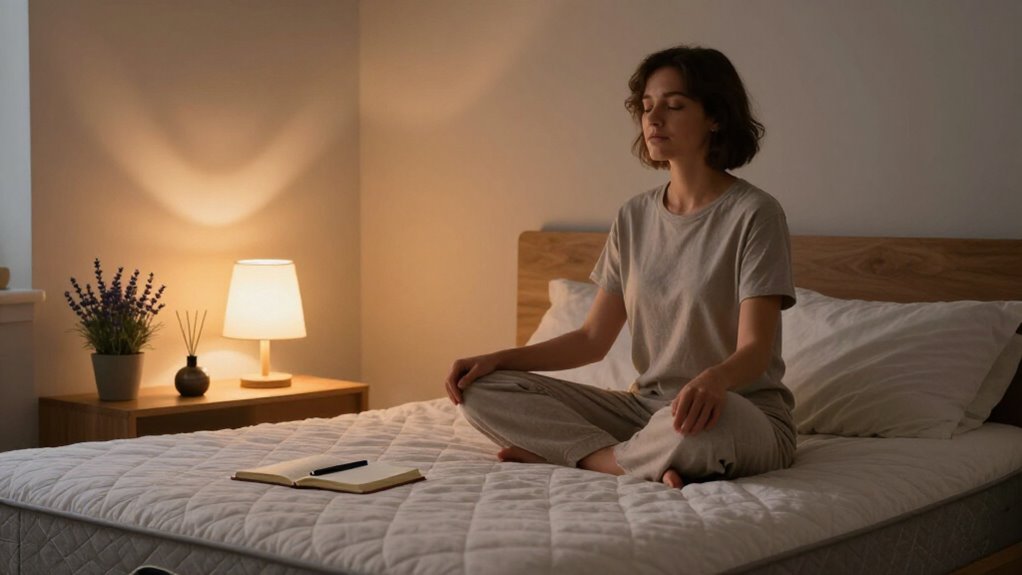
I was drowning in nighttime anxiety until I ditched my phone and grabbed my weighted blanket from Corala Blanket—game changer, honestly. We at Corala Blanket believe quality sleep starts with your environment. I journal my racing thoughts, practice breathwork, and keep things dim. Brands like Casper and Brooklinen get it too. Now? I’m actually sleeping. Want that peace back?
Quick Takeaways
- Establish a relaxing sleep environment with ambient lighting, calming scents, and optimal temperature, darkness, and quietness to facilitate natural sleep-wake cycles.
- Practice calming breathwork and gentle yoga poses to quiet the mind, lower physiological stress, and promote relaxation before bed.
- Limit digital device use and exposure to blue light for 1-2 hours before bedtime to avoid disrupting circadian rhythms and hormone production.
- Engage in a dedicated journaling practice to process anxious thoughts and emotional triggers, shifting focus towards a restful mindset.
- Incorporate soothing bedtime routines, such as light reading, warm herbal tea, deep breathing exercises, and gentle stretching, to signal the body to wind down for better sleep.
Create a Relaxing Bedroom Environment
Although personal preferences for bedroom environments can vary, research suggests that creating a space conducive to relaxation may help alleviate nighttime anxiety.
Ambient lighting, such as dimmable lamps or string lights, can promote a soothing ambiance. Incorporating calming scents like lavender or chamomile through essential oil diffusers or candles may also trigger the parasympathetic nervous system and induce relaxation. Choosing soft lighting fixtures designed specifically for sleep can further enhance melatonin production and prepare the body for rest.
Sleep experts, such as Dr. Michael Grandner at the University of Arizona, recommend minimizing external stimuli and maintaining a cool, dark, and quiet sleep environment to facilitate the body’s natural sleep-wake cycle.
Practice Calming Breathwork and Gentle Movement
Gentle breathwork and mindful movement can help quiet the mind and cultivate a state of relaxation before bed.
Gentle breathwork and mindful movement can help quiet the mind and cultivate a state of relaxation before bed.
Mindful breathing techniques, such as diaphragmatic breathing and box breathing, activate the parasympathetic nervous system to reduce physiological arousal.
Gentle stretching and yoga poses like child’s pose and supine twists release muscle tension and joint stiffness.
Research shows these practices can lower heart rate, blood pressure, and cortisol levels, promoting better sleep.
Experts recommend incorporating 5-10 minutes of calming breathwork and gentle movement into a nightly routine.
Combining these methods can powerfully downregulate the stress response for more restful nights.
Many natural ways to calm stress before bed involve simple practices that signal safety to the nervous system and prepare the body for sleep.
Limit Digital Distractions Before Bed
Digital devices emit blue light that can disrupt the body’s natural circadian rhythms and hormone production, making it harder to fall and stay asleep.
To limit digital distractions before bed:
- Avoid screens for 1-2 hours before bedtime.
- Use night mode or blue light filters on devices.
- Charge devices outside the bedroom.
- Establish a relaxing pre-bed ritual without electronics.
Reducing screen time and digital exposure in the evening supports the body’s natural sleep-wake cycle for better rest.
Research shows this digital detox can notably improve sleep quality and duration.
Excessive screen time has been shown to significantly alter sleep patterns by suppressing melatonin release and delaying sleep onset.
Capture Anxious Thoughts in a Dedicated Journal

Capturing anxious thoughts in a dedicated journal can provide an outlet for processing worries and stressors before bed.
Thought journaling allows individuals to identify anxiety triggers, engage in therapeutic writing, and reflect on calming techniques. This emotional expression can be a powerful tool for managing nighttime anxiety.
Experts recommend setting aside time each evening to write down concerns, fears, and negative thought patterns. This dedicated ritual helps shift the mind from the day’s activities to a state of relaxation.
Numerous studies have shown the benefits of this type of journaling for reducing anxiety and improving sleep quality.
Implement a Soothing Bedtime Routine
A soothing bedtime routine can help individuals shift from the day’s activities into a relaxed state, promoting better sleep quality. Applying calming strategies before bed can significantly reduce anxiety and prepare the mind for restful sleep.
Consider these four steps:
- Engage in light reading, such as calming bedtime stories, to quiet the mind.
- Sip a warm, herbal tea to induce drowsiness.
- Practice deep breathing exercises or listen to soothing music to ease tension.
- Perform a simple stretching routine to release physical and mental stress.
Establishing a consistent, calming pre-bed ritual signals to the body that it’s time to wind down, fostering more restful sleep.
Explore Natural Sleep Support Supplements
Natural sleep support supplements can provide an alternative approach to addressing nighttime anxiety and promoting more restful sleep. These herbal remedies often contain ingredients like melatonin, valerian root, and chamomile, which may help regulate the sleep-wake cycle and induce relaxation. However, it’s important to take into account sleep hygiene practices as well, such as establishing a consistent bedtime routine and minimizing exposure to blue light before bed.
| Supplement | Potential Benefits | Cautions |
|---|---|---|
| Melatonin | Regulates circadian rhythms | Can interact with medications |
| Valerian Root | Reduces anxiety, promotes relaxation | May cause daytime drowsiness |
| Chamomile | Anti-inflammatory, mild sedative effects | Allergic reactions possible |
Cortisol Levels Impact Sleep Quality

Cortisol, an essential glucocorticoid hormone, plays an instrumental role in regulating the body’s sleep-wake cycles and stress responses. Research highlights key observations on cortisol‘s impact:
- Higher pre-sleep cortisol predicts shorter total sleep time and lower efficiency.
- Flattened diurnal cortisol patterns associate with poor sleep quality and negative health outcomes.
- Subjective sleep quality correlates with cortisol changes, regardless of actual sleep duration.
- The bidirectional relationship between disrupted sleep and cortisol dysregulation demonstrates cortisol as an independent risk factor for insomnia.
Larger cortisol changes between sleep onset and awakening were linked to better subjective sleep quality, although no significant association was found with objective sleep quality.
Melatonin Supplements for Sleep Quality
Melatonin, a natural hormone produced by the pineal gland, plays an essential role in regulating the body’s sleep-wake cycle.
Studies indicate that melatonin supplements may help improve sleep quality, particularly in those experiencing sleep disturbances.
The recommended melatonin dosage typically ranges from 0.5 to 5 milligrams, taken 30 minutes before bedtime.
While melatonin is generally considered safe, it’s important to consult a healthcare provider, especially for individuals with underlying medical conditions or those taking medications, to guarantee the safety and efficacy of melatonin supplements.
Proper dosage and timing are vital for maximizing the benefits of melatonin for improved sleep quality.
Many people choose to buy melatonin gummies as a convenient and tasty option for better sleep support.
FAQ
How Can I Reduce Nighttime Anxiety Quickly?
Cultivate a sense of inner calm through deep breathing and mindfulness practice. This allows the mind to let go of anxious thoughts, empowering the individual to navigate the night with greater focus and resilience.
What Is the Best Natural Sleep Supplement?
Melatonin, a natural sleep hormone, can boost sleep quality by 40%. Herbal remedies like chamomile tea and good sleep hygiene habits are powerful natural sleep supplements that can conquer nighttime anxiety with ease.
Do I Need a Dedicated Sleep Journal?
A dedicated sleep journal can provide valuable understanding into one’s sleep patterns, enabling individuals to make informed decisions and maximize the benefits of journaling for enhanced rest and rejuvenation.
How Can I Improve My Melatonin Production?
To enhance melatonin production, minimize exposure to artificial light at night and consume melatonin-rich foods such as tart cherries, bananas, and oats. This will empower the body to naturally regulate its sleep-wake cycle.
How Does Anxiety Affect Cortisol Levels?
Anxiety triggers the stress response, leading to increased cortisol production and a hormonal imbalance. This can adversely impact sleep, appetite, and overall wellbeing, compromising one’s ability to achieve a position of power.
References
- https://academic.oup.com/sleep/article/47/9/zsae087/7642187
- https://pmc.ncbi.nlm.nih.gov/articles/PMC7068538/
- https://pmc.ncbi.nlm.nih.gov/articles/PMC12561395/
- https://www.frontiersin.org/journals/behavioral-neuroscience/articles/10.3389/fnbeh.2022.945661/full
- https://pmc.ncbi.nlm.nih.gov/articles/PMC4914363/
- https://www.msjonline.org/index.php/ijrms/article/view/15003
- https://www.2minutemedicine.com/physical-activity-improves-sleep-quality-and-cortisol-regulation/