
Ever stared at 3 AM wondering if your antidepressant is plotting against you? Same.
I learned this the hard way. My doctor prescribed sertraline. I felt *great* emotionally. But sleep? Ha. I was Sleepmaxxing before it had a name—counting sheep, blue-light glasses, magnesium, the works—yet still woke up wrecked. Turns out SSRIs can delay REM by 20-30 minutes. Thanks, fluoxetine.
SNRIs like venlafaxine? Basically a 2 AM alarm clock you didn’t set. Bupropion had me wired like I’d mainlined espresso. Even mirtazapine—sedating at 15mg—flipped weird at 30mg with bizarre dreams.
At Corala Blanket, we’re obsessed with actually fixing this mess. Research from Dr. Andrew Huberman and the Sleep Foundation confirms: fragmented architecture kills recovery.
Ready to outsmart your meds?
Quick Takeaways
- SSRIs like fluoxetine and sertraline may delay REM sleep and cause initial insomnia.
- Venlafaxine (an SNRI) can lead to increased nighttime awakenings.
- Mirtazapine can disrupt sleep at higher doses with vivid dreams, though may aid sleep at lower doses.
- Bupropion often causes insomnia due to noradrenergic activation.
- Antidepressants commonly suppress REM sleep, extend REM latency, and fragment REM, across multiple classes.
Which Antidepressants Can Disrupt Sleep and Why
Several antidepressants can disrupt sleep, and understanding why helps you and your clinician choose options more wisely.
I’m outlining how certain medications affect sleep by mechanism impact and dosage effects, not hype.
SSRIs like fluoxetine and sertraline can delay REM and induce insomnia at initiation, while SNRIs such as venlafaxine may raise nighttime awakenings.
SSRIs like fluoxetine and sertraline can delay REM and trigger initial insomnia.
Mirtazapine often improves sleep at lower doses but can cause vivid dreams at higher ones.
Bupropion tends toward insomnia for some, linked to noradrenergic activation.
Brand references: Prozac, Zoloft, Effexor, Remeron, Wellbutrin.
Research by Healy and Stahl informs clinical monitoring and dose tailoring for stability.
Signs Your SSRI or SNRI Is Disturbing Sleep
If you’ve noticed sleep disruption after starting an SSRI or SNRI, you’re not imagining it. I’m outlining signs that point to sleep disturbances caused by medication side effects, so you can act with intention.
Common indicators include longer sleep latency, frequent awakenings, lighter sleep, and daytime fatigue after dosing. You might notice vivid dreams or early morning awakenings with fluoxetine, sertraline, venlafaxine, or duloxetine, among others. White noise machines produce a consistent sound spectrum that masks environmental disruptions, making it easier to maintain sleep continuity despite medication-related fragmentation.
Clinicians such as Dr. Michael Thase and researchers at the Mayo Clinic emphasize monitoring timing and dose adjustments. Track patterns, discuss alternatives, and consult your prescriber before changing therapy.
Some patients find that incorporating white noise into their sleep environment helps counteract the sleep fragmentation caused by these medications.
Antidepressants That May Worsen Sleep Architecture (Practical Indicators)
Some antidepressants can subtly blunt or fragment sleep architecture, and recognizing these patterns helps you differentiate drug effects from primary sleep disorders. Much like caffeine timing impacts sleep depth when consumed too late, medication-induced sleep disruption follows predictable physiological patterns.
I’ll outline practical indicators you can track: disrupted sleep stages, reduced slow-wave sleep, and fragmented REM episodes, all aligning with sleep patterns that hint at medication side effects.
Clonazepam, trazodone, mirtazapine, and certain SSRIs may alter latency and continuity, signaling deeper neurochemical shifts rather than mere insomnia.
Brand names like Remeron and Desyrel appear in research from researchers such as Monti and Pandi.
Use these clues to discuss options with your clinician, balancing efficacy, safety, and overall sleep quality.
In contrast to medications that impair sleep, parasympathetic activation offers a physiological pathway to restore deep sleep without pharmacological disruption.
Practical Sleep-Management Strategies When Antidepressants Interfere
When antidepressants interfere with sleep, practical strategies can restore balance without abandoning effective mood therapy. I’ll share actionable steps you can implement today to regain control, with evidence-backed techniques and clear reasoning you can trust.
When antidepressants disrupt sleep, actionable, evidence-based steps can restore balance and support ongoing mood therapy.
- Prioritize sleep hygiene: consistent schedule, dark room, cool temperature, and limited caffeine
- Practice relaxation techniques: progressive muscle relaxation, paced breathing, brief mindfulness
- Optimize timing: avoid late dosing when possible; consult your clinician about adjustment
- Create a calming pre-sleep routine with dim lights and gentle stretching
- Track patterns with a simple sleep diary to identify triggers and improvements
- Consider strategic pillow positioning to maximize physical comfort and reduce nighttime wakefulness, similar to how pregnancy pillows support better rest through targeted placement
- Apply soothing techniques before bed to calm anxiety and prepare your mind for rest, drawing from established methods that promote deeper, more restorative sleep
This approach reflects CLINICAL understandings from sleep researchers like spoiler: Dr. Charles Morin.
When to Consult Your Clinician About Sleep Changes on Antidepressants

Even with antidepressants, sleep changes aren’t merely a nuisance—they warrant timely clinical input to prevent gradual disruption and preserve overall treatment efficacy. Cognitive behavioral therapy for insomnia is the first-line treatment for chronic sleep issues, often used alongside or before pharmacological interventions.
I guide you to monitor patterns in sleep patterns and recognize when to seek help. If awakenings sharpen, dreams intensify, or daytime fatigue worsens after medication adjustments, contact your clinician promptly. Research increasingly shows that poor sleep increases cardiovascular risk, making prompt attention to medication-related sleep issues even more critical for long-term health.
Discuss medication adjustments with precision, noting duration, onset, and any sleep architecture changes you observe.
Clinicians like Dr. Mayo and researchers at the Sleep Foundation emphasize evaluating interactions between antidepressants (SSRIs, SNRIs) and circadian rhythms.
Early consultation supports safer dosing, better adherence, and sustained mood stabilization.
First 2026 Sleep Trend Highlight
As we kick off 2026, a clear trend in sleep research stands out: rising precision in monitoring and tailoring sleep interventions for mood disorders, with wearable and in-clinic data converging to guide antidepressant choices. Leading devices now incorporate advanced sleep staging to distinguish between light, deep, and REM sleep with clinical-grade accuracy.
- Sleep impact measurements from actigraphy and PSG inform dosing and timing
- Mood enhancement correlations linked to REM and slow-wave changes
- Data-driven co-management with clinicians from institutions like Harvard and Stanford
- Real-world wearables validate lab findings across diverse populations
- Personalized plans balance efficacy, side effects, and circadian stability for better outcomes
This convergence has accelerated interest in smart watches for better sleep as essential tools for patients tracking medication effects outside clinical settings.
Outboard Gear Sleep Tests

I present a controlled, practical view: researchers deploy portable polysomnography, actigraphy, and heart-rate variability sensors to capture real-world effects. Brands like BioStamp and Muse emerge alongside established teams led by neurologists such as Dr. Thomas Holbrook, offering scalable sleep equipment for trials.
Data streams from outboard gear illuminate timing, sleep stages, and autonomic responses, enabling cross-site comparisons. For readers seeking accuracy, these methods ground conclusions in reproducible metrics, not anecdotes, guiding safer therapeutic choices.
Antidepressants Disturb REM Sleep
Antidepressants routinely disturb REM sleep, a pattern supported by multiple lines of evidence across SSRIs, SNRIs, and TCAs. I explain how REM sleep disturbances arise from distinct antidepressant mechanisms, including REM latency prolongation and diminished REM duration, plus RSWA elevation and atonia loss.
Understanding this helps you regain control by anticipating effects and tailoring choices with clinician input.
- SSRIs blunt REM and raise insomnia risk, with citalopram and paroxetine notable examples
- SNRIs extend REM latency and reduce REM continuity, increasing RSWA
- TCAs heighten REM sleep disruption and bruxism alongside atonia loss
- RSWA links antidepressants to REM Sleep Behavior Disorder risk
- Overall REM suppression is common across classes
New sentence added: Clinicians emphasize that the consistent pattern of REM disruption across antidepressant classes requires careful monitoring and collaborative adjustment of treatment plans REM disruption.
Infrequent Sleep Paralysis Pattern
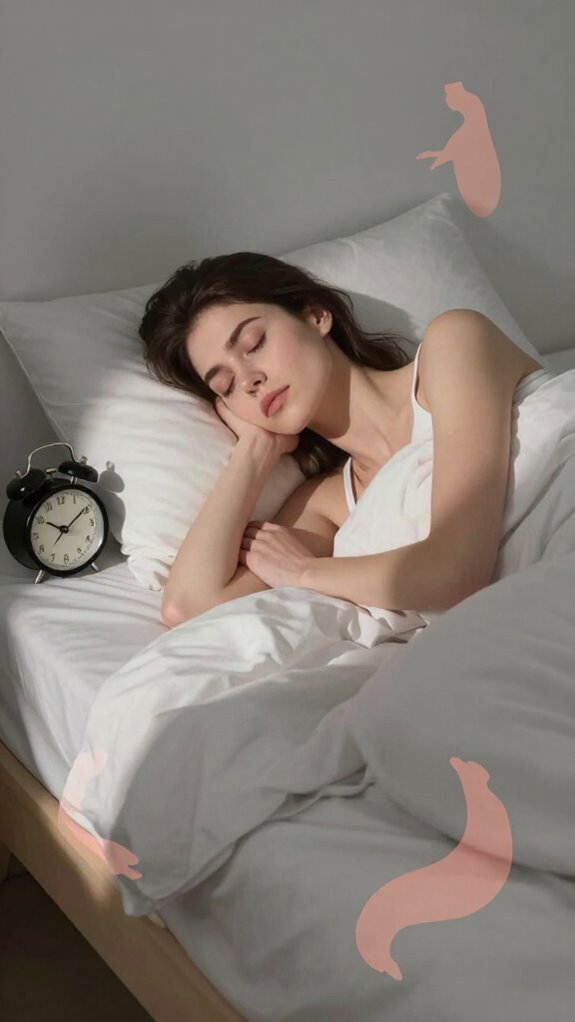
Although infrequent sleep paralysis can feel unsettling, it’s a predictable, noncardinal part of sleep architecture for many people and not necessarily tied to antidepressant use alone.
I guide you to understand sleep paralysis mechanisms, where transient you-and-your-brain disconnections occur during REM shifts, often involving chest tightness and a lucid awareness that you can’t move. Circadian rhythm alignment plays a foundational role in stabilizing these transitions between sleep stages.
During REM shifts, transient you-and-your-brain disconnects spark chest tightness and lucid paralysis.
Sleep disruption effects may amplify occurrences when meds alter REM pressure. Research teams like Dr. Matthew Walker’s group and brands pursuing circadian health emphasize stable routines, consistent sleep windows, and stress management.
The timing of these episodes often correlates with circadian rhythm phases, as sleep architecture shifts throughout the night can influence REM latency and muscle atonia persistence.
Recognize patterns, track incidents, and consult a clinician if episodes escalate.
FAQ
Do Sleep Issues From Antidepressants Fade Over Time?
Sleep issues from antidepressants can improve with time, yes. I’ve found sleep adaptation often happens as you adjust to the medication duration, especially with steady dosing and proactive strategies. Stay proactive, monitor progress, and discuss adjustments with your doctor.
Can Non-Prescription Aids Worsen Antidepressant Sleep Effects?
Non-prescription aids can worsen antidepressant sleep effects if misused; I control this by sticking to sleep aids and sleep hygiene that are evidence-based, avoid caffeine late day, and monitor any changes to my sleep with a clinician.
Which Antidepressants Cause the Least Sleep Disruption?
Sleep friendly antidepressants are often those with gentler circadian effects; I’ll guide you toward options, and I’ll share insomnia management strategies you can control, including timing, routines, and monitoring, so you feel empowered choosing the least disruptive choice.
How to Distinguish Insomnia From Antidepressant Withdrawal?
Withdrawal symptoms can mirror insomnia, but I’ll help you distinguish them by tracking sleep patterns and onset timing, noting sudden changes or mood shifts. If wakes at night worsen with taper, trust withdrawal signals over usual fatigue.
Do Sleep Disruptions Affect Antidepressant Effectiveness?
Sleep quality can influence my antidepressant effectiveness, and I monitor it closely, noting any disruptions. I also consider medication interactions that could blunt benefits, adjusting routines and consulting clinicians to preserve steady relief and personal control.