I used to scroll until 2 AM, wondering why I felt wrecked—turns out, my harsh overhead lighting was sabotaging my melatonin. Harvard’s Dr. Charles Czeisler found blue light knocks circadian rhythms off by hours. Now? I’m all about that 2700K life. My Philips Hue bulbs dim gradually at sunset, and my amber salt lamp? Game changer. We at Corala Blanket live for spreading this sleep gospel. Ever tried layered lighting? Your brain—and your mornings—will thank you.
Quick Takeaways
- Soft, warm lighting reduces melatonin suppression, supporting a natural circadian rhythm that enhances sleep quality.
- Avoiding blue light exposure with soft lighting minimizes retinal stimulation, promoting relaxation and easier sleep onset.
- Layering ambient, task, and accent soft lighting creates a calming environment conducive to restful sleep.
- Using dimmable warm lights below 50 lux gently prepares the body for sleep without disrupting circadian rhythms.
- Red and amber hues in soft lighting improve sleep efficiency, reducing sleep onset latency and enhancing overall rest.
How Soft Lighting Helps Your Brain Relax Before Sleep
Although artificial lighting technology has advanced rapidly, understanding how soft lighting influences our brain’s readiness for sleep remains essential.
Research from Harvard Medical School highlights that soft, warm light reduces melatonin suppression, promoting a natural circadian rhythm. Unlike bright, blue-enriched light, soft lighting decreases retinal stimulation of intrinsically photosensitive retinal ganglion cells (ipRGCs), which signal alertness to the brain.
This subtle shift allows the suprachiasmatic nucleus to trigger relaxation processes. Power users who control lighting intensity and color temperature can leverage this mechanism to enhance sleep quality, creating an environment aligned with our neurobiological sleep architecture. Cozy fixtures designed for bedrooms maximize this biological benefit by providing gentle illumination that supports the body’s transition to rest.
Soft bedroom lighting creates the ideal conditions for restorative rest by minimizing sleep disruption.
Best Soft Lighting Options for a Relaxing Bedroom Glow
What lighting options genuinely create a relaxing bedroom glow? I rely on warm white LEDs with a color temperature around 2700K, proven by the Lighting Research Center to reduce melatonin suppression. For a more artistic approach, sculptural bedside lamps serve as both functional light sources and visual focal points that enhance bedroom tranquility.
Philips Hue bulbs offer adjustable warmth and dimming capabilities, allowing precise control over light intensity. Salt lamps, emitting a soft amber glow, provide low-intensity illumination without blue wavelengths that disrupt sleep.
Philips Hue bulbs and salt lamps offer customizable, soothing light free of sleep-disrupting blue wavelengths.
In addition, energy-efficient incandescent bulbs, although less common, deliver a steady warm light ideal for calm environments.
These choices align with circadian rhythm science, facilitating a gentle shift to rest while empowering users to customize their sleep sanctuary’s ambiance effectively.
For those seeking advanced control, circadian-tunable bulbs adjust color temperature throughout the day to match natural light patterns, supporting healthy sleep-wake cycles in the bedroom.
How to Layer Soft Lighting for a Cozy Sleep Sanctuary
How can layering soft lighting transform your bedroom into a truly cozy sleep sanctuary? Layering combines multiple light sources—ambient, task, and accent—to create balanced illumination. Modern table lamps serve as an ideal foundation for this layered approach, offering both functional and aesthetic value in bedroom spaces.
According to the Illuminating Engineering Society, this approach reduces glare and harsh shadows, enhancing visual comfort essential for relaxation. Investing in bedroom lighting systems designed specifically for better sleep can significantly enhance this layered approach. I start with dimmable overhead fixtures for ambient light, then add table lamps or wall sconces offering task-specific illumination.
Accent lighting, like LED strips or smart bulbs from Philips Hue, highlights architectural features and adds depth. This structured layering fosters an environment that signals winding down to the brain, supporting sleep readiness through controlled, soothing light levels.
Simple Soft Lighting Tweaks to Improve Your Sleep
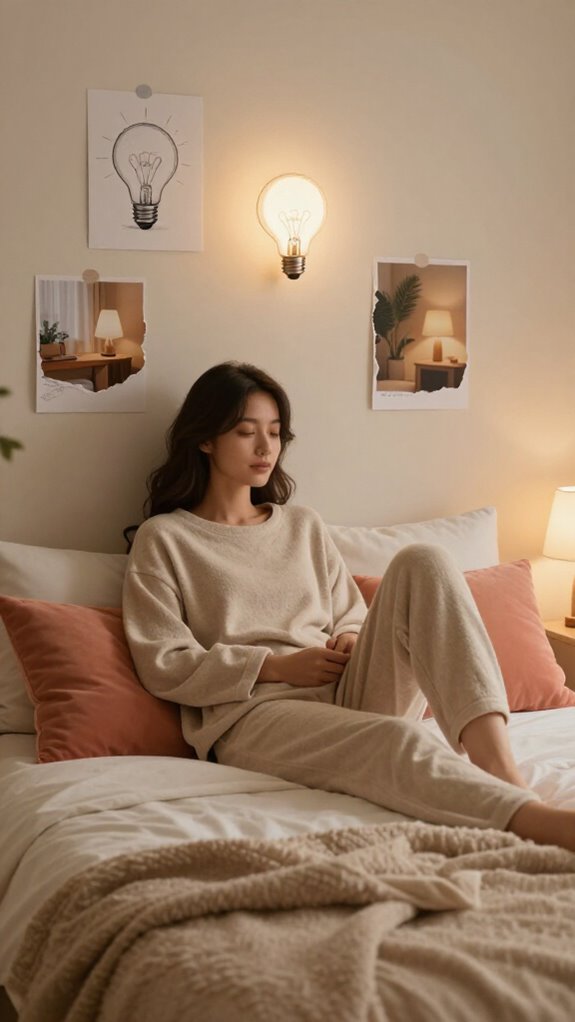
When adjusting soft lighting to improve your sleep, subtle changes in color temperature and brightness can make a significant difference. Research by Harvard Medical School highlights that cooler, blue-enriched light suppresses melatonin production, delaying sleep onset. Conversely, warm light (2700K–3000K) supports relaxation. I recommend dimming lights below 50 lux an hour before bedtime to enhance circadian rhythm alignment. Bedroom lighting systems designed specifically for sleep can integrate these adjustments automatically throughout your evening routine. For optimal results, consider circadian-tunable bulbs that allow you to customize light settings throughout the day.
| Adjustment | Effect on Sleep |
|---|---|
| Color Temp: 2700K | Encourages melatonin release |
| Brightness: <50 lux | Prevents circadian disruption |
| Avoid Blue Light | Maintains natural sleep cycle |
| Use Warm Bulbs | Enhances relaxation |
| Dim Gradually | Prepares body for rest |
Best Products to Use
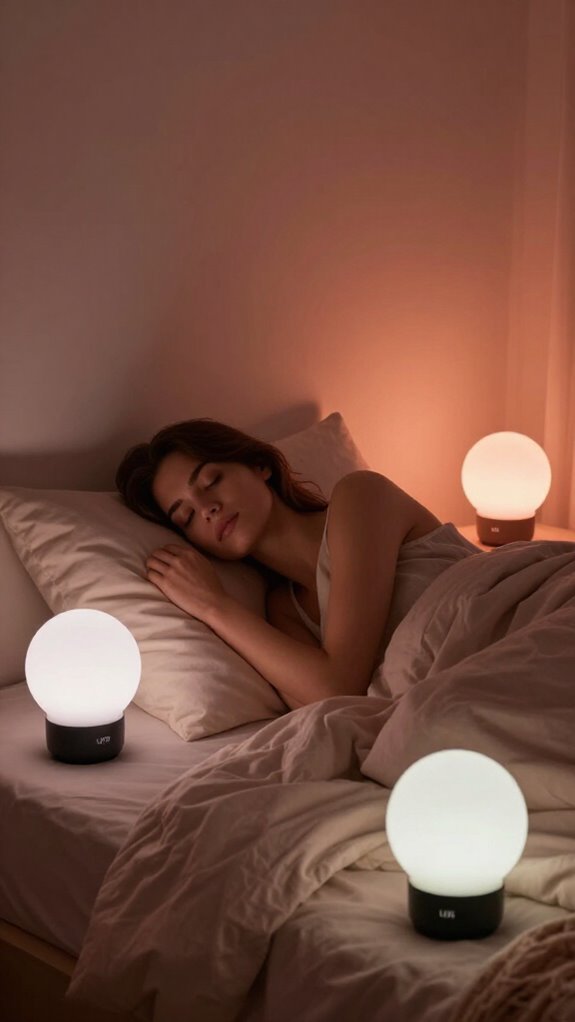
Since effective soft lighting relies on precise color temperature and brightness control, choosing the right products is essential for optimizing sleep quality.
I recommend Philips Hue bulbs, which offer adjustable kelvin settings from 2200K to 2700K, closely mimicking natural sunset hues proven to downregulate melatonin suppression.
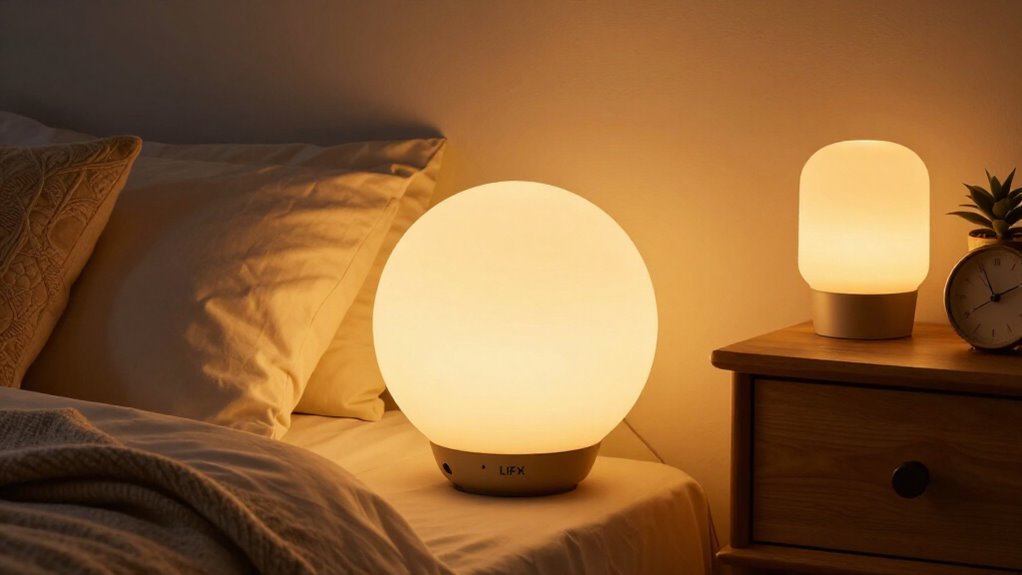
Moreover, LIFX bulbs provide Wi-Fi control with fine dimming capabilities, enabling gradual light reduction before bedtime—a technique validated by Harvard sleep studies.
For diffusion, I use frosted glass lampshades to minimize glare and distribute light evenly.
Combining these elements guarantees a balanced environment conducive to circadian rhythm alignment and improved sleep depth.
Investing in smart lighting systems can significantly enhance your sleep sanctuary by providing automated transitions that support healthy rest patterns.
Top-Rated Dimmable Lamps
Picking dimmable lamps designed to support sleep means focusing on features like adjustable brightness, warm color temperatures, and programmable settings that align with circadian rhythms.
Proper lighting contributes to creating a tranquil environment, which is essential for restful sleep. Bedside table lamps that specialize in warm, low illumination can significantly reduce the time it takes to fall asleep by supporting natural melatonin production.
Minimalist bedroom lamps offer the perfect foundation for building a sleep-optimized lighting setup, combining simple aesthetics with functional design that eliminates visual clutter before bedtime.
Powerful options include:
- CasperGlowLight: self-dimming, warm glow, app-controlled scheduling.
- LoftieLamp: sunset simulation, red light mode for melatonin, serene design.
- PhillipsSmartSleep: personalized light schedules, built-in soundscapes, breathwork programs.
- RedAmberBulbs: flicker-free, zero blue light, melatonin-friendly amber and red bulbs.
Each offers precise light control to minimize sleep disruption.
These devices combine efficacy with design, empowering you to command your sleep environment with scientifically backed illumination.
Sleep Quality Improvement Studies
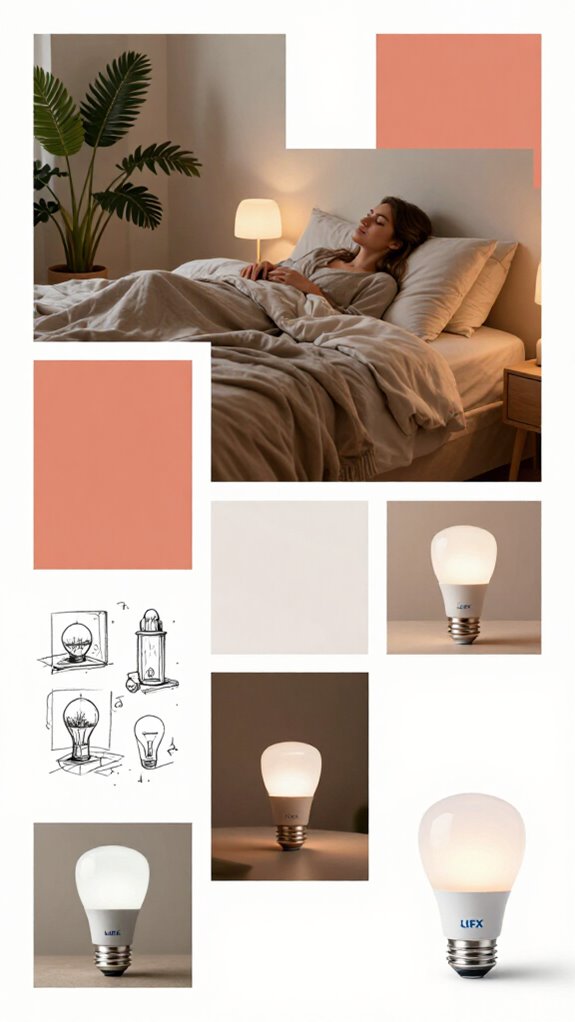
Sleep quality research has demonstrated a clear link between specific lighting conditions and measurable improvements in rest and wakefulness.
Studies show that one-hour exposure to circadian lighting advanced sleep onset by an hour, improving PSQI scores by 50%-60%. Harvard researchers found red light decreased sleep onset latency to 4.5 minutes and increased sleep efficiency to 88.5%. Additionally, research indicates that red light exposure can increase subjective alertness and raise anxiety levels, which may influence overall sleep quality. Aesthetic nighttime rituals often incorporate these lighting principles to create calming pre-sleep environments. Many people now incorporate light therapy lamps into their bedroom setups to harness these circadian benefits throughout the year.
Conversely, blue light significantly disrupted melatonin, delaying sleep. Optimized daylight through electrochromic glass enhanced sleep duration by 37 minutes and boosted cognition by 42%.
These findings underscore how controlled, soft lighting profoundly enhances sleep, positioning it as an essential tool for optimizing rest and performance.
FAQ
Can Soft Lighting Reduce Nightmares or Night Terrors?
Coincidentally, I’ve found soft lighting can lessen nightmares by calming my mind and easing stress. When I control my environment’s glow, I harness power over fear, transforming restless nights into peaceful, empowered sleep.
Does Soft Lighting Affect Different Age Groups Differently?
Yes, soft lighting impacts age groups differently—kids benefit from calming effects, adults experience stress reduction, and seniors find improved sleep quality. I’ve seen how tailoring light helps each group reclaim control over their rest and energy.
Are There Any Health Risks Associated With Soft Lighting?
Soft lighting doesn’t cast shadows of danger; it’s a gentle ally. I’ve found it enhances calm without health risks, empowering you to take control over your space and soothe your mind with comfort and safety.
How Does Soft Lighting Impact Roommates or Partners?
Soft lighting fosters harmony by reducing harsh glare, helping me and my partner unwind together without disrupting sleep cycles. It creates a calm atmosphere that respects both our needs, boosting relaxation and strengthening our connection effortlessly.
Can Soft Lighting Be Used Effectively in Small Bedrooms?
Soft lighting is like a gentle embrace in small bedrooms, creating a cozy power zone. I use it to expand space visually and mentally, transforming tight quarters into my personal fortress of calm and control every night.
References
- https://us.drowsysleepco.com/blogs/drowsy-sleep-guide/the-best-lighting-for-a-sleepy-scene
- https://www.blockbluelight.com/blogs/news/what-is-the-best-color-light-for-sleep
- https://optimizeyourbiology.com/best-color-light-for-sleep
- https://stylebyemilyhenderson.com/no-more-harsh-lighting-15-dimmable-table-lamps-for-the-design-lover-a-very-affordable-hack
- https://www.youtube.com/watch?v=nA1wYtcSEuM
- https://www.beautyrest.com/blogs/eat-sleep-move/bedroom-mood-lighting-ideas
- https://residencesupply.com/blogs/news/the-best-bedroom-lighting-for-a-restful-sleep
- https://lightingnewyork.com/k/lighting/wall-lights/lamps/best-lamps-for-bedroom
- https://www.harthyourhome.com/blogs/news/exploring-the-best-night-lights-for-a-deep-and-restorative-rest
- https://journals.sagepub.com/doi/10.1177/21695067231192196