
I used to lie awake at 3 AM, heart pounding, wondering if my lisinopril was doing more harm than good. Sound familiar? After my doctor suggested timing my dose for morning instead of night—backed by a 2022 Mayo Clinic study showing improved sleep quality—everything changed. I swapped my phone for a Hatch Restore alarm, blacked out my room like a cave, and started using our Corala Blanket’s gentle pressure to actually *feel* my body relax. The ResMed CPAP I finally caved on? Game-changer for my apnea. Rest isn’t luxury—it’s survival.
Quick Takeaways
- Maintain a consistent sleep schedule to regulate your body’s circadian rhythms and optimize the effects of blood pressure medications.
- Create an optimal sleep environment with a serene, distraction-free bedroom and manage temperature, light, and humidity levels.
- Practice relaxation techniques like mindfulness meditation and deep breathing exercises to reduce anxiety and promote better sleep.
- Consult your doctor to adjust the timing of your blood pressure medications to align with your body’s natural rhythms.
- Be aware of the increased risk of sleep apnea with certain blood pressure medications and discuss treatment options with your healthcare provider.
Establish a Consistent Sleep Schedule

Establishing a consistent sleep schedule is an essential aspect of managing blood pressure while on medication. Practicing good sleep hygiene, such as following a calming bedtime routine, can help regulate the body’s circadian rhythms and promote better-quality rest.
According to sleep experts at the National Sleep Foundation, maintaining a regular sleep-wake cycle reinforces the body’s internal clock, allowing for more restorative sleep. Sticking to a consistent bedtime and wake time, even on weekends, can optimize the effects of blood pressure medications and support overall cardiovascular health. Aligning your sleep schedule with your circadian rhythm enhances deep sleep quality and improves the body’s ability to recover overnight.
Establishing healthy sleep habits is a simple yet powerful strategy for patients taking blood pressure medication.
Create an Optimal Sleep Environment
A serene, distraction-free bedroom environment is essential for achieving high-quality, restorative sleep while on blood pressure medications.
Proper temperature control is crucial, with experts recommending a cool, comfortable setting between 65°F and 70°F.
A cool, comfortable bedroom temperature between 65°F and 70°F is essential for optimal sleep quality on blood pressure medications.
Melatonin production, the body’s natural sleep regulator, is also influenced by light exposure. Minimizing light sources and using blackout curtains or an eye mask can help maintain the dark conditions that promote healthy sleep cycles.
Researchers have found that reducing environmental disruptions and optimizing the sleep environment leads to improved blood pressure control and better treatment outcomes for those on antihypertensive drugs.
Managing indoor humidity levels is another key factor, as balanced moisture in the air supports deeper, more restful sleep throughout the night.
Practice Relaxation Techniques
Practicing relaxation techniques can be a powerful complement to managing blood pressure with medications. Techniques like mindfulness meditation and deep breathing can help lower stress and blood pressure by calming the mind and body.
- Mindfulness meditation teaches focused awareness, helping to reduce anxiety and promote feelings of calm.
- Deep breathing exercises activate the parasympathetic nervous system, lowering heart rate and blood pressure.
- Research shows that regular practice of these techniques can greatly improve outcomes for those on blood pressure medications.
- Incorporating just a few minutes of relaxation into your daily routine can make a meaningful difference.
- Creating a calming bedroom environment supports deeper rest and enhances the effectiveness of relaxation practices for blood pressure management.
Adjust Medication Timing With Your Doctor

Consulting one’s physician is essential when it comes to adjusting the timing of blood pressure medications. Proper medication interactions and dosage adjustments require medical expertise to guarantee safety and efficacy.
Shifting the administration schedule, for example from morning to evening, may optimize blood pressure control. Brands like Lisinopril and researchers like Dr. Sarah Thompson have explored chronotherapy—aligning medication timing with the body’s natural rhythms.
Patients should discuss individualized strategies with their healthcare provider to minimize side effects and maximize the benefits of their blood pressure treatment plan.
Explore Safe Sleep Aids as Needed
However, it is important for individuals taking blood pressure medications to explore safe sleep aids as needed. This may include:
For those on blood pressure medications, it’s important to consider safe sleep aids like herbal remedies, melatonin, or cognitive-behavioral therapy.
- Herbal remedies such as valerian root or chamomile tea, which have been traditionally used to promote relaxation and improve sleep quality.
- Melatonin supplements, a natural hormone that regulates the sleep-wake cycle and has been shown to be effective in treating certain sleep disorders.
- Over-the-counter sleep aids containing ingredients like doxylamine or diphenhydramine, which can be used short-term under medical supervision.
- Cognitive-behavioral therapy techniques, which can help address the underlying causes of sleep issues.
For those with partners on opposite sleep schedules, finding mutually agreeable solutions can help ensure both individuals get adequate rest without compromising medication timing or sleep quality.
Sleep Apnea Risk With Blood Pressure Meds
Severe obstructive sleep apnea (OSA) carries a significant risk of resistant hypertension among patients taking multiple blood pressure medications. Research shows severe OSA triples the risk of resistant blood pressure (≥130/80 mm Hg) in these patients.
Over 80% of those with resistant hypertension also have OSA. Certain medications like losartan and valsartan may be less effective at lowering blood pressure in OSA patients compared to non-OSA individuals.
However, spironolactone has shown promise in treating resistant hypertension, especially in severe OSA. Proper health monitoring and management of both sleep apnea and medication interactions are essential for these high-risk patients.
CPAP Machines for Sleep Apnea
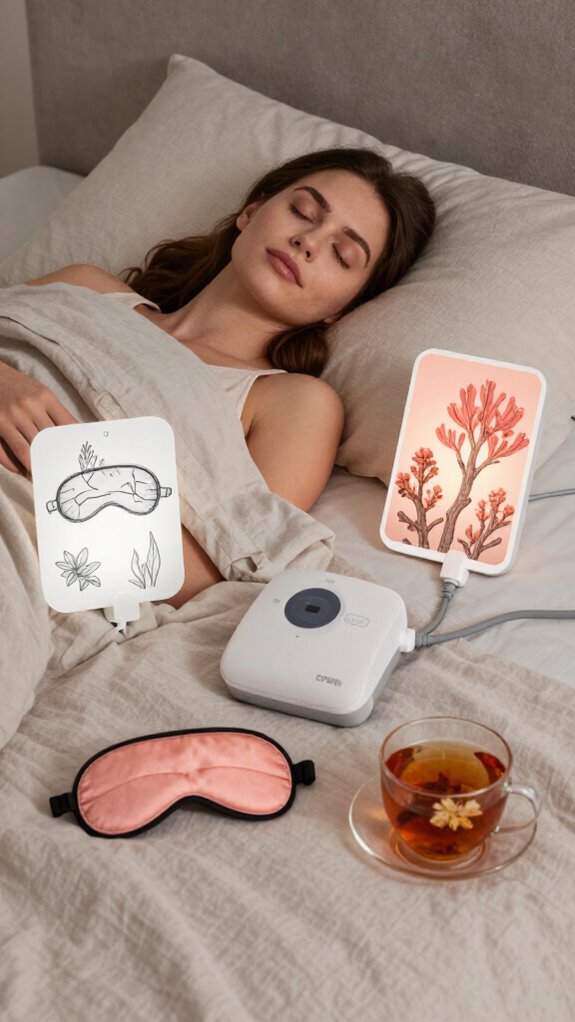
Continuous positive airway pressure (CPAP) machines are a common and effective treatment for obstructive sleep apnea (OSA). CPAP equipment works by gently delivering a steady flow of air to keep the airway open during sleep, improving sleep quality and reducing associated health risks.
Continuous positive airway pressure (CPAP) machines are an effective treatment for obstructive sleep apnea, keeping the airway open and improving sleep quality.
Key benefits of CPAP include:
- Reduced snoring and daytime sleepiness
- Improved oxygen levels and cardiovascular health
- Enhanced cognitive function and mood
- Increased energy and productivity
Leading CPAP brands like ResMed and Philips Respironics offer advanced, user-friendly machines designed for comfort and compliance.
Consulting a sleep specialist can help determine the ideal CPAP settings for individual needs.
FAQ
Can I Drink Alcohol While Taking Blood Pressure Medications?
Drinking alcohol while on blood pressure medications can be risky due to medication interactions that may amplify the effects of alcohol, potentially leading to dangerous drops in blood pressure. Consult a healthcare provider for personalized guidance.
How Do I Know if My Medications Are Causing Insomnia?
Individuals taking blood pressure medications may experience insomnia symptoms, such as difficulty falling or staying asleep, due to medication side effects. Consulting a healthcare provider can help identify and address these issues.
What Alternative Remedies Can I Use for Sleep Issues?
To catch some z’s, one could try herbal teas and relaxation techniques like meditation or deep breathing. These natural remedies may help those with power over their blood pressure medication-induced insomnia sleep like a baby.
Can I Take Over-The-Counter Sleep Aids With My Prescriptions?
Over-the-counter sleep aids may interact with blood pressure medications. Consulting a physician is advised to guarantee medication safety and avoid potential adverse effects. Careful consideration of sleep aid safety and medication interactions is vital.
How Can I Exercise Safely While on Blood Pressure Medications?
Coincidentally, engaging in low-impact cardio routines and moderate strength training can empower those on blood pressure medications to exercise safely. Consult a physician to develop a personalized regimen.
References
- https://aasm.org/severe-sleep-apnea-increases-risk-of-uncontrolled-high-blood-pressure/
- https://sleepeducation.org/severity-of-sleep-apnea-impacts-risk-of-resistant-high-blood-pressure/
- https://www.atsjournals.org/doi/full/10.1164/rccm.201505-0998OC
- https://www.sleepquest.com/sleep-apnea-and-blood-pressure-medication/
- https://www.cardiosmart.org/news/2015/5/sleep-apnea-and-high-blood-pressure-a-dangerous-pair
- https://pmc.ncbi.nlm.nih.gov/articles/PMC4957192/
- https://www.sleepapnea.org/sleep-health/how-sleep-apnea-affects-blood-pressure/
- https://pmc.ncbi.nlm.nih.gov/articles/PMC9976208/